2 Apr, 2025 | Admin | No Comments
Photograph Endangered Golden Snub-Nosed Monkeys in China’s Nature Reserves
By Expedition Leader Eddy Savage
One of the most rewarding experiences of my photo expeditions to China with Natural Habitat Adventures would have to be the time spent with golden snub-nosed monkeys. We spend a day of our adventure searching out these wild monkeys in a remote valley flanked on either side by tall, steep and gorgeous mountains. These unlikely primates are the most outstanding contrast of colors. These monkeys showcase brilliant golden-orange fur of varying intensities. Older male golden snub-nosed monkeys display long, brilliant golden guard hairs on their backs. The distinctive nose, where they get their name from, is unlike any primate nose I’ve seen. Sharply upturned, the nose and area around hint at a light blue skin coloration. It’s a spectacular contrast that surprisingly (or understandably) blends well into their natural habitat in the mountains around Sichuan Province, China. Please enjoy this collection of my photographs taken while on Nat Hab’s Wild China Photo Expedition.
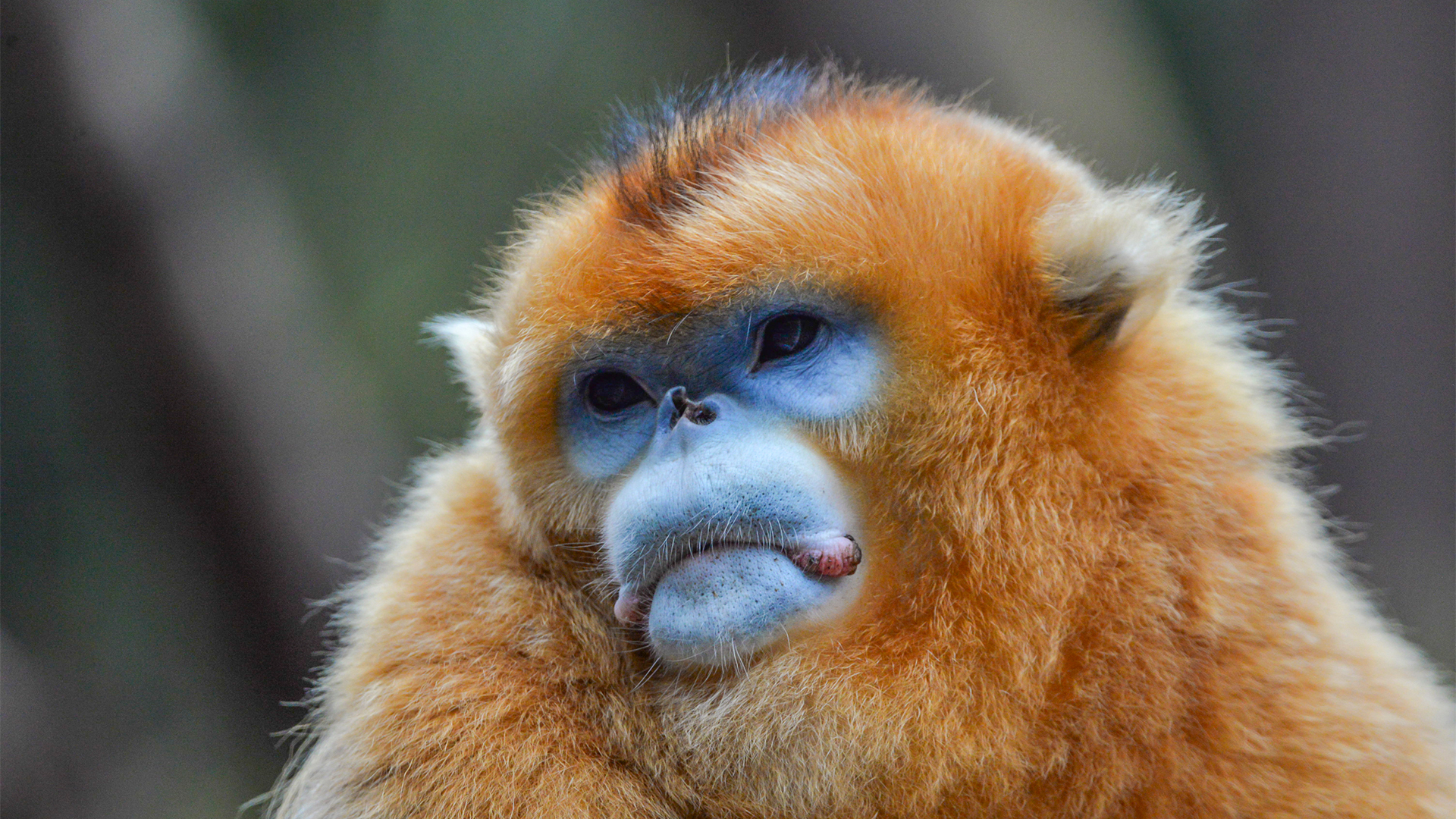
Here, we see an adult male golden snub-nosed monkey. One of the distinguishing facial features of male monkeys is the wart-like growths on either side of their mouth. They appear once the monkey approaches sexual maturity. It is thought they likely have something to do with breeding and communication, but there is no conclusive evidence yet.
© Eddy Savage
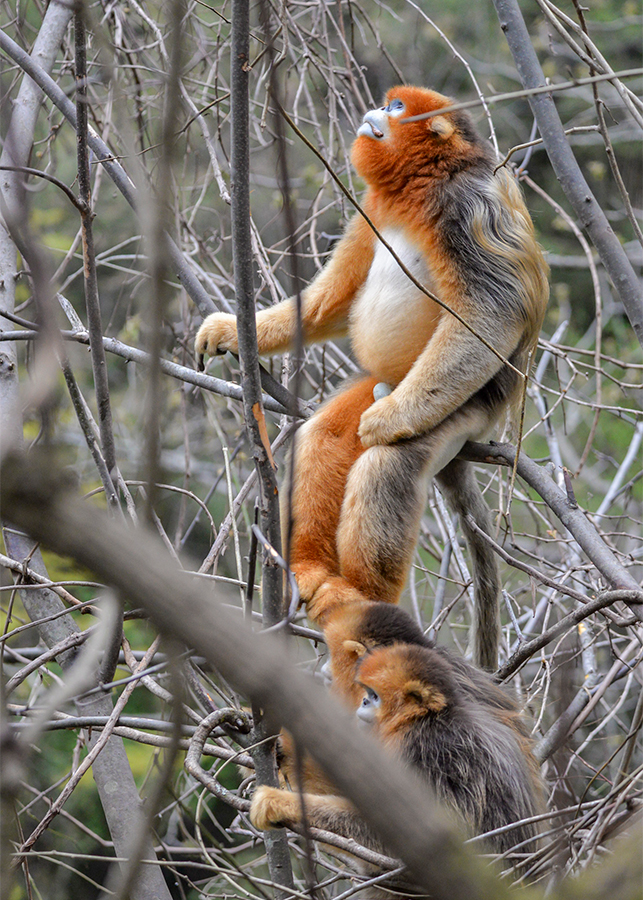
These tree-dwelling monkeys spend more than 90% of their time in the canopy. Their food source varies throughout the seasons. In the dead of winter, they’ll prefer lichens, and in the spring and summer, they’ll eat new growth, leaves and fruits.
© Eddy Savage
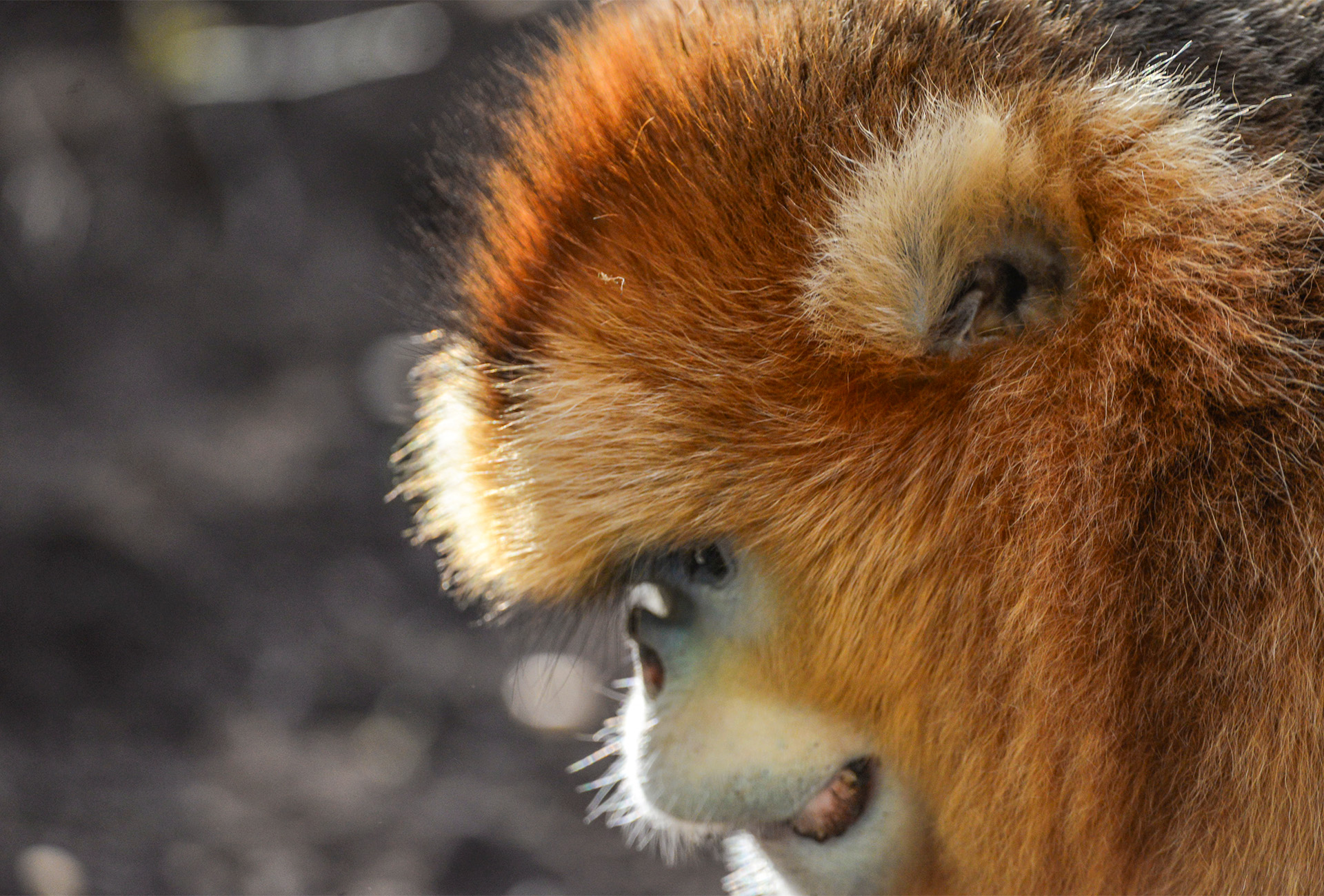
These primates survive in the coldest winter conditions of any primate on Earth, secondary to humans. One adaptation thought to be derived from their cold-weather lives is the snub-nose: flattened and tucked away under the forehead, it is likely an adaptation to protect them from frostbite during the -13°F winter temps.
© Eddy Savage
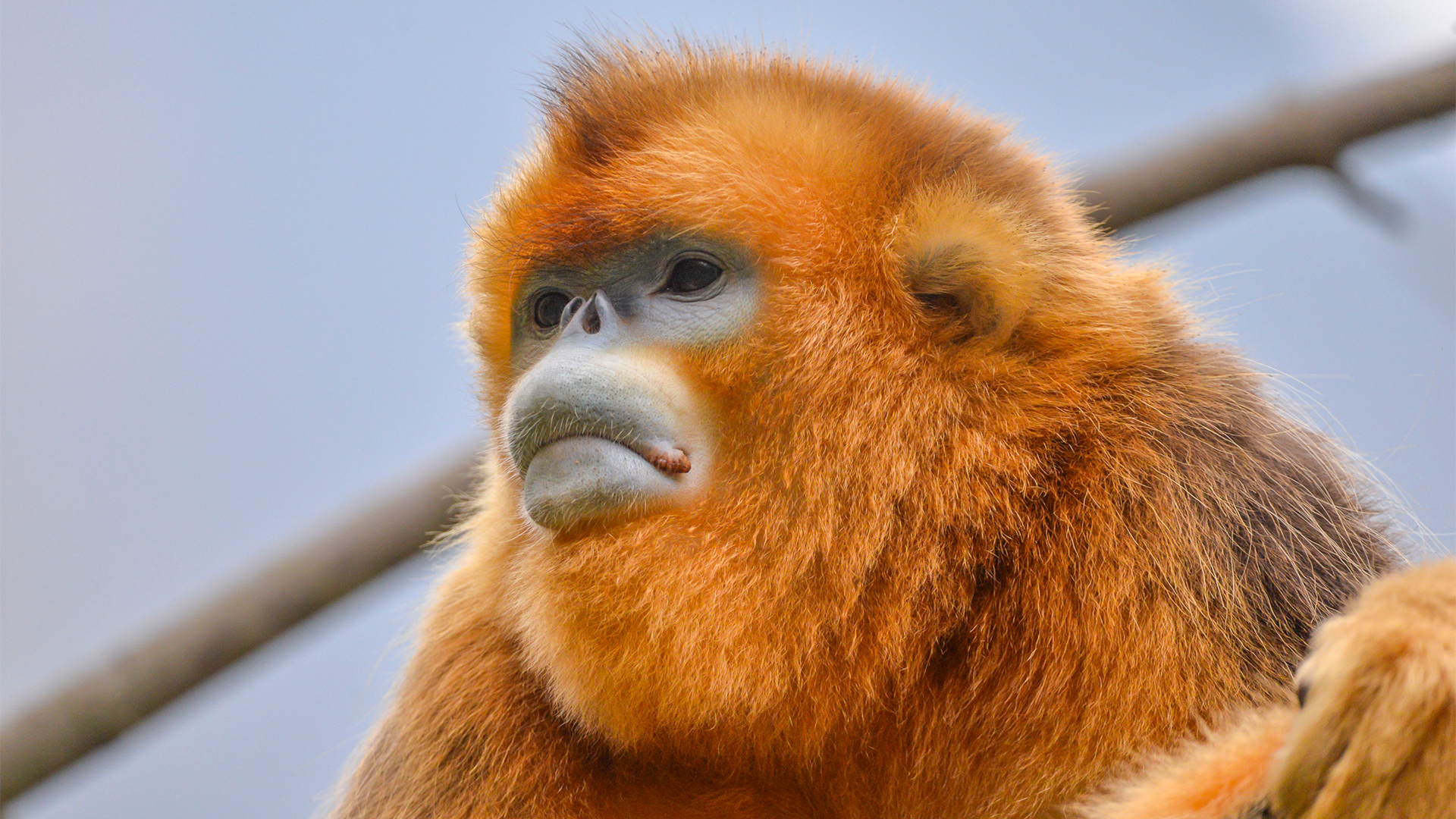
Their habitat is in the deciduous broad-leaved and coniferous forests that sit between 4,000 feet and 13,000 feet in elevation. Snow is often a contender for their winter lives, so having a healthy fur coat goes a long way.
© Eddy Savage
During my observations of the troop, which can number between 40 and 70, it appeared as though demographics split up well. Family groups in one direction, sub-adults/juveniles in another, and males with females in another. Here, we see a group of juveniles playing in the trees.
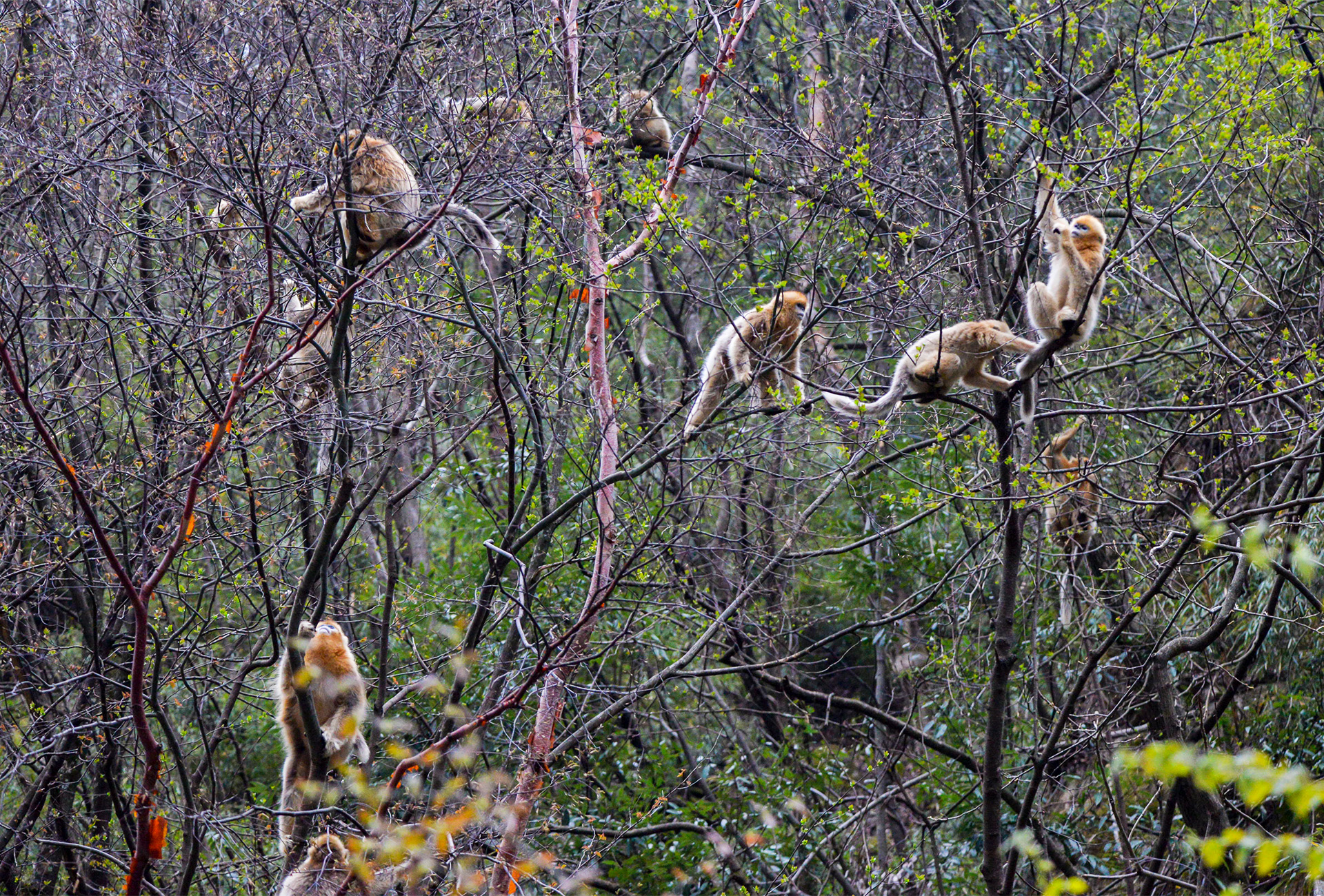
© Eddy Savage
Here is a trio of young monkeys playing with each other. Highly distractable and chaotic, they climbed up and down each other while one or two held onto the tree branches.
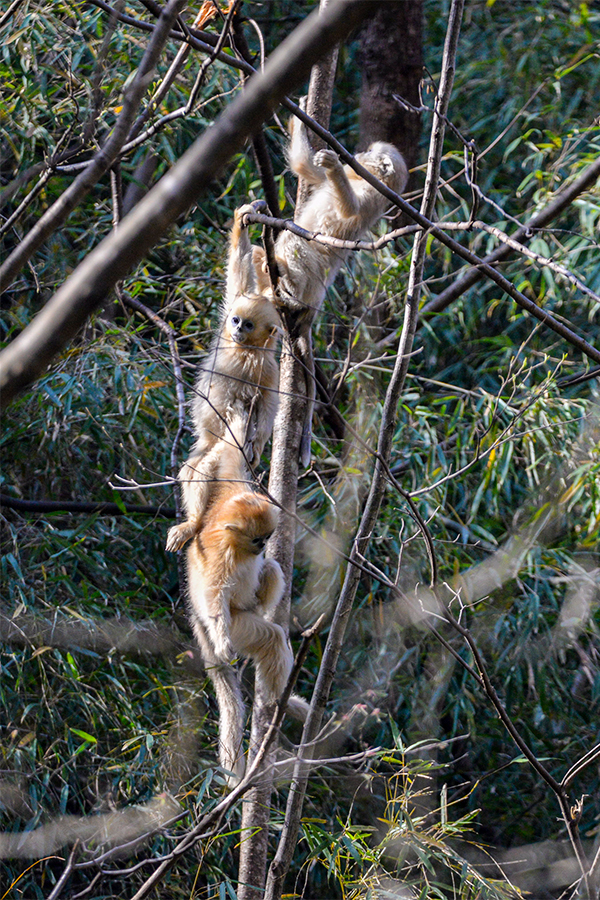
© Eddy Savage
Breeding behavior can occur at any time of year; however, it will only be successful during the fall and winter months. October through January is the rough breeding window. Typically, most baby golden snub-nosed monkeys are born between April and August, and their gestation is approximately seven months. This photo is from April, so this is a super young golden snub-nosed monkey.
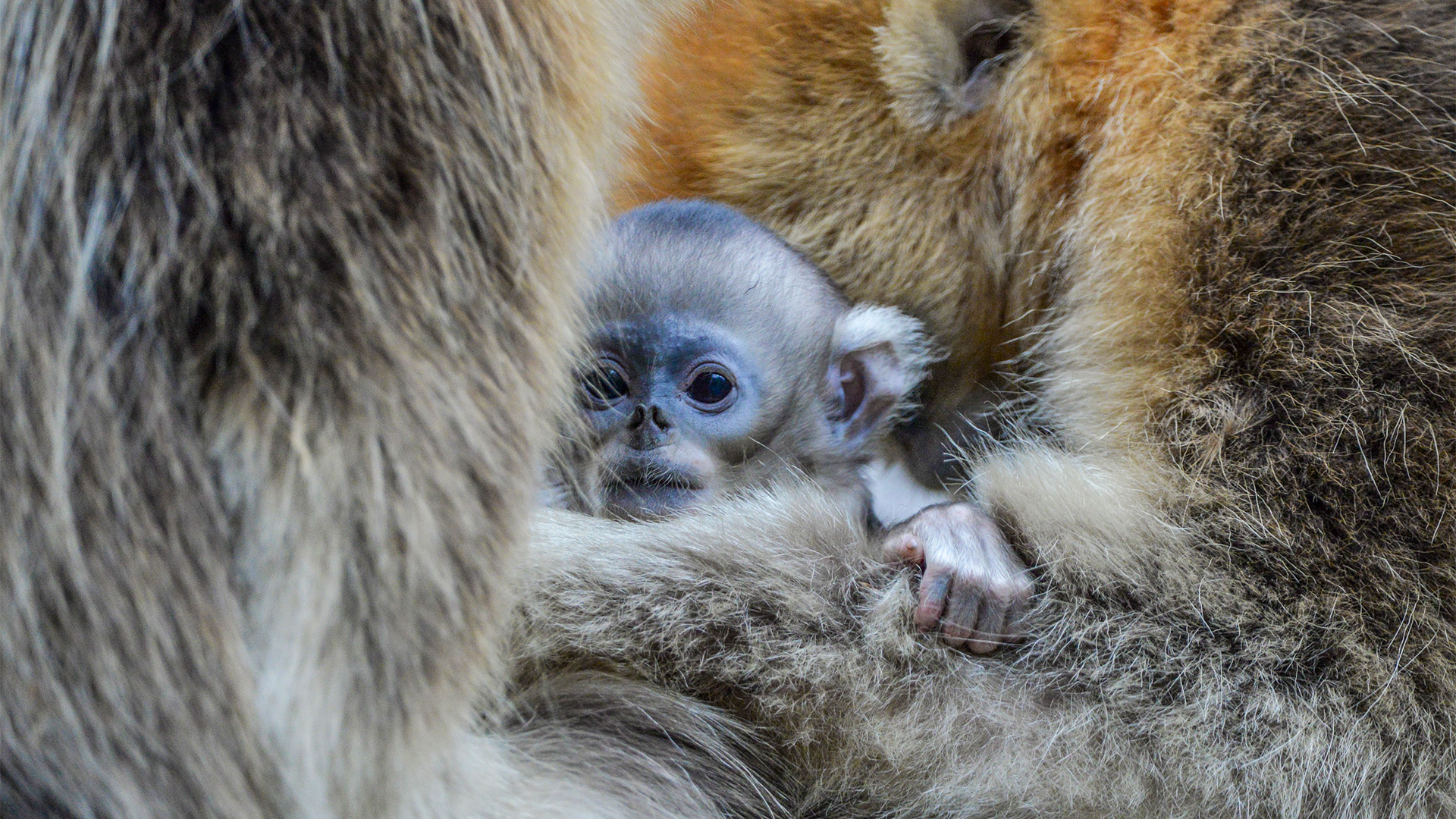
© Eddy Savage
When it comes to instigating breeding, the females are usually in control. When receptive to breeding, they will lounge upside-down and make faces toward the male monkey. If the male is interested, he’ll make a wide and toothy grin before journeying toward the female.
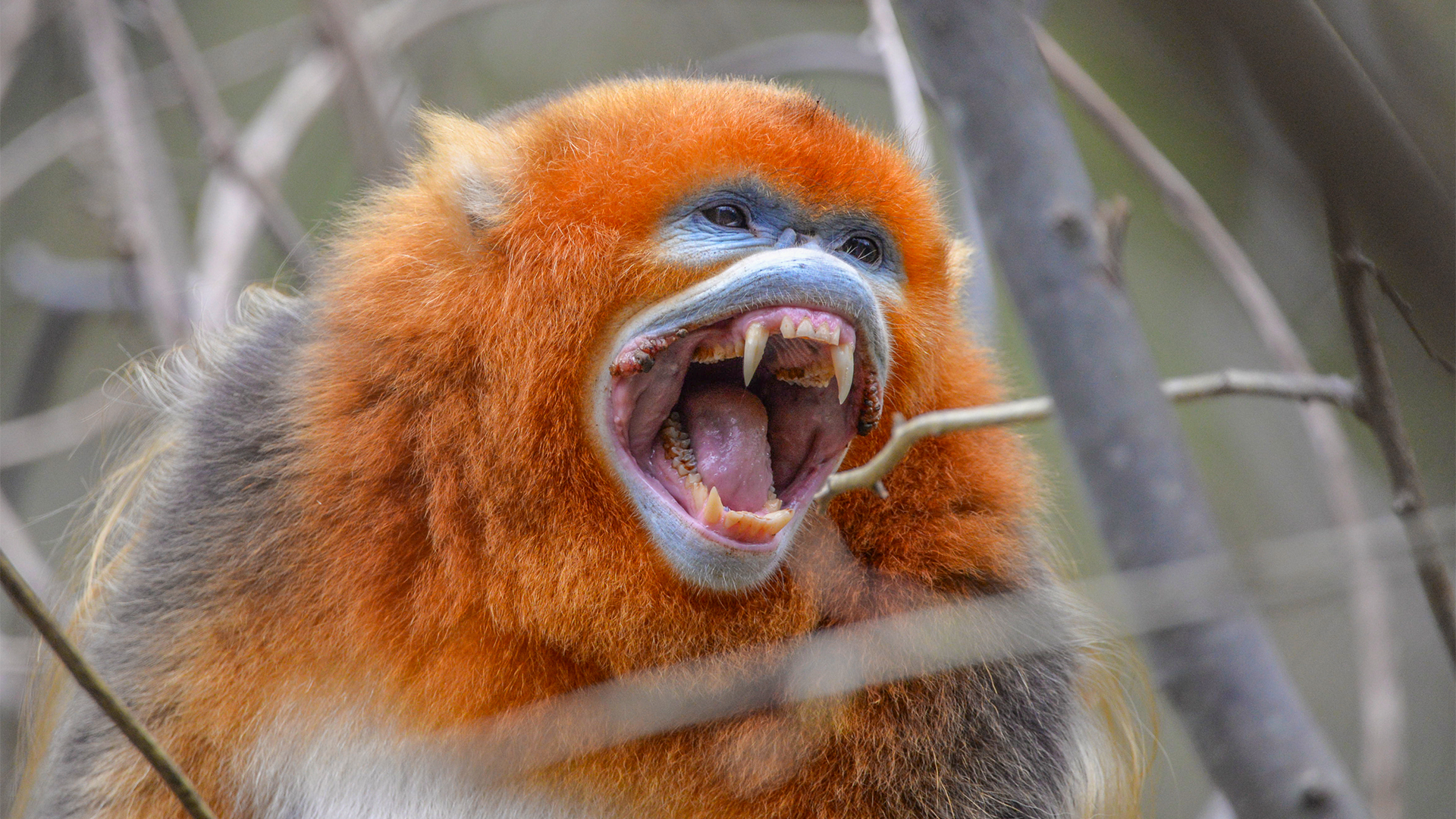
© Eddy Savage
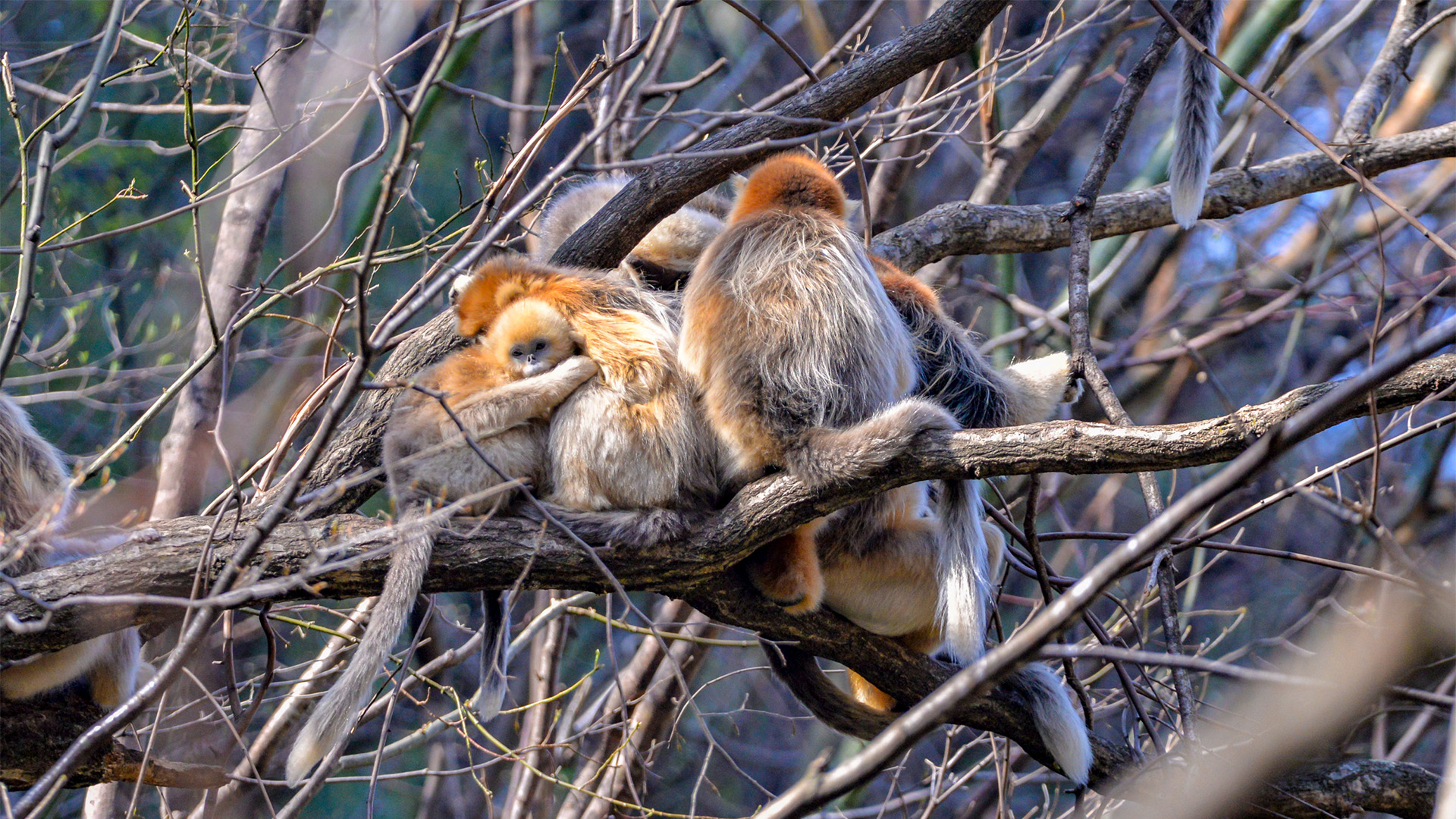
Huddling among golden snub-nosed monkeys is also common. I’ve often observed them bundled together like this, sometimes grooming each other. It’s also hypothesized these monkeys huddle together more readily than others to stay warm, due to their colder habitat. It’s interesting that whenever a stressful event occurs within the troop, the monkeys scatter and join into small huddles like this. It may also provide comfort to each monkey.
© Eddy Savage
Baby golden snub-nosed monkeys are weaned at approximately one year. There is also evidence that females share in the nursing and care for the young, often seen in groups of several moms and offspring.

© Eddy Savage
The post Photograph Endangered Golden Snub-Nosed Monkeys in China’s Nature Reserves first appeared on Good Nature Travel Blog.
In the autumn of 1973, wilderness writer and naturalist Peter Matthiessen joined preeminent field biologist George Schaller high in Nepal’s Himalayan Mountains on a journey that would soon become legendary. While Schaller was there to study the mating habits of the bharal, or Himalayan blue sheep, Matthieseen was on a quest for spiritual enlightenment. That is, a quest coupled with the hope of glimpsing one of the region’s most elusive animals: the snow leopard.
This strenuous two-month expedition resulted in one of Matthiessen’s best-known and award-winning books, The Snow Leopard—a work that still enlightens and inspires readers today.
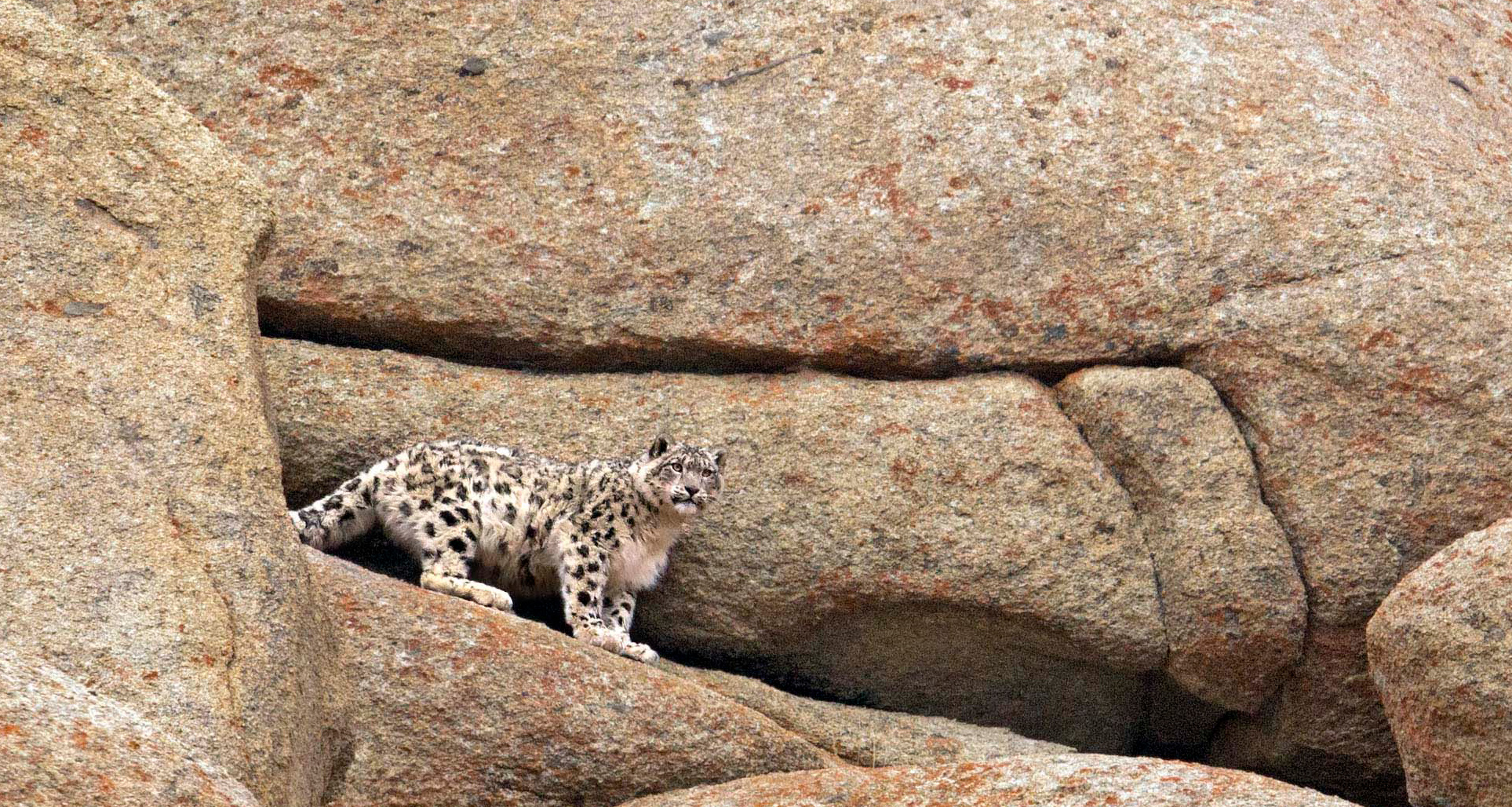
It’s no secret that big cats stir imaginations, from the majestic lions of Kenya’s Maasai Mara to the jaguar, a large and spotted feline that holds court over South America’s Pantanal. And snow leopards are no exception. For a long time, so little was known about these shy and solitary creatures that inhabit Earth’s uppermost reaches that they took on an almost mythical status. Local residents call them the “gray ghost” or the “ghost of the mountains” because they’re so rarely seen.
© Surya Ramachandran
In fact, when Matthiessen embarked on his expedition, only two Westerners had reported seeing a snow leopard over the previous 25 years. One of those Westerners was Schaller, who was also the first to capture a snow leopard on film. In 1971, his photos appeared in the pages of National Geographic, giving the world its first opportunity to view this fabled being in its natural habitat.
The Elusive Snow Leopard
Getting a photo of a wild snow leopard is no easy task, although it’s been made much easier in recent years. Spotters and master trackers know exactly where to look and what to look for, such as fresh scat, snow-embedded tracks and even marking patterns.
Since Matthiessen’s The Snow Leopard was first published in 1978, a lot has been learned about these shy and solitary creatures. They can reach up to seven feet in length and weigh anywhere from 60 to 120 pounds. They roam mostly at dawn in the pre-morning hours, then again in the afternoons and evenings.
(function(d,u,ac){var s=d.createElement(‘script’);s.type=’text/javascript’;s.src=’https://a.omappapi.com/app/js/api.min.js’;s.async=true;s.dataset.user=u;s.dataset.campaign=ac;d.getElementsByTagName(‘head’)[0].appendChild(s);})(document,123366,’h26miydqw9qxx8tbdoix’);
Due to a difference in their anatomical structure, snow leopards can’t actually roar, though they do chuff, purr and growl. They move about quietly, preferring steep, snow-covered mountainsides high above the treelines, in places where the air is thin and the weather often relentless. Their thick fur—colored whitish to gray with black spots and rosettes along the neck, head, and back—easily camouflages them within the landscape, making them extremely difficult for the average eye to see.
Where to See Snow Leopards in the Wild
According to the Snow Leopard Trust, a non-profit organization dedicated to protecting the snow leopard, between 3,900 and 6,400 wild snow leopards are believed to be left around the world, though the actual number remains unknown. They inhabit a large swath of alpine and subalpine terrain that traverses 12 countries in northern and central Asia, including Mongolia, Afghanistan and Bhutan.
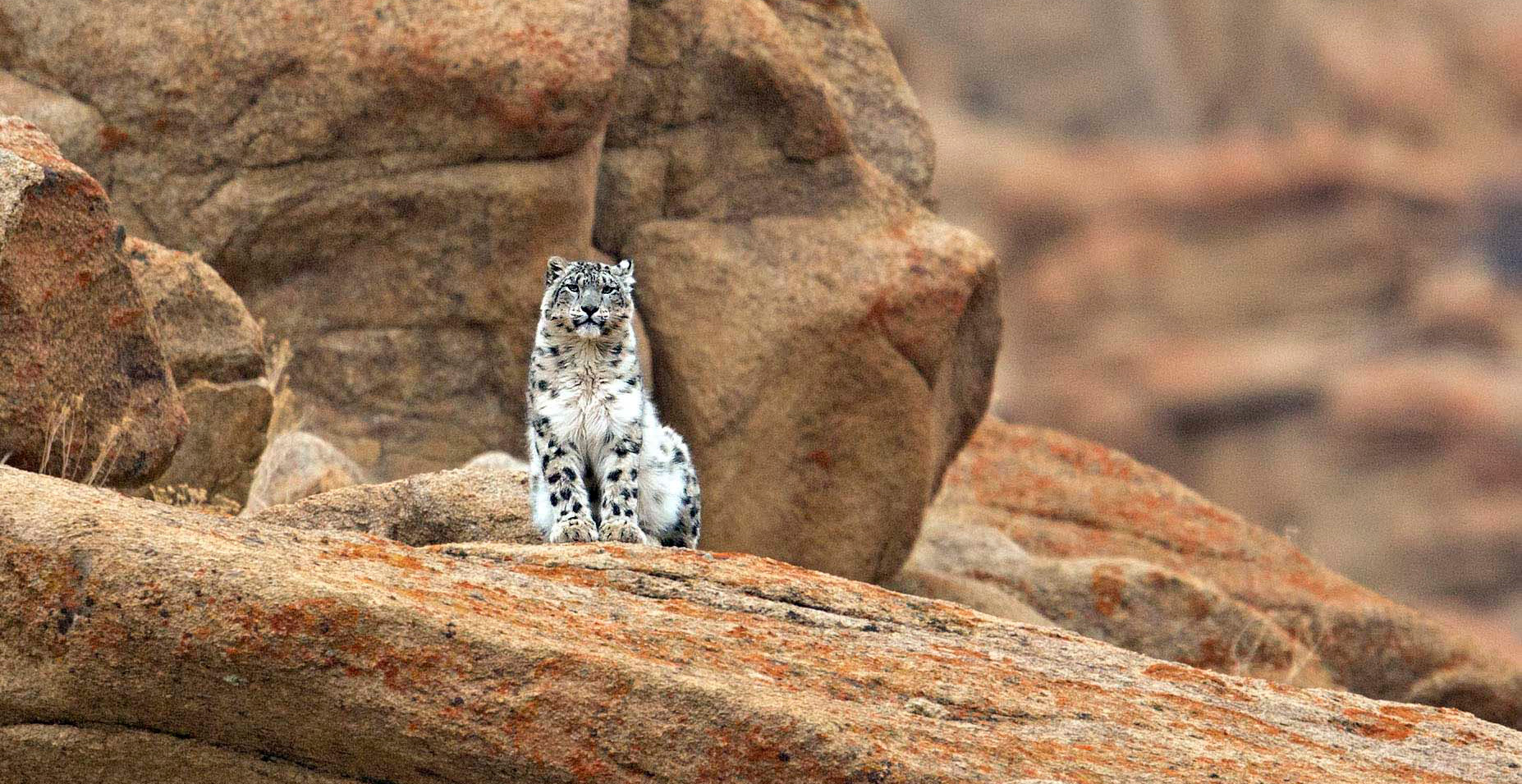
Schaller captured his now-famous photos in Pakistan’s Chitral Valley—another place snow leopards are known to frequent—and dozens of them roam freely in Russia’s Altai Mountains, at the convergence of China, Mongolia and Kazakhstan. However, one of the best places for spotting them is in India’s Ladakh territory, part of the larger Himalayan mountain range, where approximately 200 or so reside.
© Surya Ramachandran
India’s Ladakh Region Awaits
For the perfect opportunity to explore this storied region and capture images of the rare snow leopard, embark on Nat Hab’s Snow Leopard Quest Photo Expedition. Tucked away in the remote Himalayas of northern India, Ladakh itself is framed by dramatic peaks and dotted with Buddha-filled monasteries, meditation caves and secluded villages. It’s a region heavily influenced by Tibetan culture and home to India’s largest national park, Hemis National Park, where you’ll find one of the highest population densities of snow leopards in a protected area on the planet.
Nat Hab’s small group size of eight and a flexible daily schedule offers participants the best chance of catching a snow leopard undisturbed. Perhaps we’ll see one who has descended to a lower altitude to feed on bharal, ibex and smaller marmots and hares that inhabit the sides of steep rock walls and graze along valley streams. Or we may spy a cat perched inconspicuously along a high ridge line. Be sure and keep your camera at the ready!
Getting a Good Photograph
The odds of capturing snow leopard pics increase once you immerse yourself in the territory of these magnificent creatures. Nat Hab’s adept spotting scouts and master trackers work tirelessly to follow the cats’ every move. The terrain may be rugged and difficult, but the rewards of seeing a snow leopard in the wild are indescribable. If you’re especially lucky, you might even spot a snow leopard cub (or two!).
Ladakh’s additional wildlife is as equally as incredible. Look for long-legged wild sheep known as urial, golden eagles and bearded vultures soaring overhead. And stay alert for a sighting of the Himalayan wolf, known for its wooly fur and ability to adapt to cold and high altitudes.
There are also the natural and cultural beauties of Ladakh itself, such as narrow valleys and colorful roadside prayer flags, winding rivers and unoccupied palaces, all of which are ripe for discovery…and for photographing.
Although Matthiessen never did spot a snow leopard during his 1973 expedition, seeing one wasn’t his sole purpose. As a 2018 New Yorker article points out, “If Matthiessen had merely wanted to set eyes on a snow leopard, he could have driven from his home on Long Island to the Bronx Zoo, where snow leopards have been bred in captivity since 1966.”
Matthiessen knew that the possibility of glimpsing a snow leopard in its natural habitat, rather than in a zoo or menagerie, would be something else entirely. However, even not seeing one would be a tremendous feat, especially when you’ve scoured the world’s tallest peaks and loftiest landscapes in your quest. That’s because it’s in the ‘seeking,’ Matthiessen realized, that the real magic occurs.
Ready to see and photograph snow leopards in the wild? Learn more about our Land of the Snow Leopard adventure and our photo-focused Snow Leopard Quest Photo Expedition. Or, explore our photo expeditions around the globe!
The post How to Get a Picture of a Wild Himalayan Snow Leopard first appeared on Good Nature Travel Blog.
Bones are everywhere in Patagonia. They dry on the brown steppes and jut up from the desert’s gray floor. They protrude like blue spikes through the surface of lakes and bleach white on the ocean’s shore. And, right now, mine are shaking. I’m just barely managing to hold on to the side of a mountainous cliff in Argentina’s La Leona Petrified Forest. Being from Wisconsin, I don’t believe anything technically called a “forest” should be as windswept, thirsty and barren as a lunar landscape; nonetheless, it is. And I’m hanging on to this hard-rock surface for dear life.
Our small group is taking a tour of this place of beating sun, high winds and tree-rocks with a local guide who is part Argentinean and part mountain goat. The forest was here at a time when South America was tipped farther north; thus, this area was once leafy and green and home to dinosaurs. Their petrified bones and the bones of the once-breathing trees are 65 to 90 million years old.
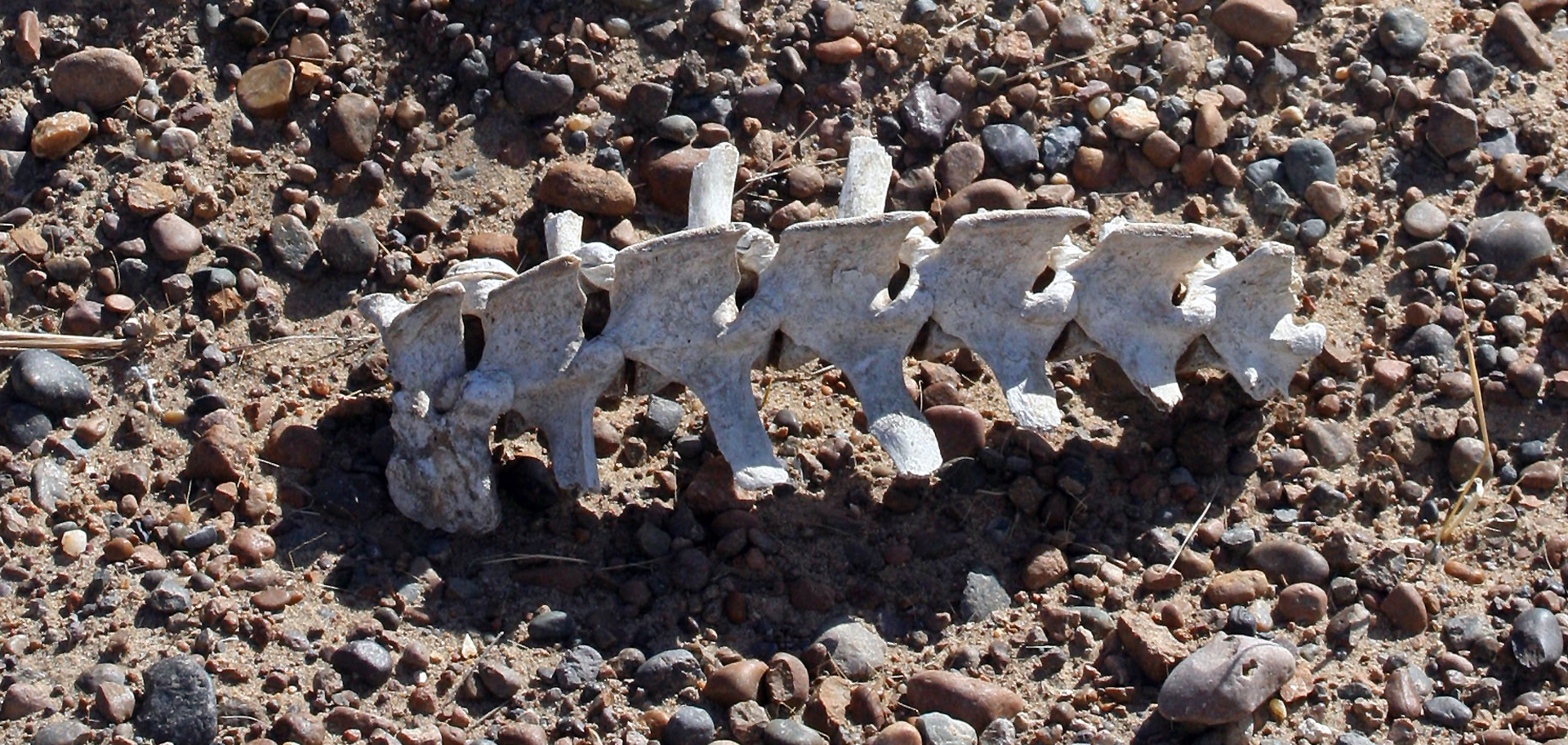
Bones are everywhere in Patagonia. They dry on the brown steppes and jut up from the desert’s gray floor. ©Candice Gaukel Andrews
Our guide strides up the rocky contours with the ease of one born to it, leading us over narrow footpaths that drop off on each side into the steep canyons and slots below. Climbing up and climbing down, switchback after switchback, I think I’ve put on a strong and brave front so far. My backpack is heavy; determined to capture this once-in-a-lifetime trip, I’m hauling two cameras and several weighty lenses, as well as the usual fleeces and rain gear. It’s been an hour and a half of dizzying height after dizzying height, and even though I’ve been afraid of heights for as far back as I can remember, I’ve hidden my terror. On the final, straight-edged climb up, however, I lose all footing and resort to grabbing on with all fours. I am now the one who’s petrified. Once I find the nerve to release my hand from the prickly bush I’ve taken hold of, our van driver hoists me up the rest of the way.
For three days prior to our visit to La Leona, our small van had shuddered and shook over the washboard highways of the UNESCO World Biosphere Reserve of Peninsula Valdes, almost as if we were traversing the rib cage of some sleeping giant. Small dust devils followed our vehicle down the gravel roads.
On the peninsula, there is no freshwater. Showers are taken in saltwater, and electricity is turned on only at night. We sleep in a remote lighthouse inn. On a beach at Punta Norte, my footsteps make the sound of tinkling, shattering glass as I step on the bright shells. Magellanic penguins are everywhere, and I photograph them standing under the hot sun, bleating from their shallow burrows in the ground or hurrying down to the waves.
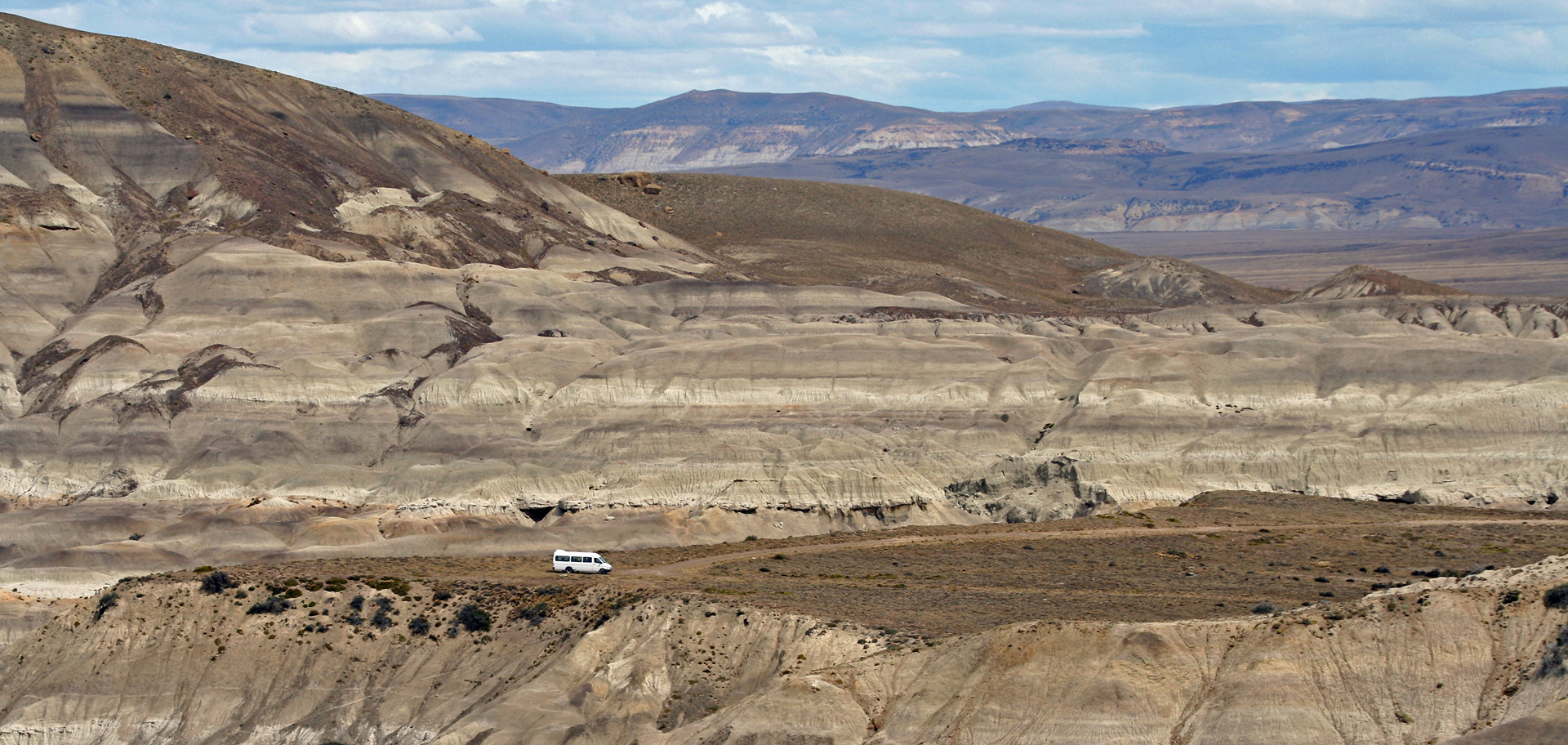
Being from Wisconsin, I don’t believe anything technically called a “forest” should be as windswept, thirsty and barren as a lunar landscape; nonetheless, it is in Argentina’s La Leona Petrified Forest. ©Candice Gaukel Andrews
I eat my sandwich lunch in front of the Atlantic Ocean. Along with the bread and meat, I swallow dust. We take a walk to look for orcas that will sometimes beach themselves intentionally to hunt baby sea lions. We do not see them; instead we find elephant seals lying along a sandbar. A gray fox wanders nearby. I didn’t know beaches could sound that way–that they could clink and bay, bark and bleat.
Riding on Steppes and Hiking on Glaciers
On my last evening on Peninsula Valdes, I go horseback riding on the steppes of Patagonia. My horse is big and fawn-colored, like the dust. During a slow sunset, we ride the narrow trail that sweeps down to the ocean on one side and stretches out to the horizon on scrub plain to the other. A few sheep and an occasional brown hare share the expanse with us. I look down and see tiny bones of other animals in the dust. A skull here; a perfect, complete hare skeleton there. Life is harsh, elemental and beautiful on these steppes, and I think I am falling in love with the bones of Argentina. On the ride back to our lighthouse home, we listen to tango music on the van’s CD player. Argentina—heat, death, passion.
After our stay on Peninsula Valdes, we make the three-hour drive to Trelew, followed by a two-hour flight to El Calafate and the now infamous La Leona Petrified Forest walk. If that walk was testing my mettle, the walk on Viedma Glacier near El Chalten and Bahia Tunel took the measure of my soul.
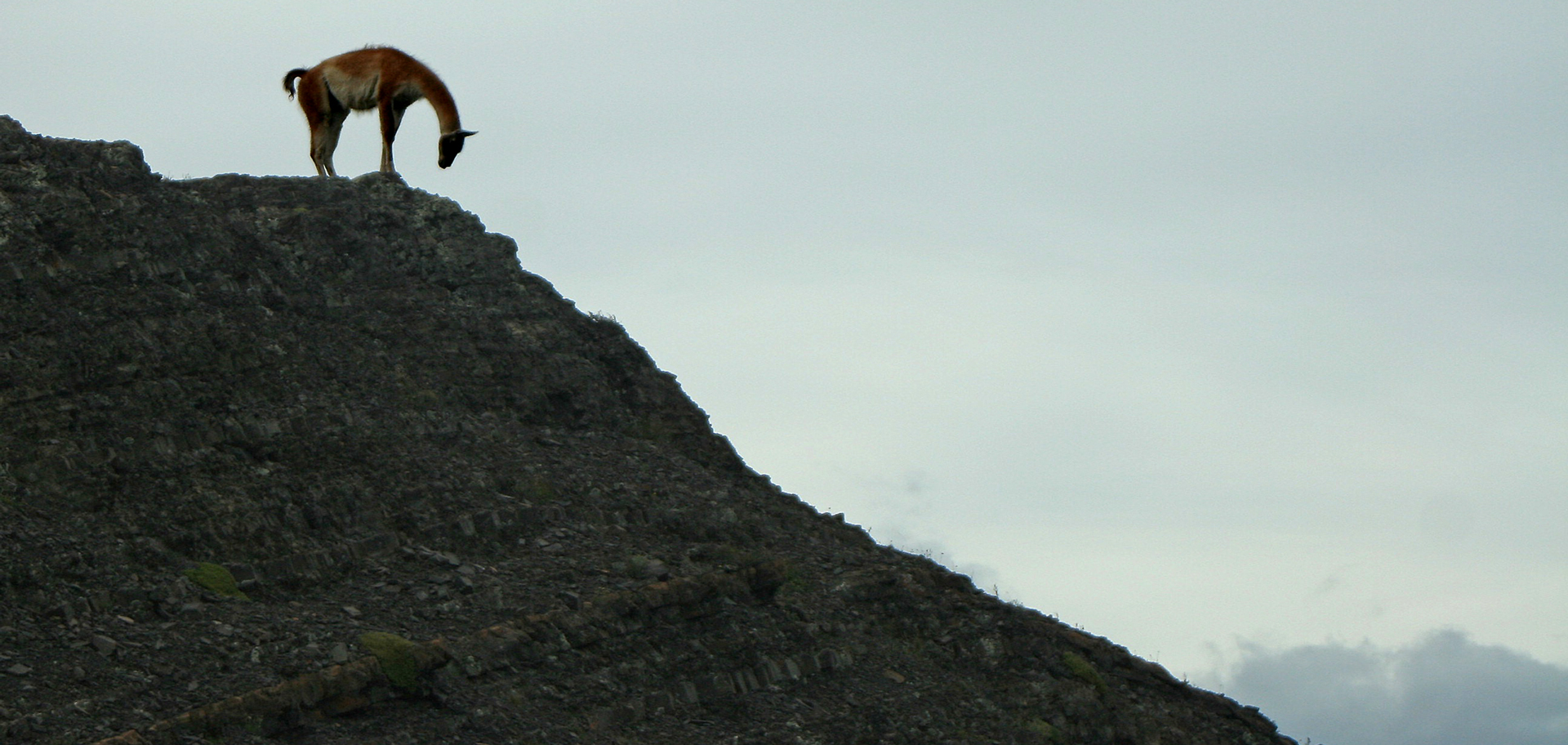
Guanacos are found throughout South America, living in dry, open country in the mountains or on the plains. A domesticated version of the guanaco is the llama. Another branch of the family tree is the alpaca, also a type of domesticated guanaco raised for its soft wool. ©Candice Gaukel Andrews
A boat transports us to the rocky front of the glacier, and after scrambling up the huge boulders, we sit down to put on our crampons. Stepping from rock to ice is stepping back in time. There are billions of years under my feet, when Pangea was new. We walk among the glacier’s caverns, peaks, hollows, crevasses and formations for two-and-a-half hours. We take a moment to sit down on this unfathomable landscape to drink a toast of Bailey’s Irish Cream, chilled by the glacier’s ice. It is the closest thing I’ve ever had to a holy drink.
On our way out of El Chalten back to El Calafate, I see Cerro Torre coming out of the clouds for the first time. Cerro Torre juts out of the young Andes Mountains, like a splinter from the spine of the continent, picked clean and worn shiny by the Patagonian winds.
A Floating Cemetery and a Very Rare Deer
In Punta Bandera, there is a blue cemetery—an iceberg cemetery. On the teal blue of Lago Argentino, the cerulean of hundreds of icebergs floats, backed by the ultramarine of the mountains. Through my camera lens, I see these bones of ice close up, poking through the skin surface of the lake.

Magellanic penguins live along the coastlines of South America, on both the Atlantic and Pacific shores. During the hot South American summers, they cool off by panting and standing with their flippers extended to catch a breeze. ©Candice Gaukel Andrews
In Chile’s Torres del Paine National Park, a UNESCO World Heritage site, we can see the French Glacier. It looks gray, like slippery skin newly shed from the vertebrae of the mountains. Standing in an alpine meadow, I can hear the avalanches on the other side of the mountain and see the Andean condors soaring overhead.
My last night in Chile, I take an early evening walk with our guide out to a peninsula, located a short distance from the lodge, which promises a direct view to Grey Glacier. I decide to take this last walk unencumbered, without my heavy backpack and camera. The sun will be setting soon anyway, I think. At the start of the path leading down to the water, which winds through a small forest, we spot a huemul, a Patagonian deer. There are only about 20 in the park and less than 1,500 left in the world. I begin to rethink my decision to leave my camera behind. The only thing to do now is drink in the moment and try to burn the image into my memory.
The peninsula is made of stones blown in by the winds. Just as we come down the path out of the woods and onto the peninsula, the setting sun illuminates the three needles of Torres del Paine. It is the first time during our stay in Patagonia that we can clearly see all three. From our vantage point, Grey Glacier slides out below them, and icebergs float all around us. It is a perfect moment.
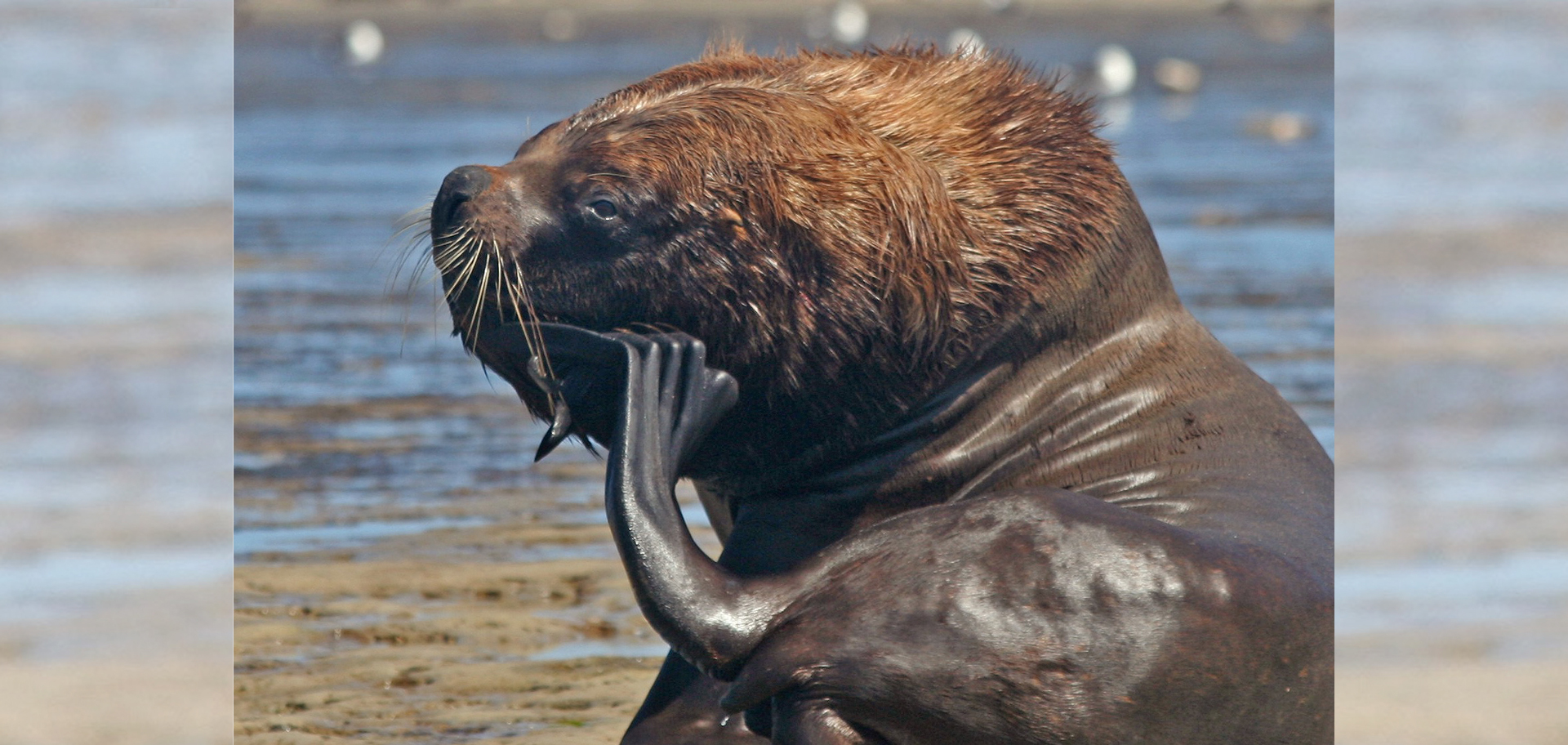
The southern sea lion (or South American sea lion) is found throughout the South American coastal region. In the past, they were hunted for food, oil and hides. Today, the threat is conflict with fisherman, who will shoot sea lions that enter their fisheries. ©Candice Gaukel Andrews
A perfect moment, that is, except I don’t have my camera. But maybe that’s what was meant to happen. I was meant to see this last evening as a writer, not as a photographer. It’s something I’ve felt in my bones for a while now.
Here’s to finding your true places and natural habitats,
Candy
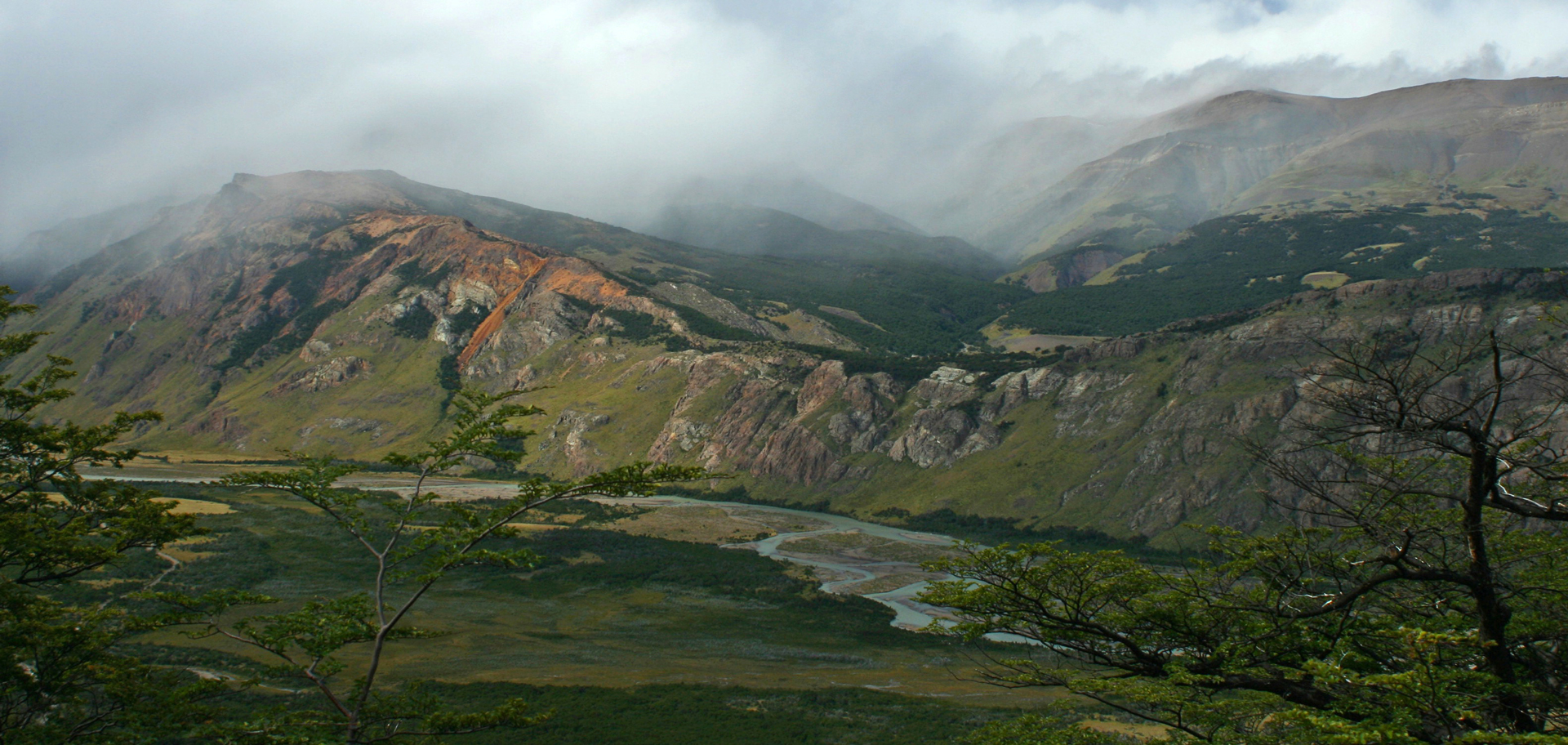
Geologists believe that at one time, Patagonia was part of the Antarctic continent. ©Candice Gaukel Andrews
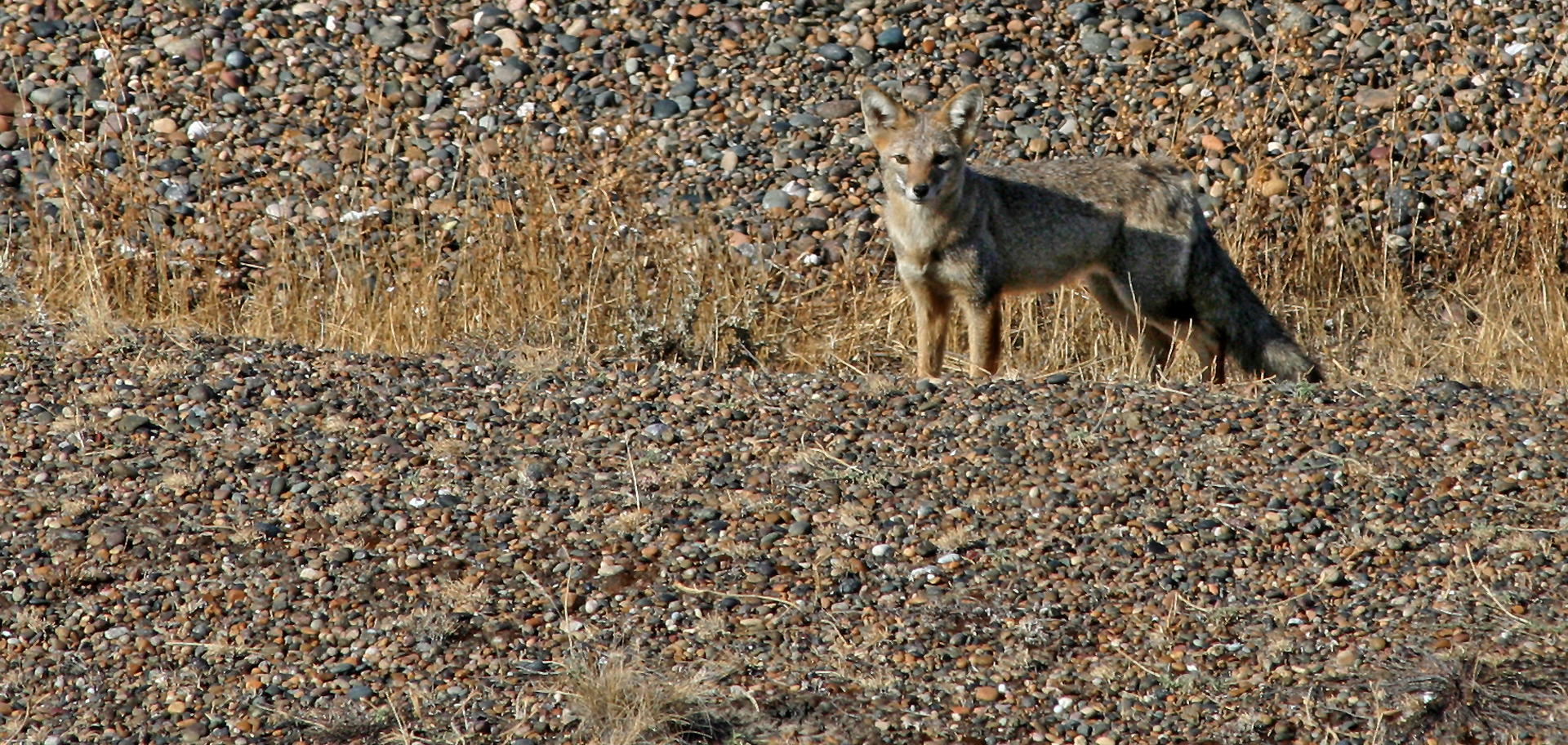
On Peninsula Valdes, a gray fox wanders. ©Candice Gaukel Andrews

First brought to Patagonia by Spanish settlers, horses have become as much a part of the landscape as the Andes Mountains. Gauchos later bred a powerful, sure-footed horse called the “criollo” to help herd livestock. Hundreds of these hardy horses now roam wild. ©Candice Gaukel Andrews

A walk on the Viedma Glacier is like stepping back in time. There are billions of years under my feet, a time when Pangaea was new. ©Candice Gaukel Andrews

The Perito Moreno Glacier in Los Glaciares National Park, Argentina, is one of the largest glaciers in South America. Its terminus is 3 miles wide, and its average height is 240 feet above the surface of the water of Lake Argentino. ©Candice Gaukel Andrews
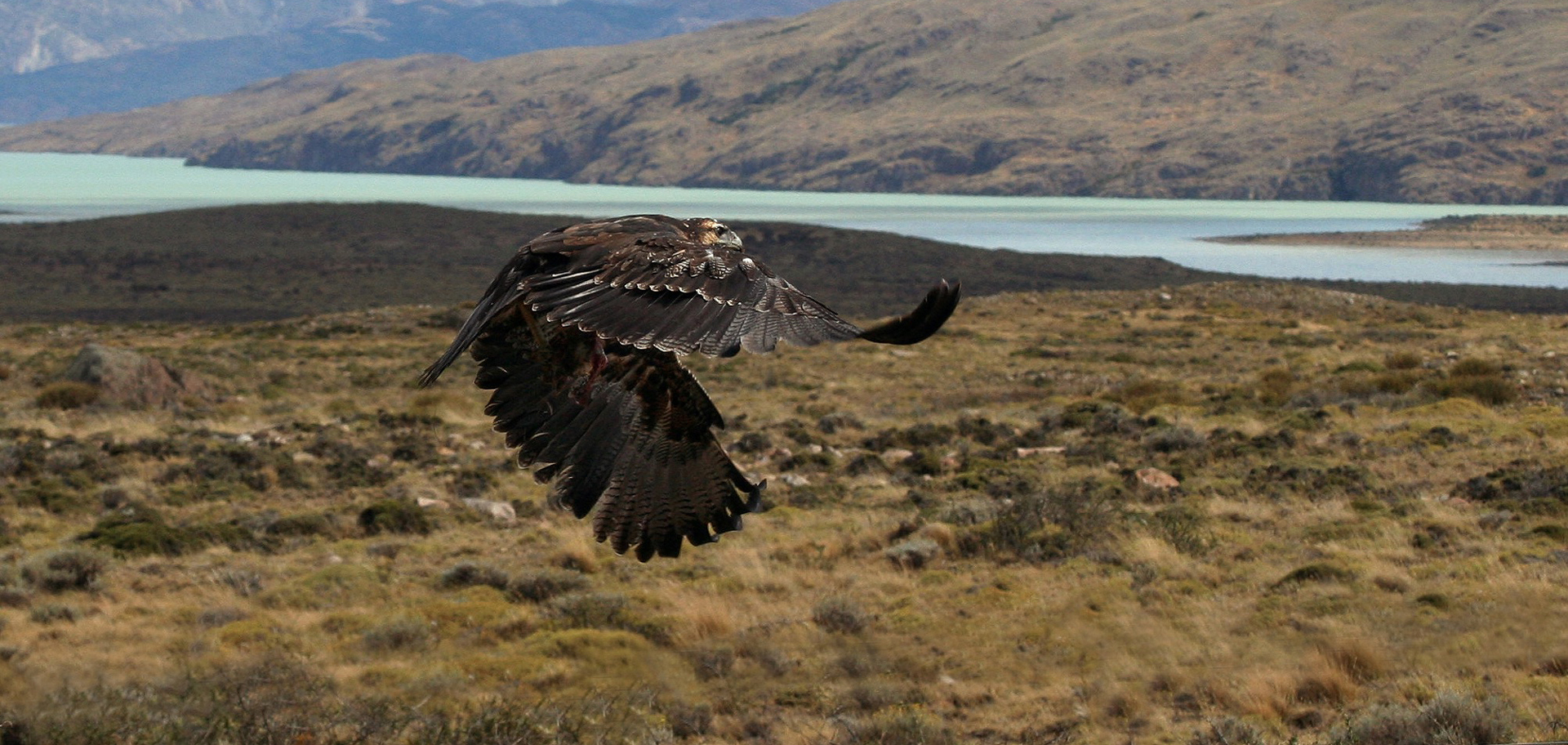
The birdlife of Patagonia is rich and diverse. ©Candice Gaukel Andrews
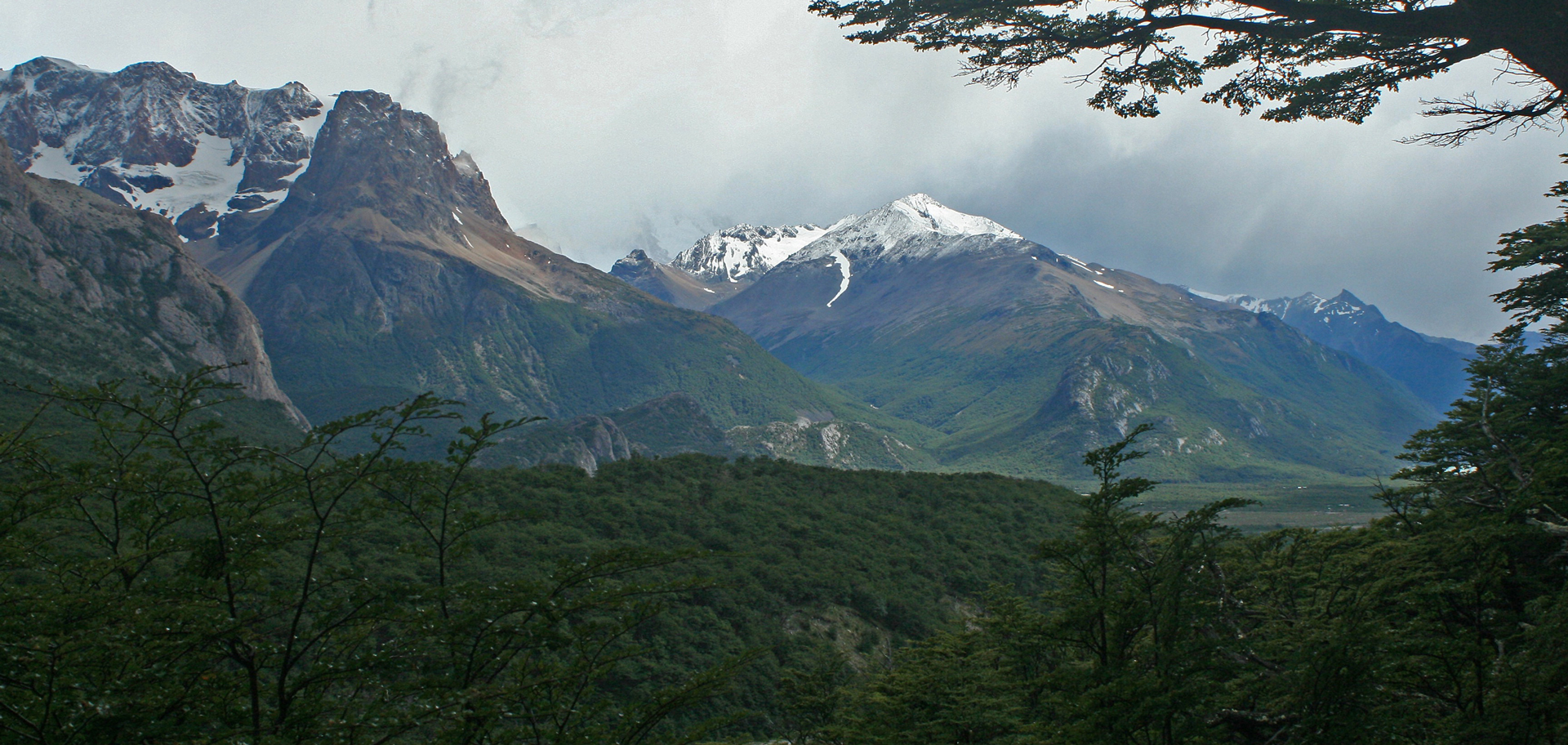
Patagonia is still the unspoiled frontier of South America. ©Candice Gaukel Andrews
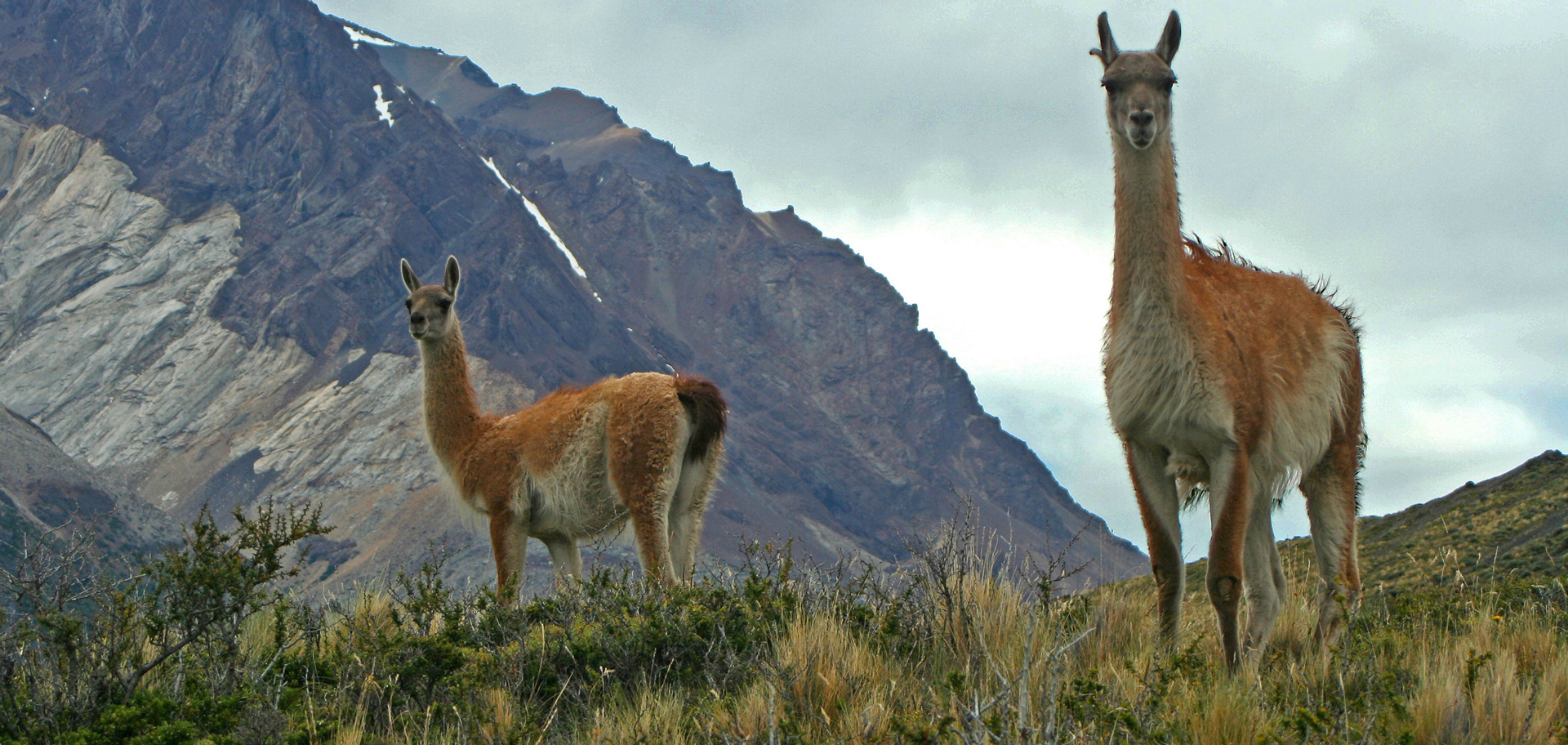
A pair of guanacos greet me on a mountain hike. ©Candice Gaukel Andrews
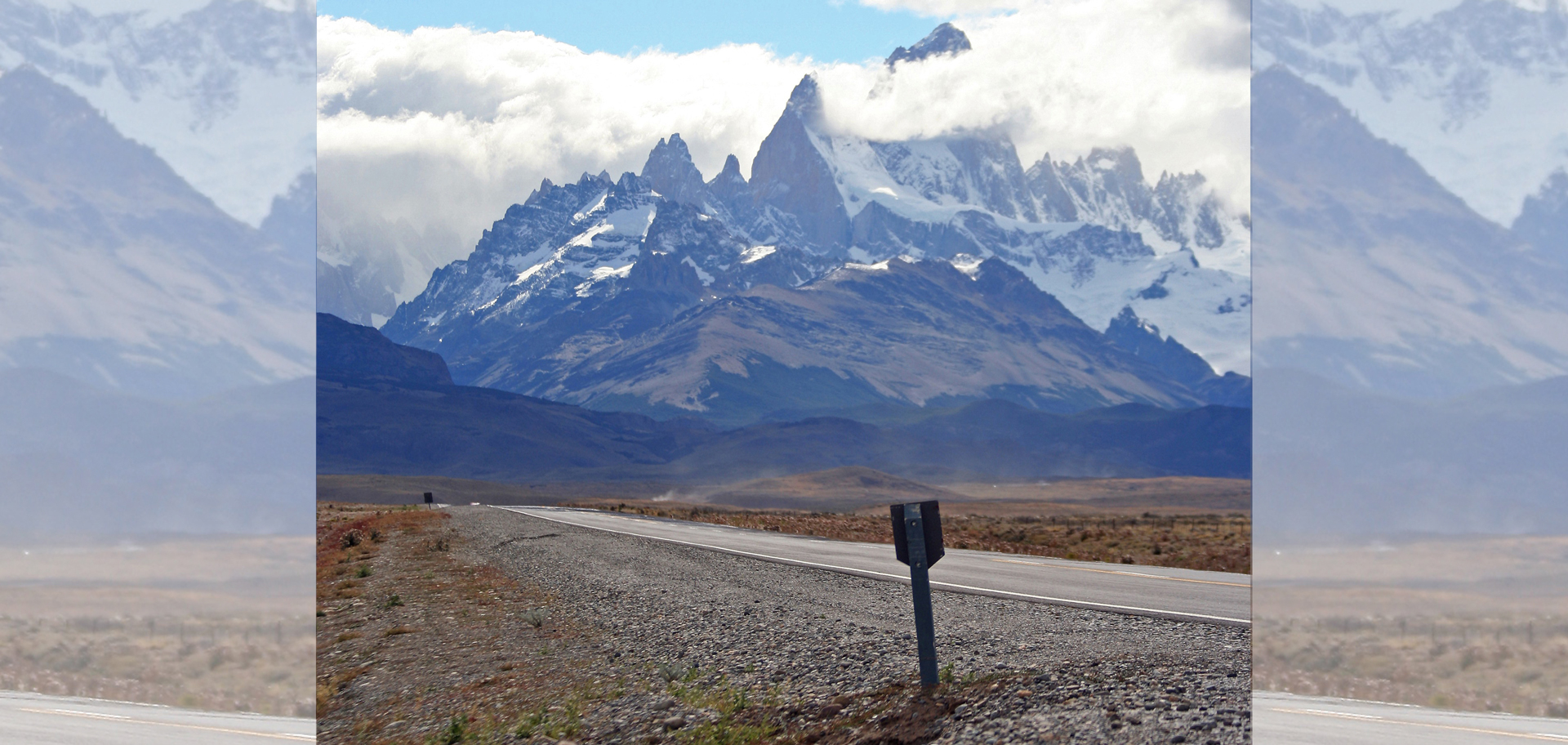
The views on a Patagonia road trip are unparalleled; I highly recommend one. ©Candice Gaukel Andrews
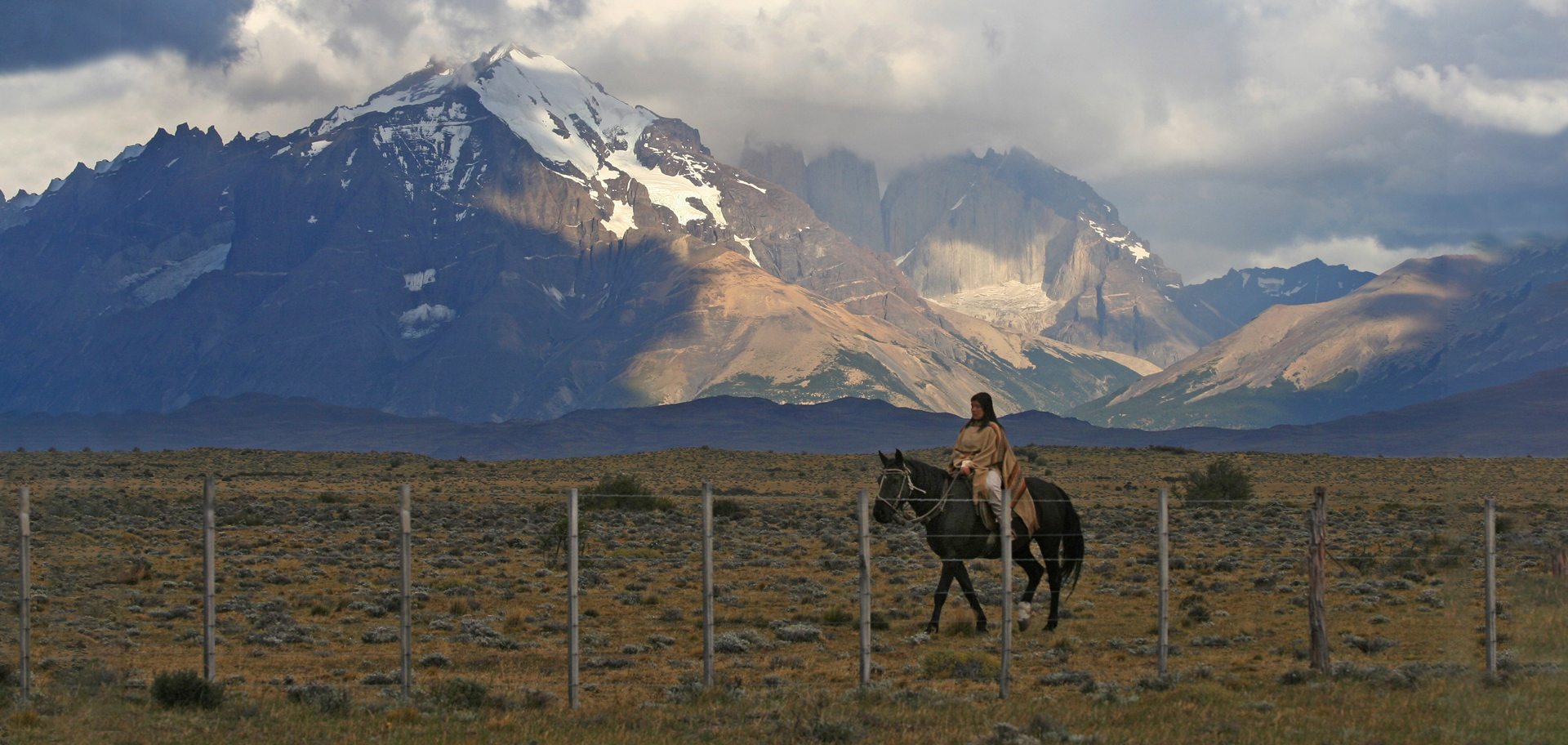
A traditionally dressed woman rides her horse on the Patagonia Steppe. ©Candice Gaukel Andrews
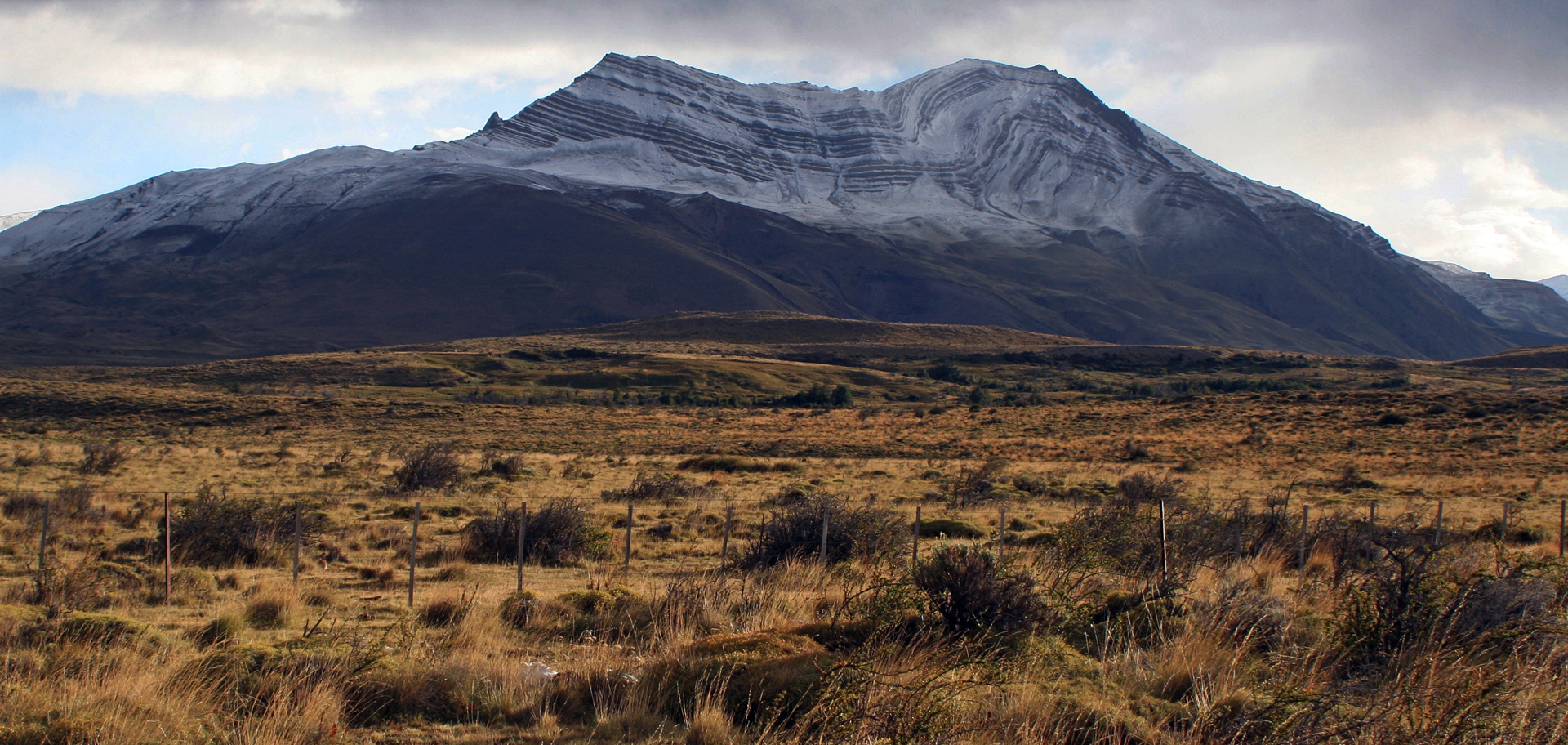
The mesmerizing landscapes look like paintings. ©Candice Gaukel Andrews
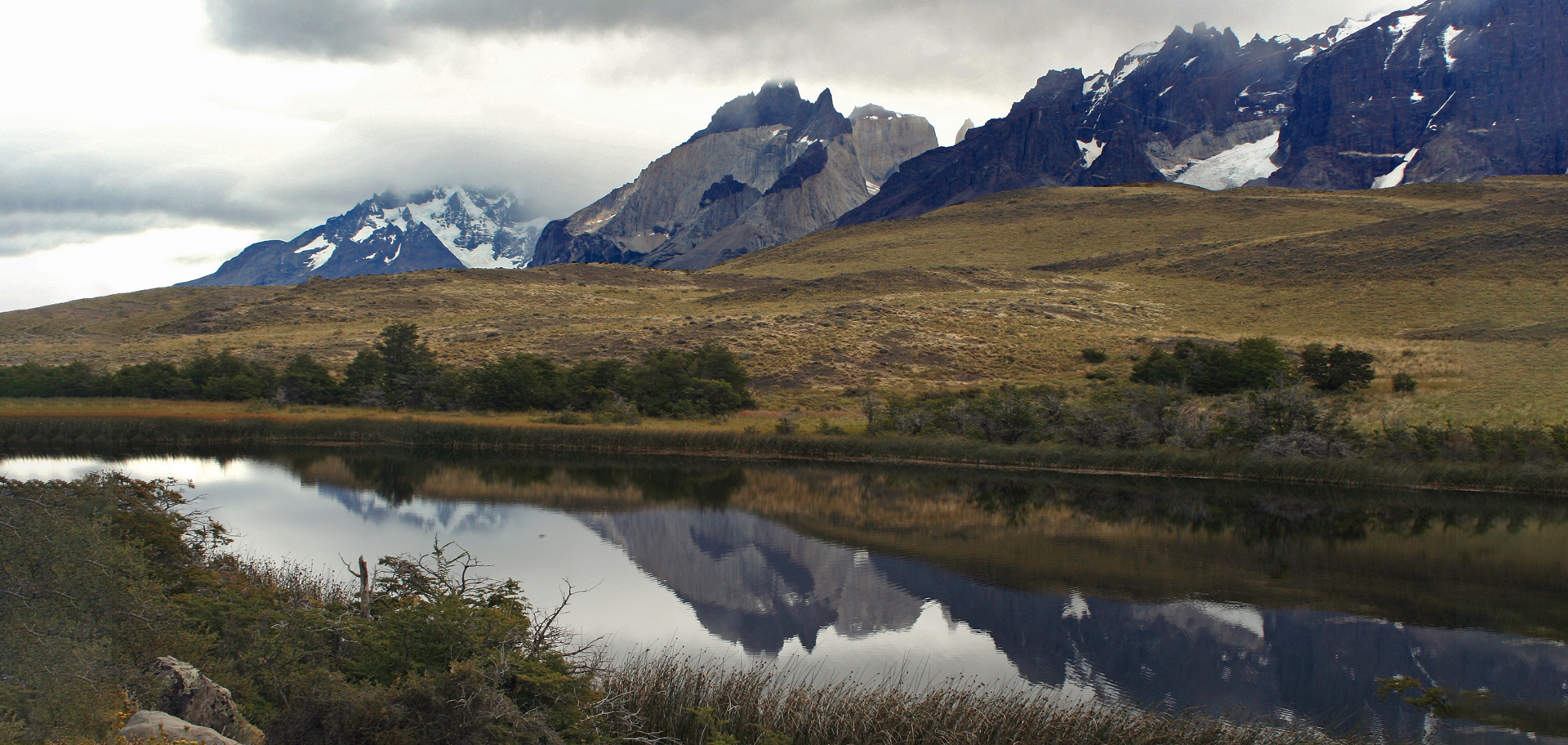
Perfect moments seem to come often in Patagonia—camera along or not. ©Candice Gaukel Andrews
The post Getting Down to the Bones in Patagonia: A Photo Diary first appeared on Good Nature Travel Blog.

After you’ve purchased a new pair of sports shoes, don’t throw away the old ones….
The post We Earthlings: Don’t Throw Away Your Sports Shoes appeared first on Earth911.

You jog in them. Compete in them. Maybe even meet your friend for lunch in…
The post Recycling Mystery: How To Recycle Your Tennis Shoes appeared first on Earth911.

Replacing all your old stuff with new green products scratches the consumer itch and feels…
The post When and How To Get Rid of Your Old Car appeared first on Earth911.
Alaska’s wild landscapes provide a stunning backdrop for capturing unforgettable bear encounters, especially in Lake Clark National Park. Whether you’re chasing the golden-hour light or waiting for that perfect bear profile, these moments are the essence of wildlife photography.
Guided by experts like Nat Hab Expedition Leader and Photo Expedition Director Mike Hillman, photographers of every level—and with any kind of gear—have the opportunity to frame extraordinary images that showcase the beauty and power of these inspiring animals.
In the video below, Mike reminds us, “Whatever you happen to have with you is going to be the best camera… it’s all about your eye as an artist.” Explore these essential photo tips, capture the bears in their natural habitat, and return home with a collection of breathtaking memories.
Read on for 11 spectacular bear photos you won’t want to miss on your next Alaskan adventure: From close-up details of a bear’s fur and claws to dynamic action shots of bears wrestling, each image tells a story of the bears in their natural habitat and come complete with How To Tips from Mike.
(function(d,u,ac){var s=d.createElement(‘script’);s.type=’text/javascript’;s.src=’https://a.omappapi.com/app/js/api.min.js’;s.async=true;s.dataset.user=u;s.dataset.campaign=ac;d.getElementsByTagName(‘head’)[0].appendChild(s);})(document,123366,’pz5de0mj31uynycbjlpy’);
Bear Silhouettes in Golden Hour Light
Alaska’s extended summer golden hour provides photographers with unique opportunities to capture stunning bear silhouettes against soft, angled light. The long, gradual sunset offers plenty of time to experiment with effects and perfect your shots.
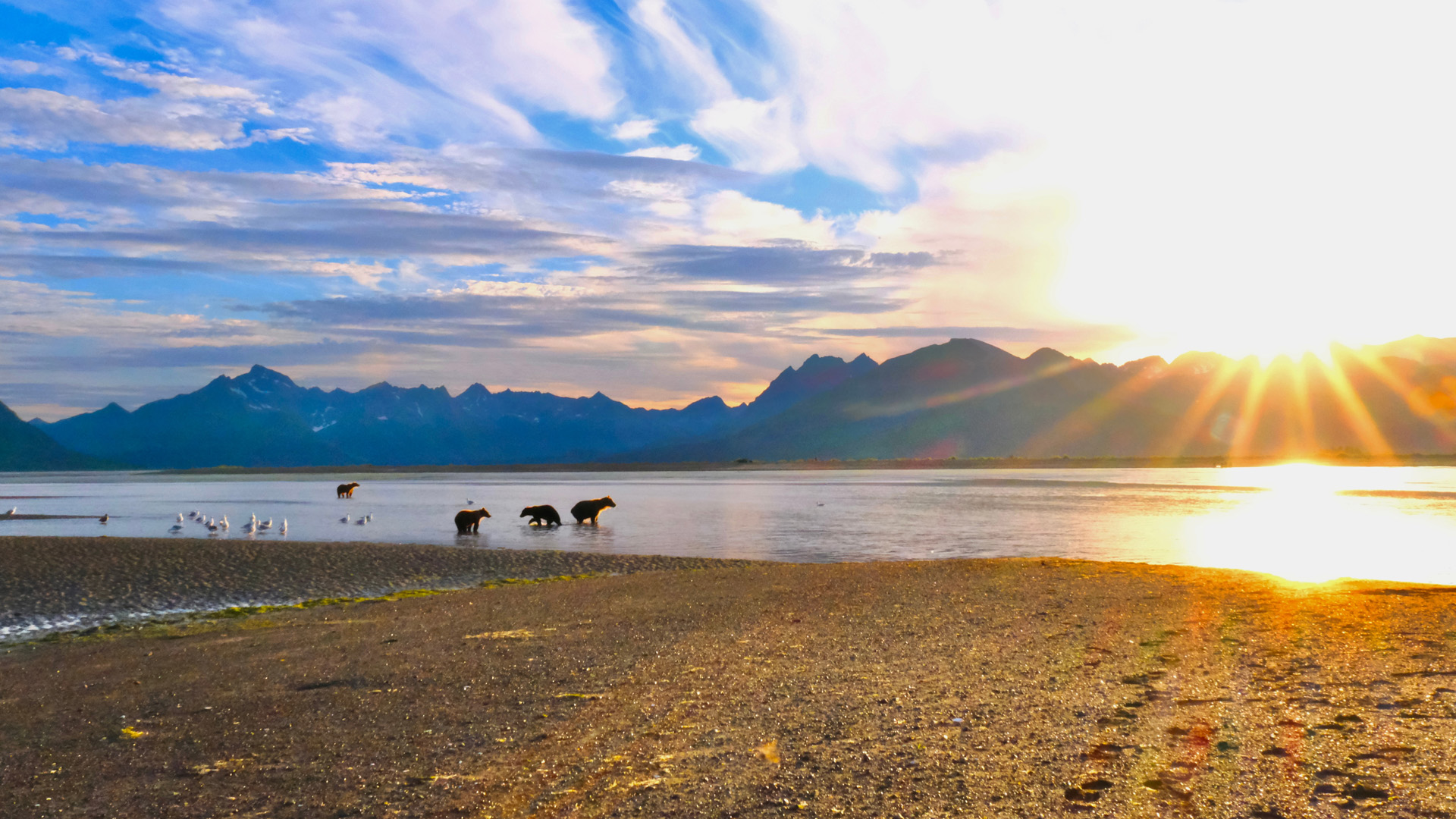
Nat Hab Expedition Leader © Arthur Kampmann
Even cloud cover can add interesting layers to the image. Mike explains, “Sun coming out through one of the holes in the clouds… is… great. That’ll give us some beautiful kind-of silhouette light for our bears.” This provides a unique opportunity for silhouette photography, where the bears stand out dramatically against the glowing horizon.
- Look for cloudy breaks: When the sun peeks through the clouds, it creates dramatic lighting.
- Position your camera low: Shooting from a lower angle highlights the bear against the sky.
- Capture multiple shots: Use burst mode to take a series of images as the bear moves.
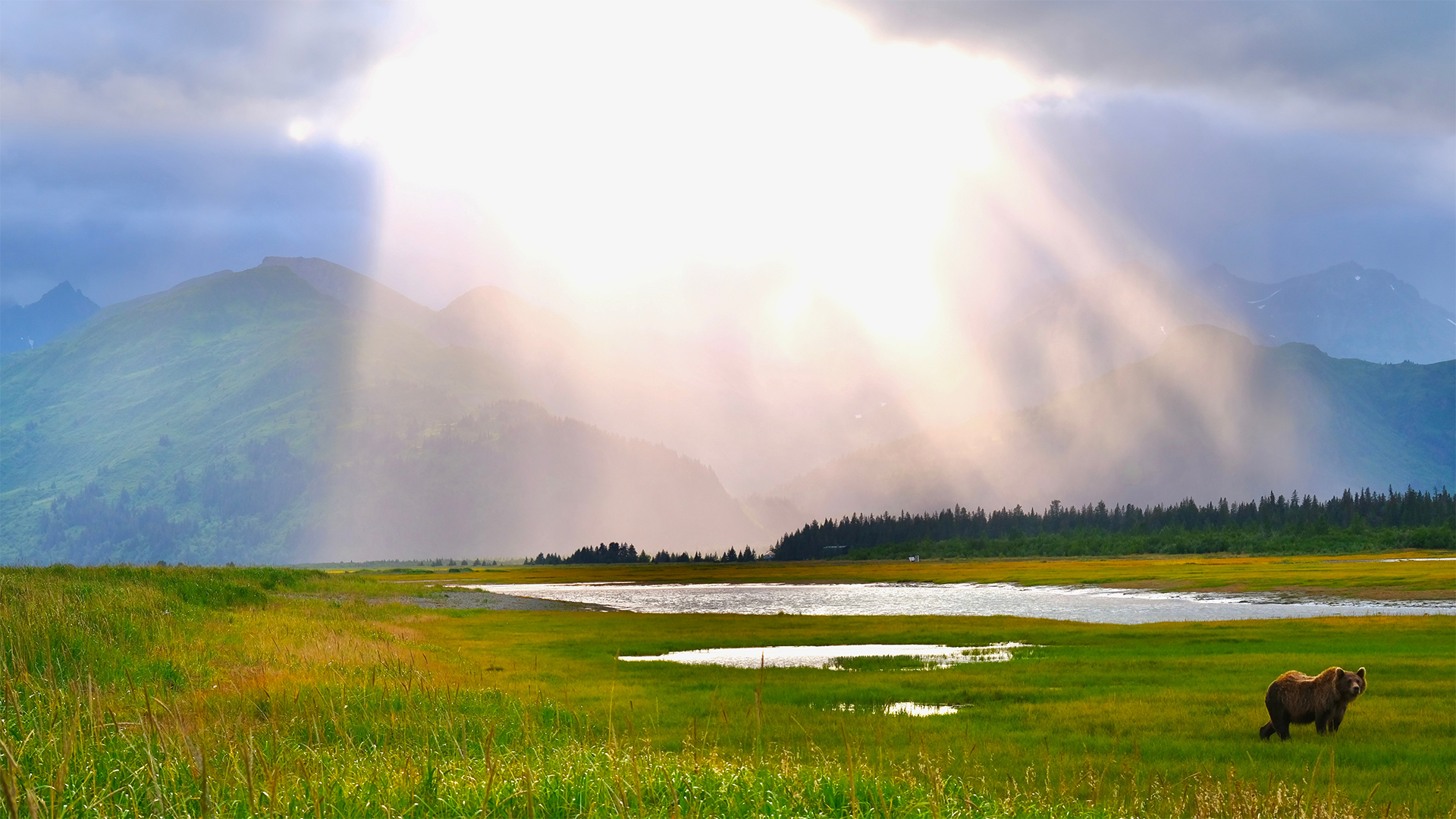
Nat Hab Expedition Leader © Arthur Kampmann
Tip: Pay close attention to how clouds interact with the light—this can create dynamic shifts in tone and mood for your Alaskan bear silhouette.
Bears in the Landscape: Tell a Broader Story
Incorporating Alaska’s dramatic mountain ranges into your bear photography adds context and grandeur to your images.
Capturing the interaction between the wildlife and the surrounding environment creates a more compelling visual narrative. You can tell a more complex story of the bears in their environment by including Alaska’s stunning mountain ranges, for example, in the shot.
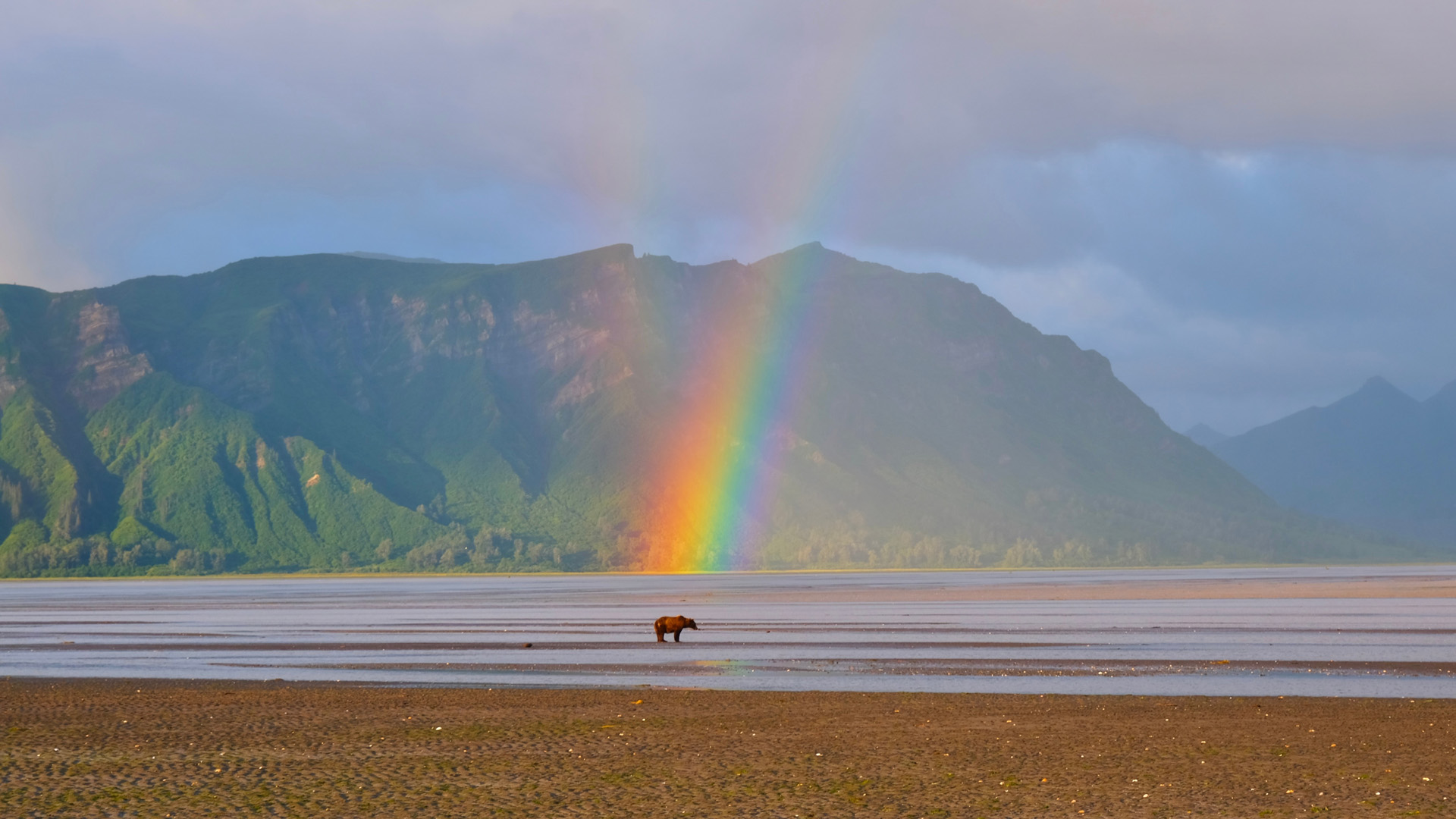
Nat Hab Expedition Leader © Arthur Kampmann
Mike emphasizes the importance of setting: “It’s important here in Lake Clark National Park to not only tell the story of up-close bears but also to tell the story of bears in the landscape. We have the beautiful mountain ranges here in the Aleutian Range as well as the Alaska Range.”
- Frame with the landscape in mind: Position the mountains or other natural elements as a background to your bear subject.
- Use a wide-angle lens: Capture more of the environment to give a sense of scale.
- Look for reflective surfaces: Water bodies and fields can add a layer of depth to your images.
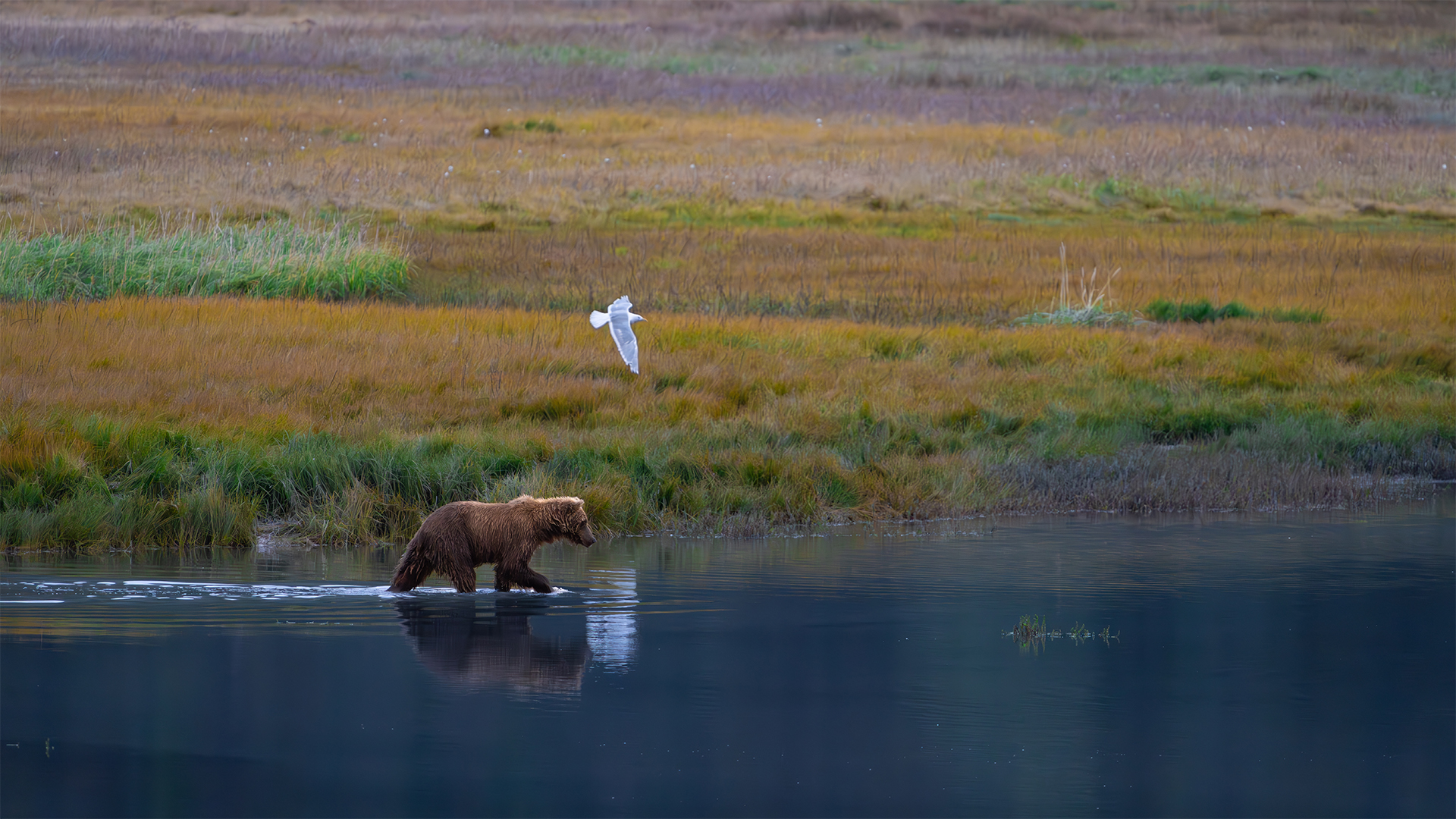
Nat Hab Staff © Megan Brief
Tip: Use the rule of thirds to balance the bear and the landscape, but don’t hesitate to break the rule when the scene calls for more emphasis on the mountains. If the mountains dominate the scene, focus more on setting up a balanced landscape composition.
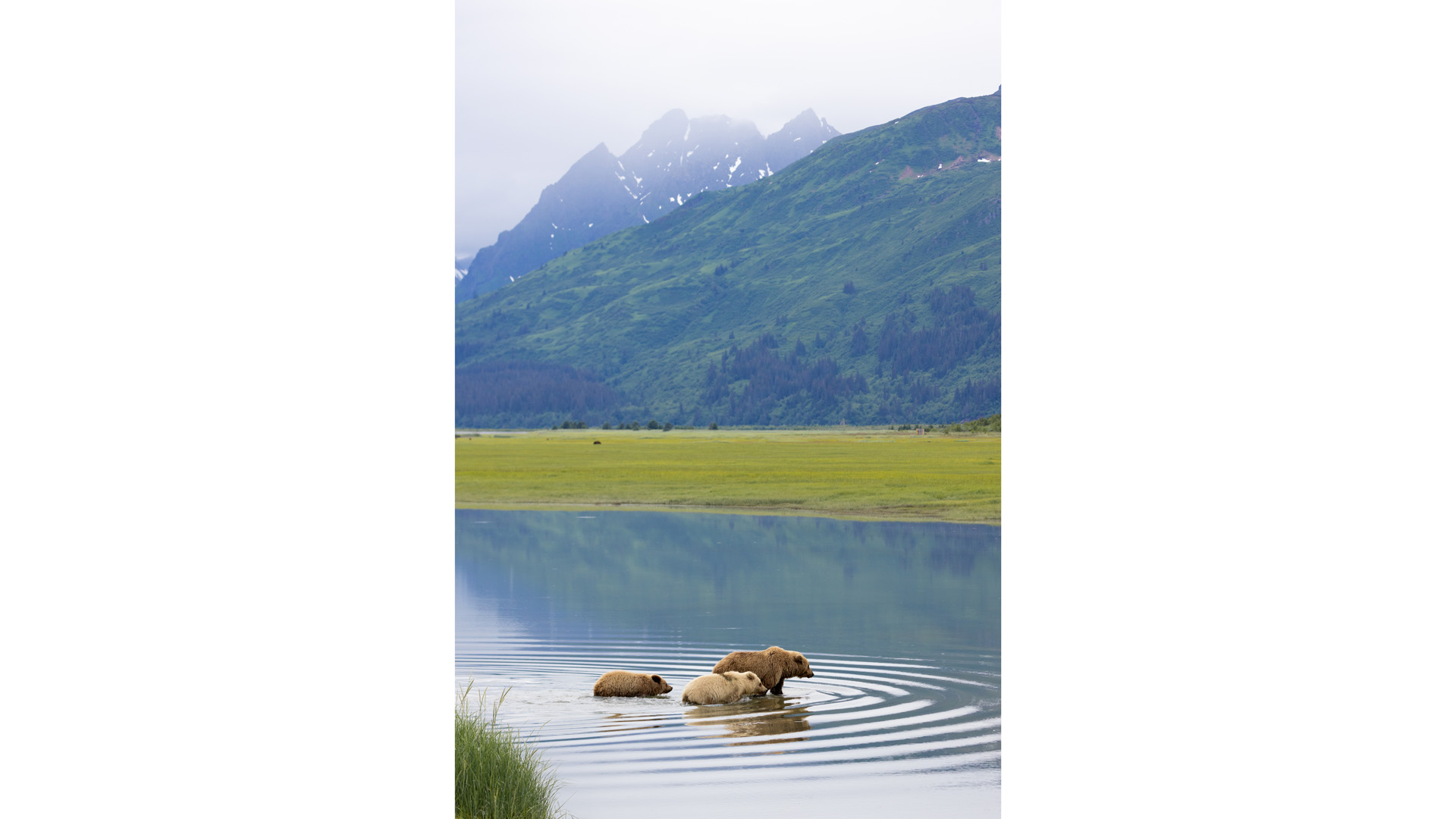
Nat Hab Expedition Leader © Rylee Jensen
Patience for Bear Profiles
For bear silhouettes, patience is key. Waiting for the perfect moment to capture a clean profile can make all the difference. “You may have to wait for those bears to move into just the right position so they’re silhouetted,” Hillman advises, “so you get that beautiful bear profile.”
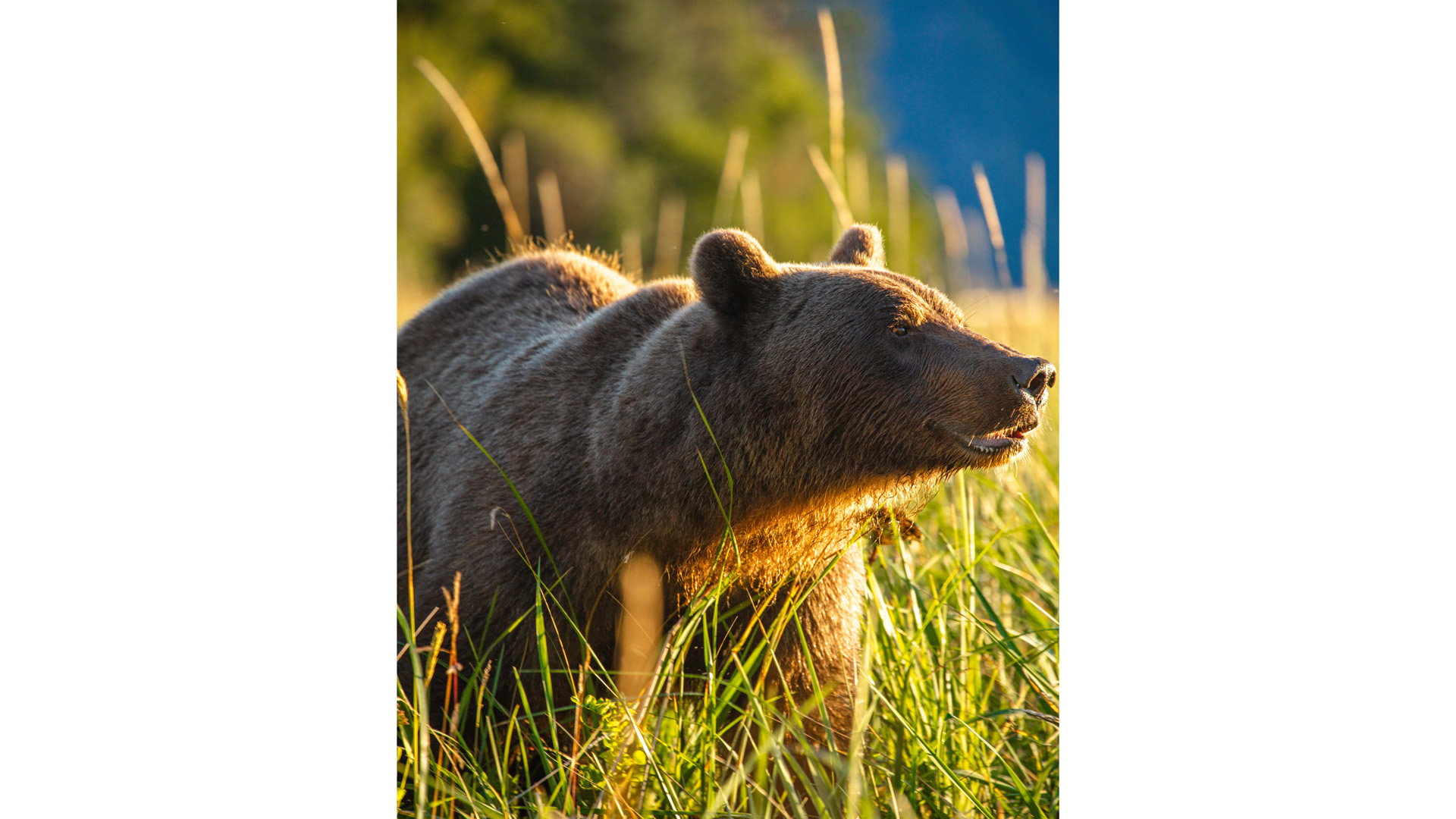
Nat Hab Expedition Leader © Jessica Morgan
A clear silhouette can ensure the bear is instantly recognizable and also highlight its powerful presence in the scene.
- Set your camera in advance: Prepare your settings based on the available light and expected bear movement.
- Wait for the right pose: A clear, recognizable bear profile can elevate your image.
- Shoot in burst mode: This ensures you capture multiple poses during movement.
Tip: Focus on the angle of the light, and look for moments when the bear’s profile stands out against a softly lit background.
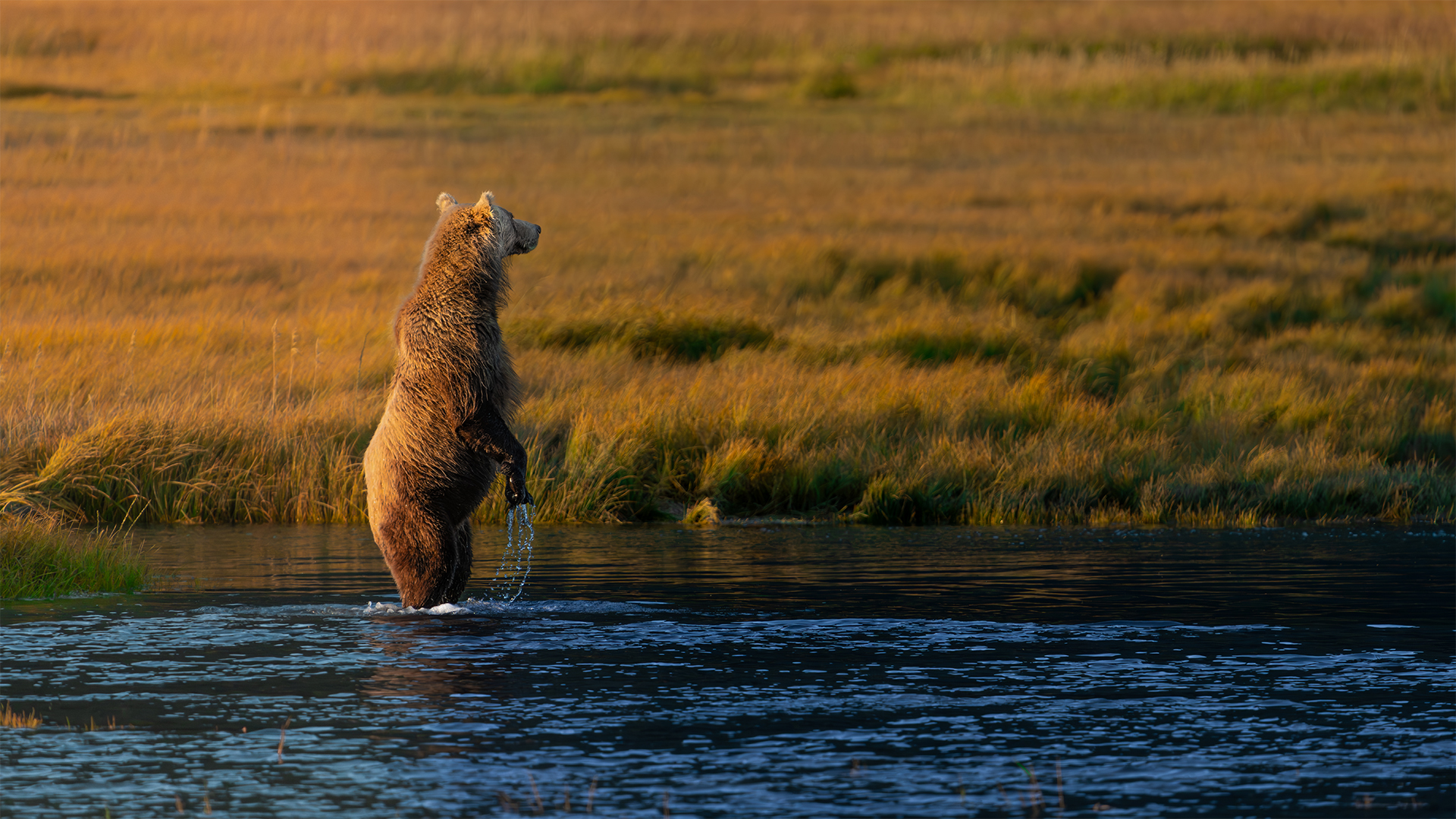
Nat Hab Staff © Megan Brief
Action Shots: Bears Wrestling
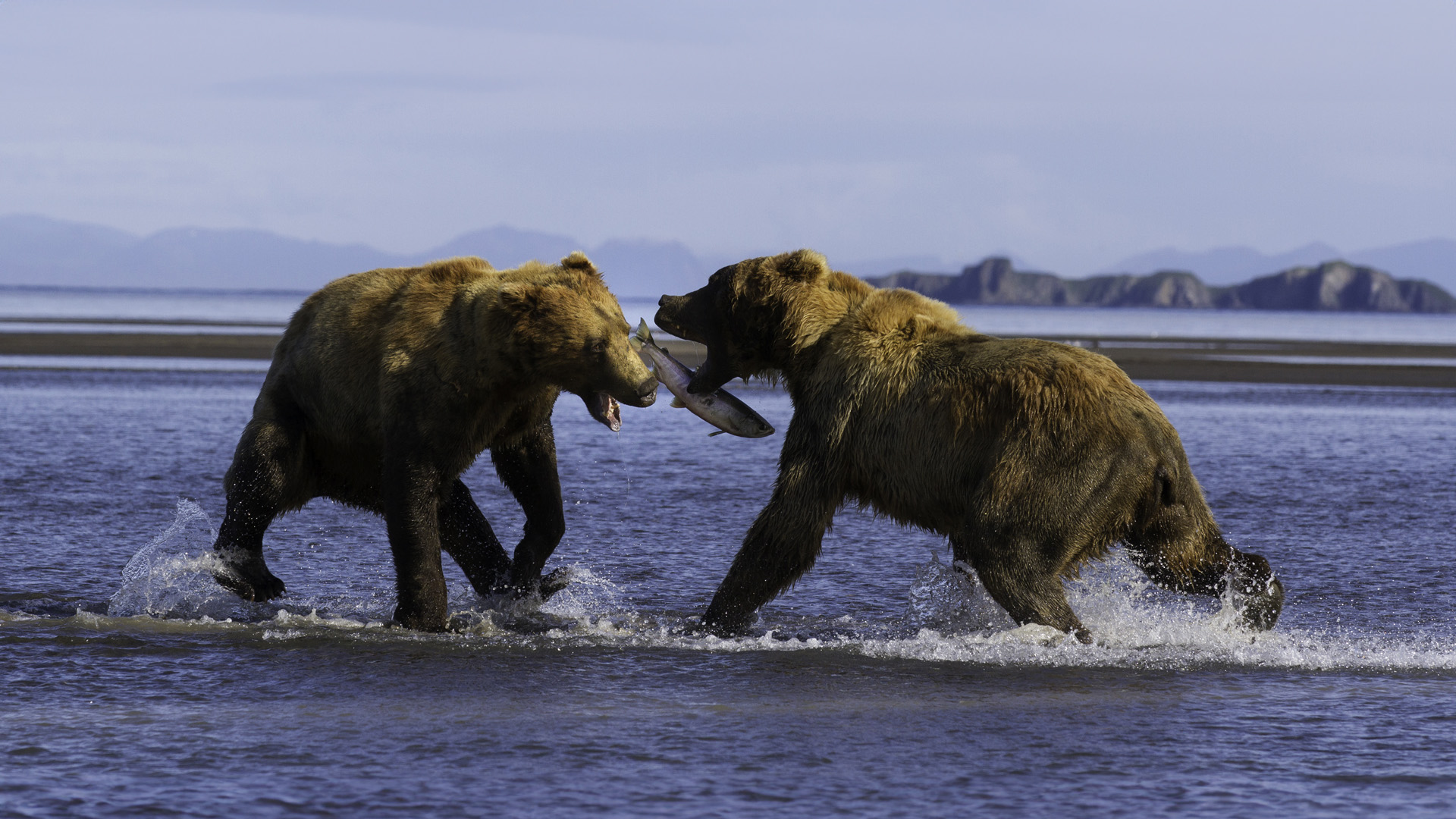
Bears wrestling or play-fighting provides fantastic action shot opportunities. To capture these dynamic moments, Mike recommends starting with “shutter speeds much higher. 1/1000, 1/2000 is oftentimes where you want to start.”
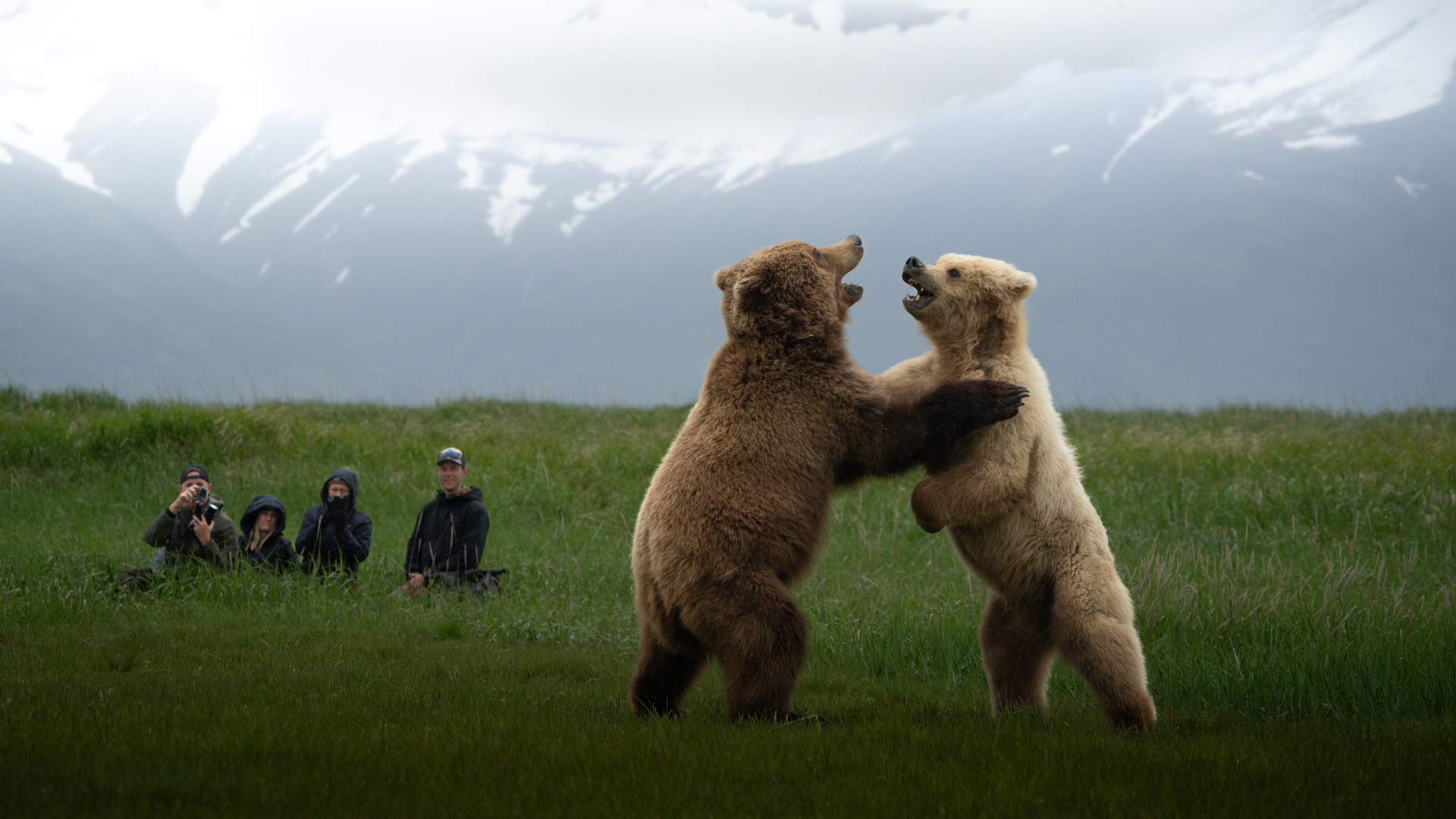
Nat Hab Expedition Leader © Justin Gibson
- Increase shutter speed: Start at 1/1000 or 1/2000 to freeze fast movements.
- Use continuous autofocus: This helps keep the wrestling bears in focus as they move.
- Look for playful behavior: Anticipate interactions like play-fighting or sparring.
© Ralph Lee Hopkins
Tip: Be ready to adjust your aperture and ISO settings as needed to maintain the right exposure in changing light conditions. Quick reflexes and high shutter speeds are key to freezing the action in sharp detail.
Close-Up Shots of Bears’ Faces and Details
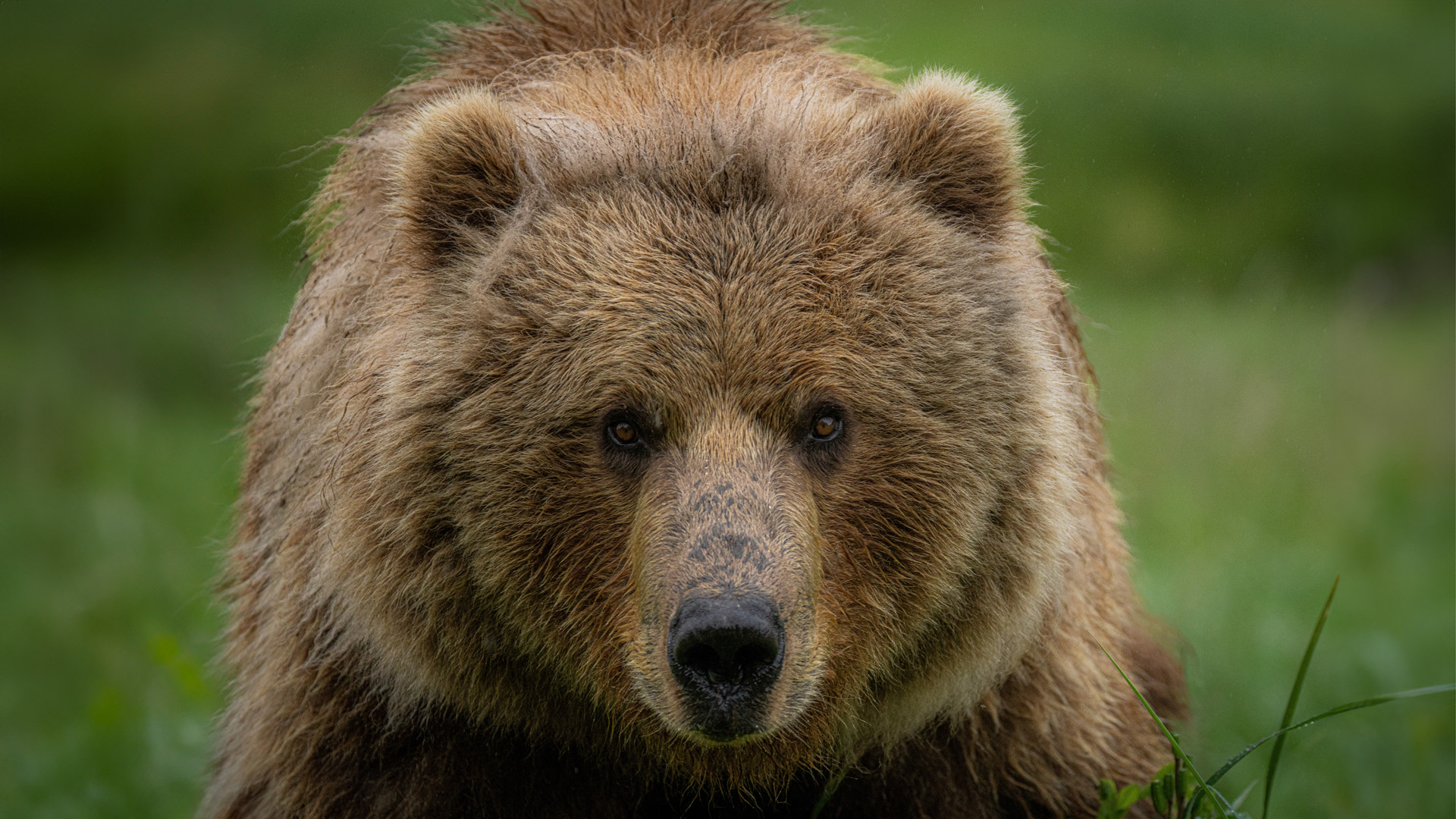
Zooming in on the intricate details—like fur, claws, or even the bears’ eyes—brings an intimate perspective to your wildlife shots. This is where precision matters.
Nat Hab Guest © Seth Webster
“Try close-ups of the fur or some details that make bears, bears… their claws, their ears, their teeth, even their nose,” Mike suggests.
- Use a telephoto lens: Zoom in without disturbing the bear’s natural behavior.
- Focus on texture: Capture the texture of fur or the sharpness of claws.
- Use a mid-range f-stop: Shoot around f/6.3 to f/7.1 for detailed, sharp close-ups.
Nat Hab Staff © Dana Cama
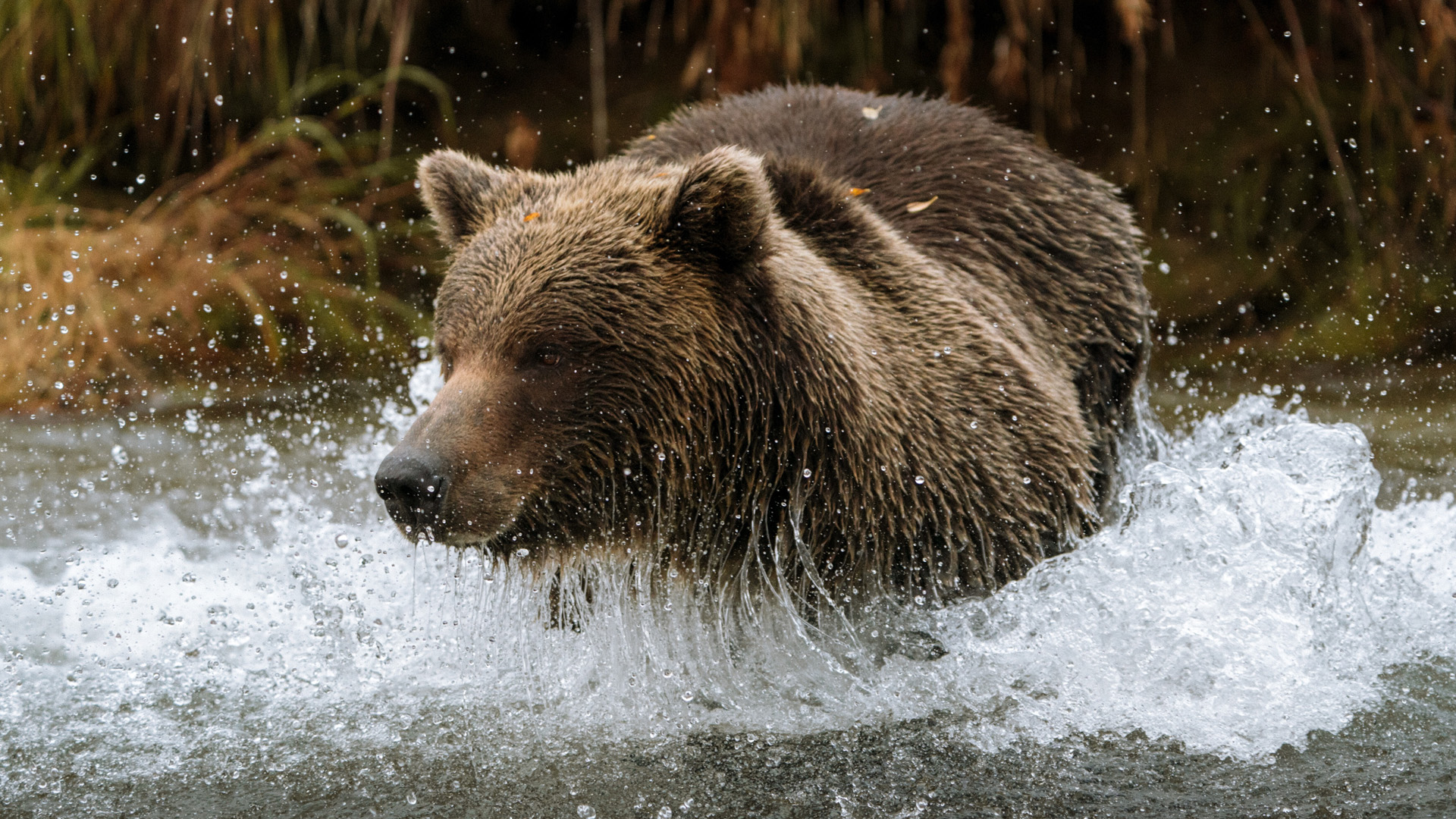
Tip: Keep your subject sharp by using manual focus if needed, especially for close-ups that highlight small features like the bear’s nose or eyes. Balancing depth of field and sharpness to bring out small features.
Bears in Tall Grass
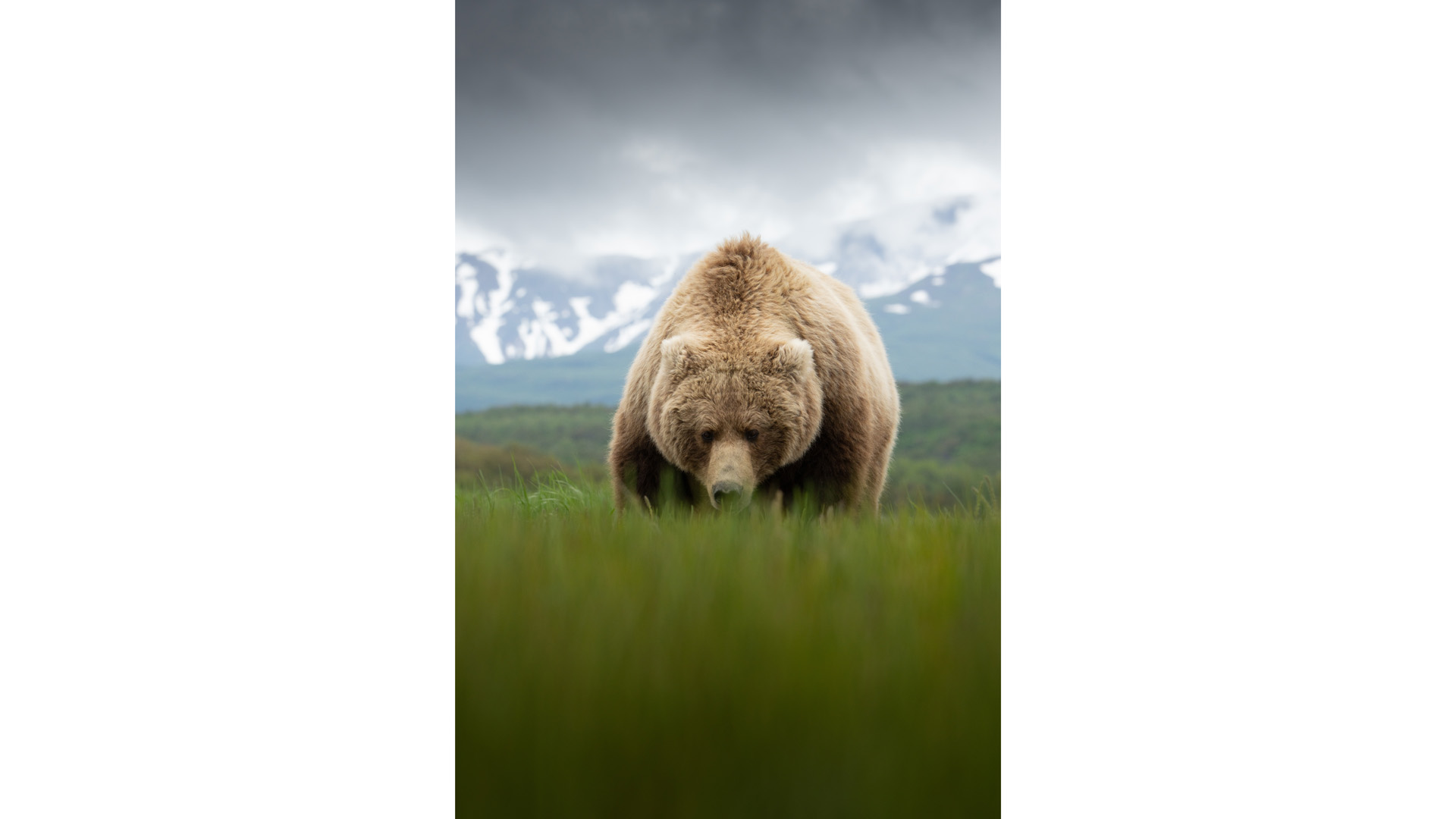
Photographing bears in tall grass can be challenging, but by adjusting your position and focus, you can create captivating shots.
Nat Hab Expedition Leader © Justin Gibson
Mike explains: “The grass is quite tall, and if we’re too low, we’re going to just be mired in the grass. So we’re getting a little bit higher up.”
- Elevate your camera position: Shooting from a higher angle helps keep the bear in focus above the grass.
- Use autofocus tracking: Follow the bear’s movements to maintain clarity in tall grass.
- Manually refocus if needed: Reset focus if the grass obscures the bear or catches the focus.
Tip: If your camera doesn’t have tracking, you can reset focus manually or use back-button focus to ensure clarity in your shot. Try shooting above the bear’s eye level to frame it properly against the grass.
Super Telephoto Shots of Bears
Using a super-telephoto lens allows you to capture close, detailed shots while maintaining a safe distance. These images can offer a unique perspective on the bear’s behavior.
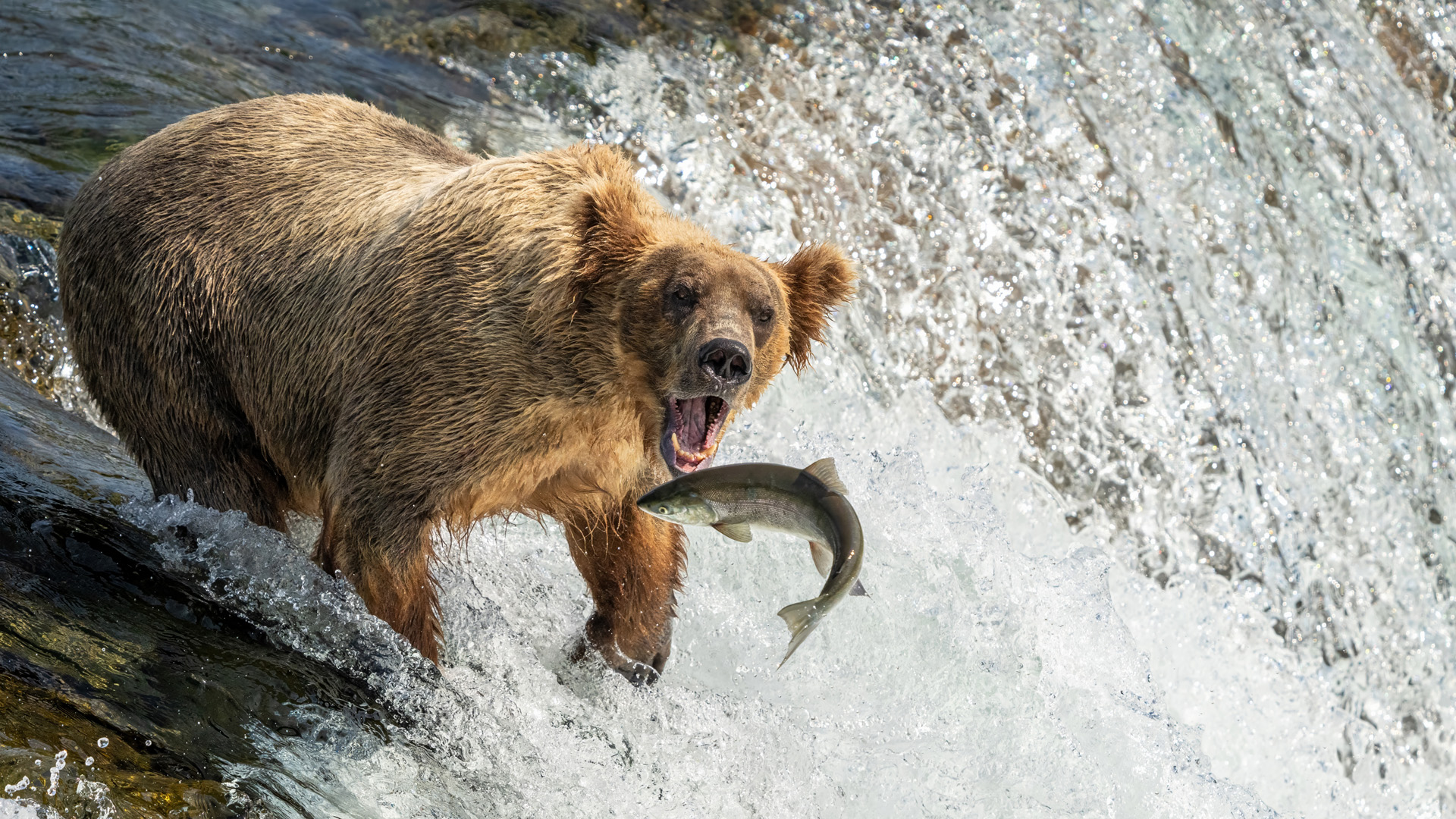
Nat Hab Expedition Leader and Photo Expedition Director © Mike Hillman
“I’m looking for these bears as they lift their head up from grazing, either looking towards me or looking towards the open side of the frame,” Mike shares about his technique.
- Adjust shutter speed: Use a speed around 1/400 to 1/600, depending on lighting conditions.
- Create bokeh: Lower the f-stop to blur the background to create a beautiful bokeh effect around the subject and make the bear stand out.
Tip: Look for moments when the bear lifts its head or interacts with the environment to create a more dynamic shot.
Vertical Bear Portrait Shots
Switching to portrait mode is an excellent way to emphasize the height and presence of a bear, especially when they are standing or walking toward you.
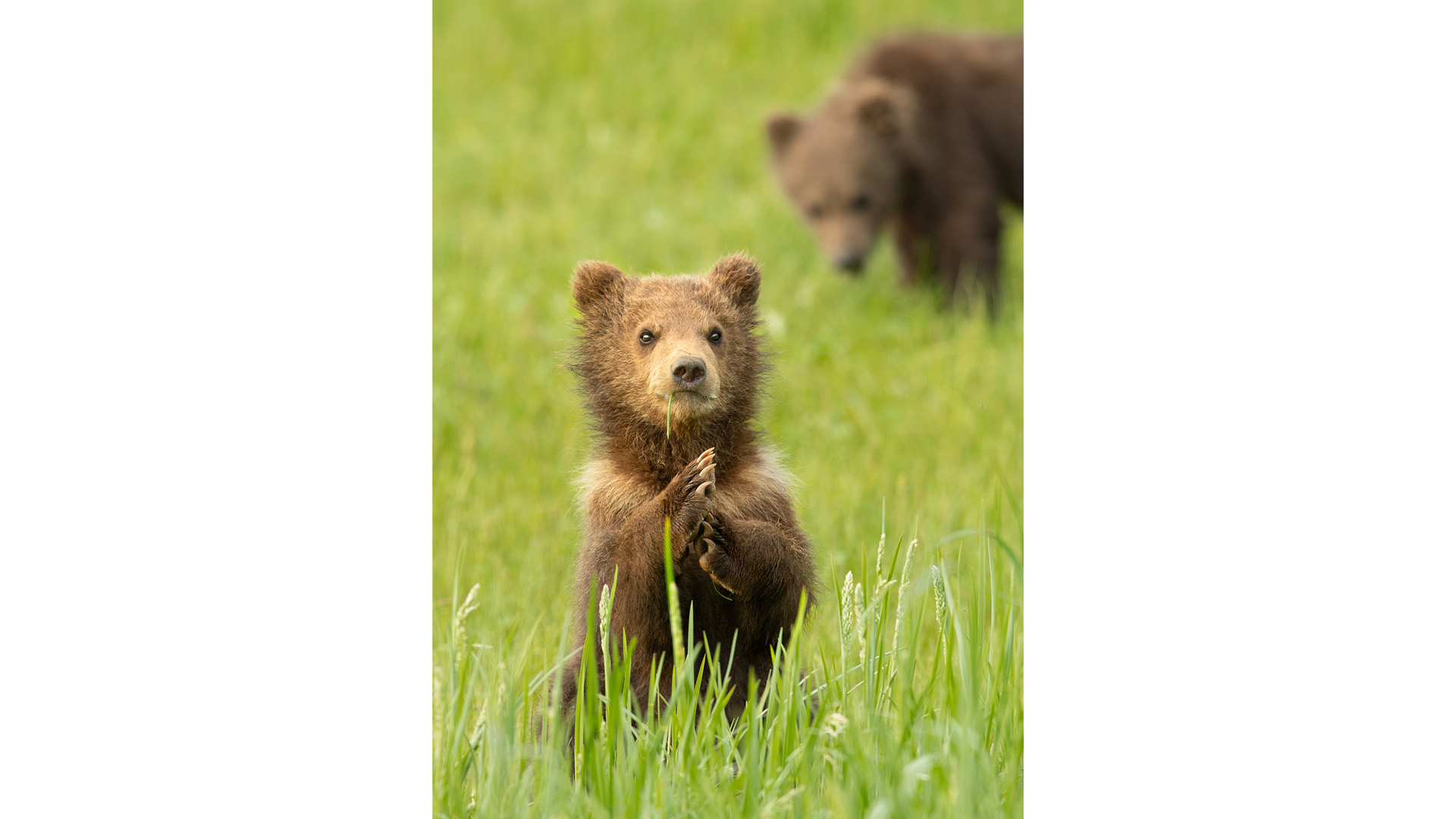
Nat Hab Guest © John Wise
“It can be very powerful to flip your camera from shooting a typical horizontal or landscape orientation and flipping it to vertical or portrait,” Mike advises.
- Flip your camera vertically: Portrait orientation highlights the bear’s height and stature.
- Focus on the face and eyes: Eye contact with the subject creates a strong visual impact.
- Use shallow depth of field: Isolate the bear from the background for a more dramatic effect.
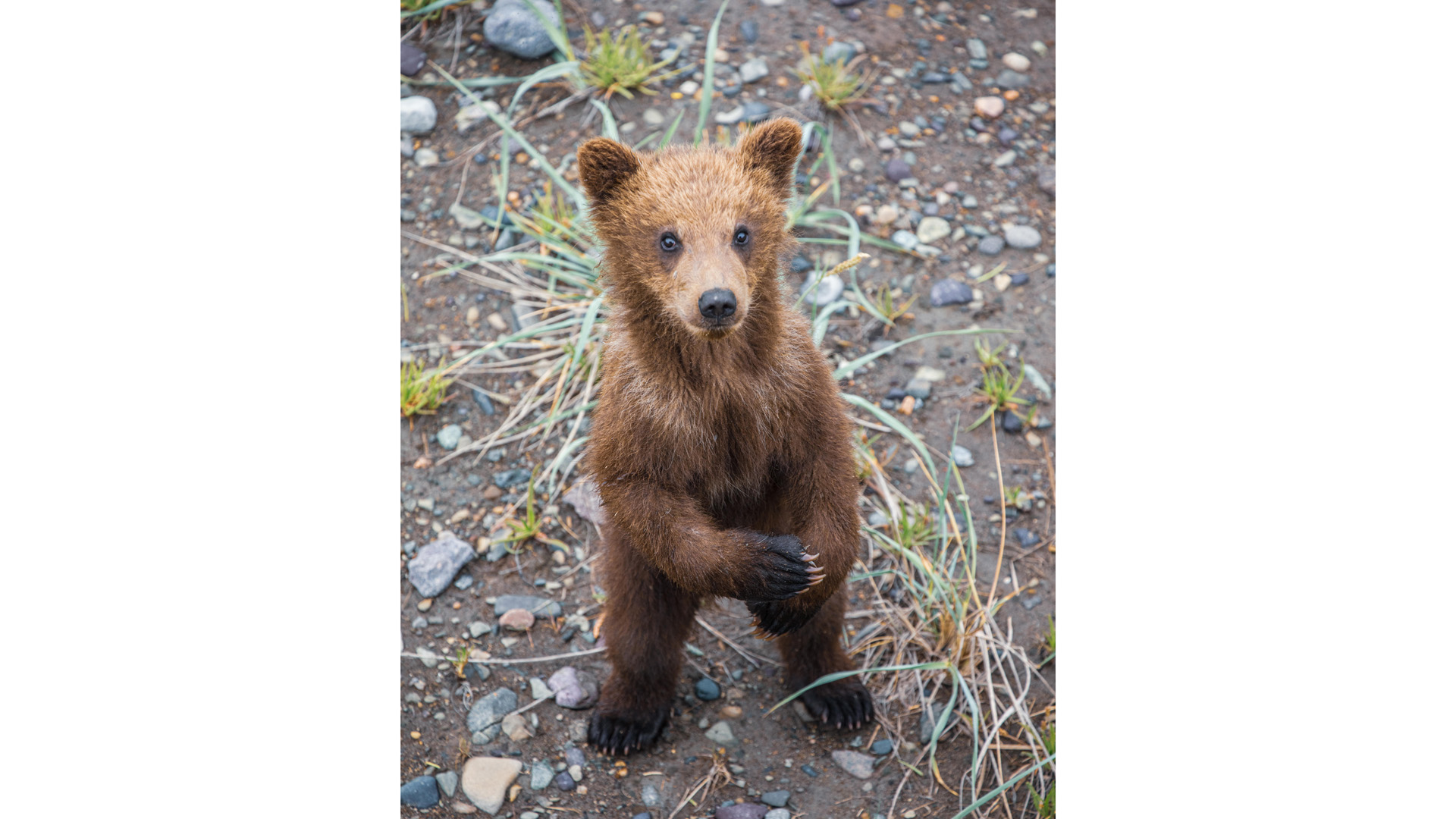
Nat Hab Expedition Leader © Jessica Morgan
Tip: Portrait shots work especially well when the bear is standing or moving toward you, as it fills the frame vertically.

Nat Hab Expedition Leader © Jessica Morgan
Close-Up Shots of Bears Grazing
Alaska’s wild brown bears‚and the salmon they feed upon—face many threats, but bears grazing offers the chance for more serene close-up shots. Patience is key here, as you wait for the perfect head-lift or interaction with the environment. The trick is “just patiently waiting as they’re grazing, waiting for that head to pick up in just the right moment, and getting that shot,” Mike explains.
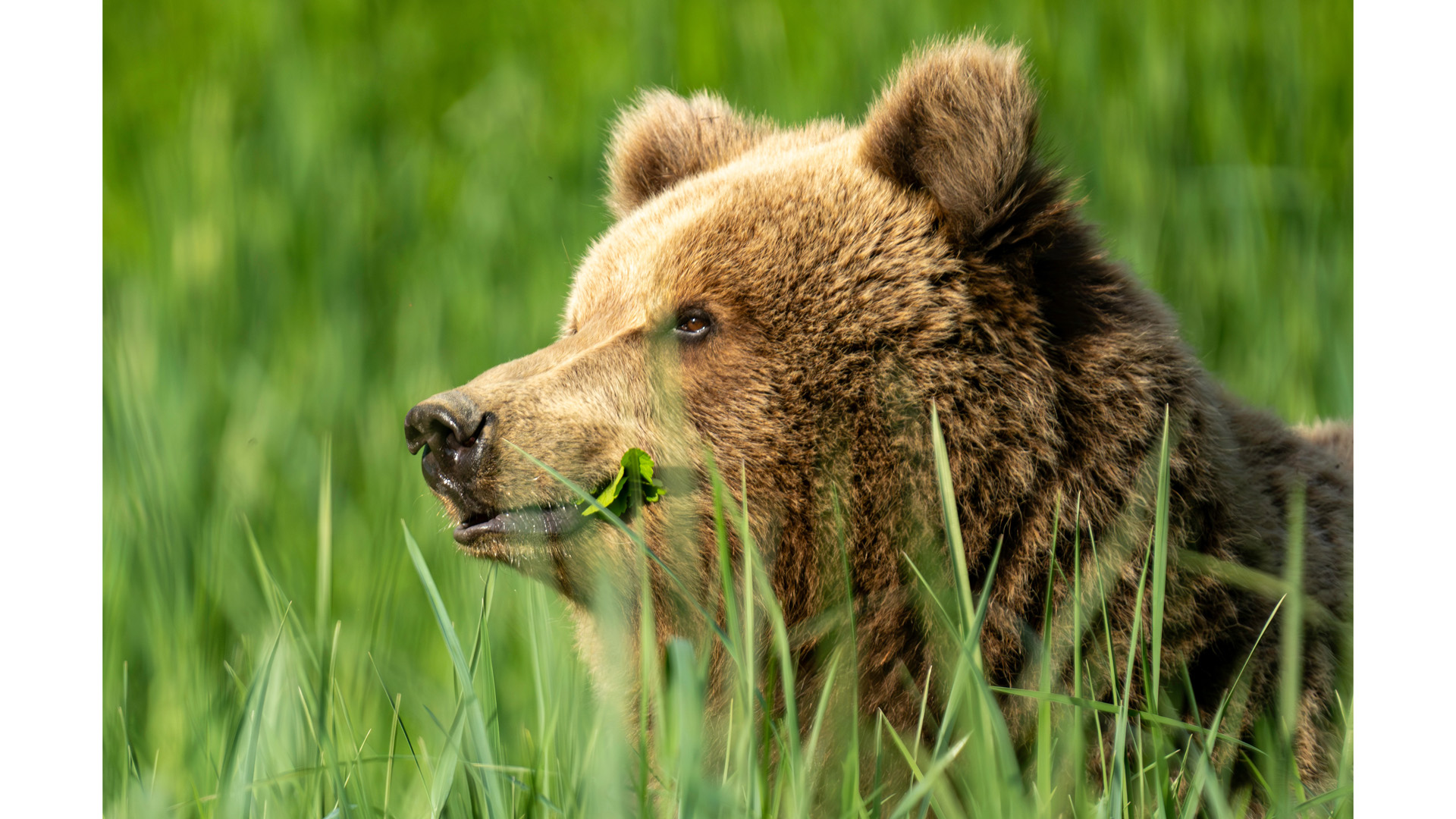
Nat Hab Expedition Leader © Brad Josephs
- Use continuous shooting mode: Capture a series of images as the bear grazes.
- Watch for head movement: Anticipate when the bear will lift its head for a clean shot.
- Keep your focus on the bear’s face: A slightly blurred background adds to the effect.
Tip: A moderate f-stop will keep the bear in sharp focus while softly blurring the surroundings for a clearer composition.
Bears Against the Landscape
Bears in proximity to the camera provide the perfect opportunity to highlight both the subject and its surroundings.
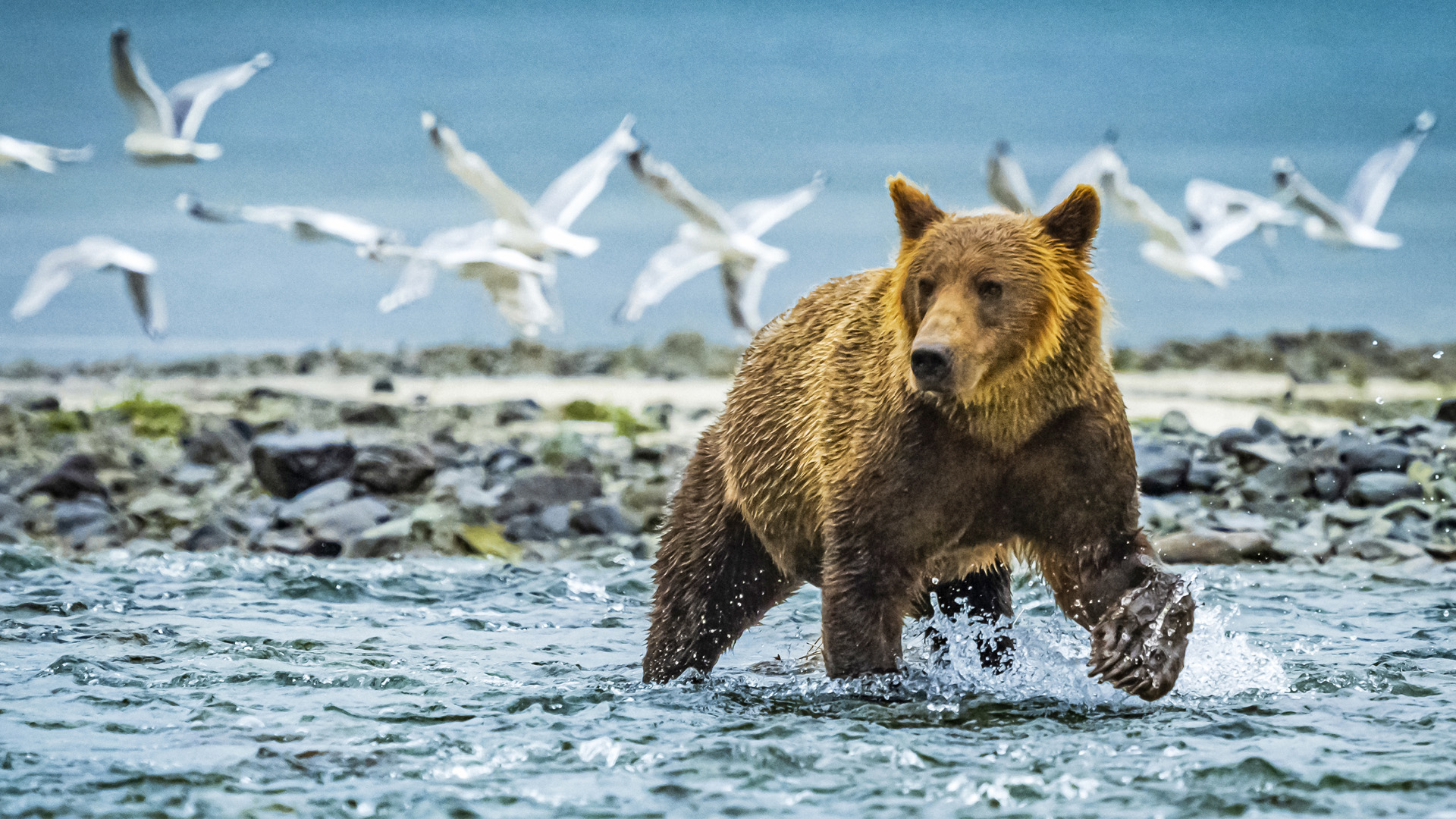
© Ralph Lee Hopkins
“Do not only think about those close-ups…now you have an opportunity with a very close bear to really show off the landscape and the background,” Mike suggests.
- Balance bear and landscape: Frame the shot to show the beauty of Alaska’s natural features along with the bear.
- Use a wide-angle lens: Capture more of the environment without losing focus on the bear.
- Include water or mountains: These elements add depth and scale to your composition.
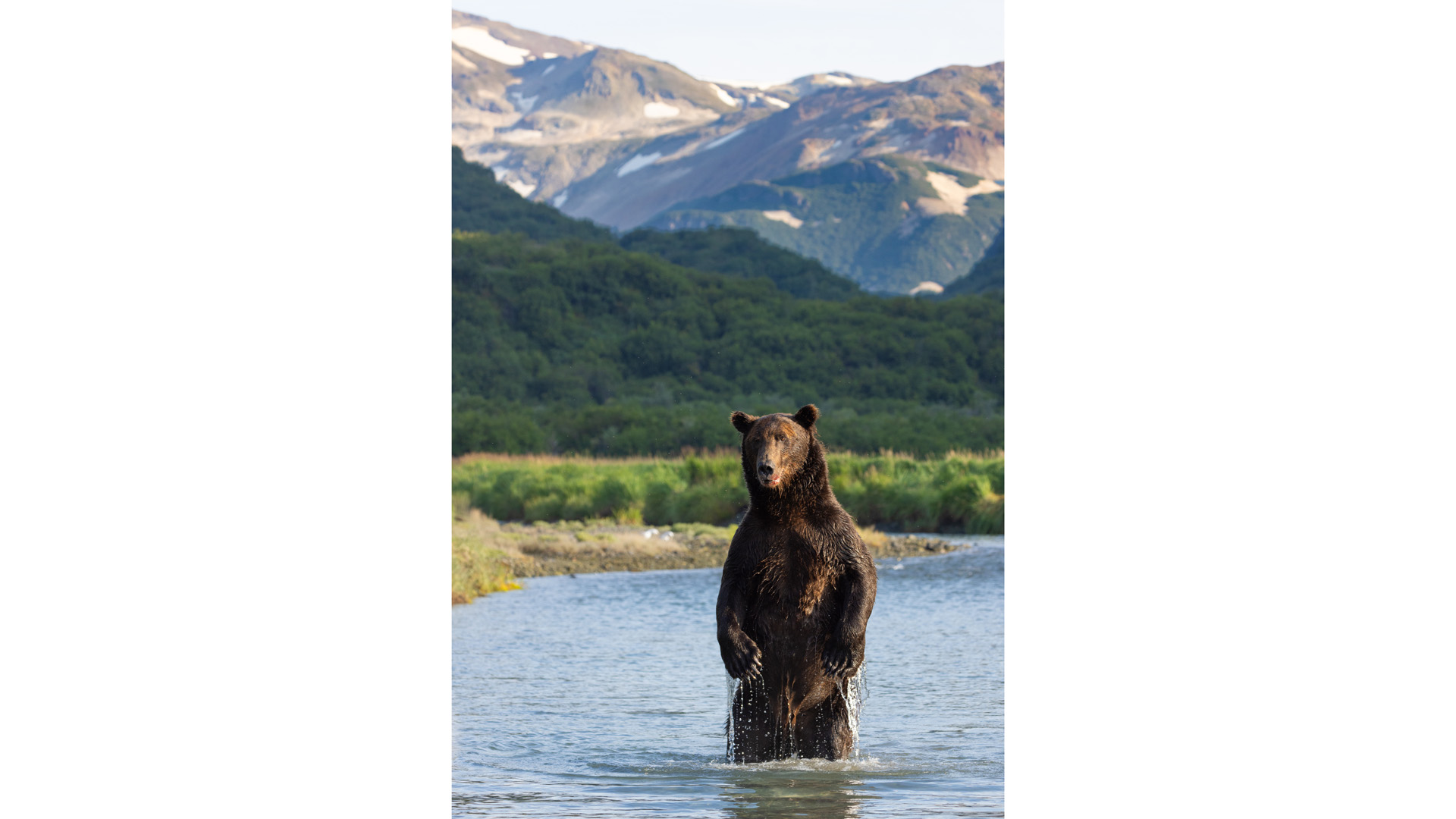
Nat Hab Expedition Leader © Rylee Jensen
Tip: Keep the bear as the focal point, but use natural elements like mountains and rivers to create a balanced image that tells the full story. Include just enough of the environment to give context without overwhelming the bear in the frame.
Bear Bums for Katmai National Park’s #FatBearWeek
As the temperature drops in September, it’s time to capture a different angle—bear bums! In early October, Katmai National Park’s Fat Bear Week celebrates the impressive seasonal preparations made by brown bears as they prepare for winter hibernation.
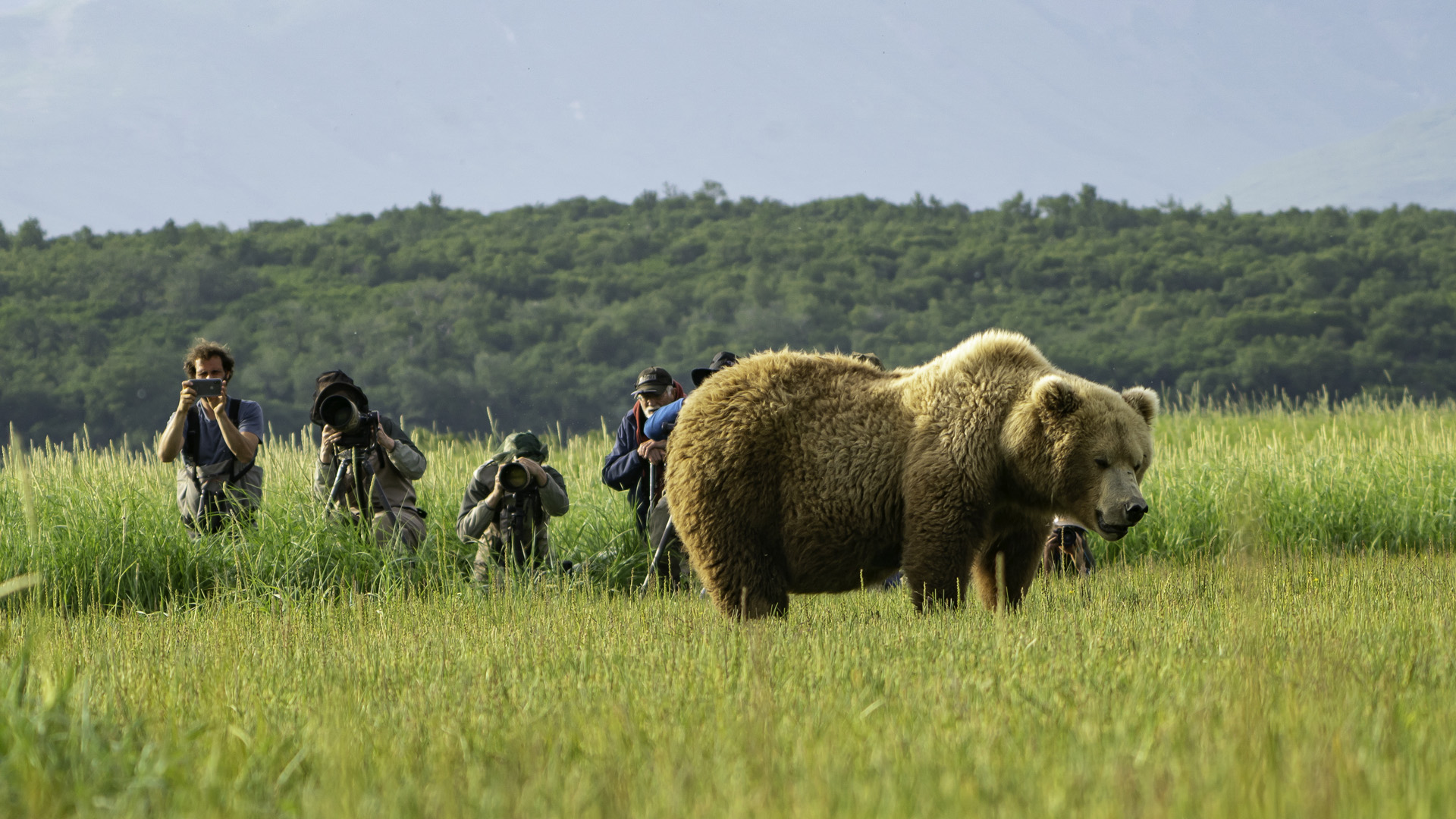
Nat Hab Expedition Leader © Brad Josephs
The #FatBearWeek competition, jointly organized by the National Park Service and Explore.org, draws spectators from around the world to participate by casting online votes for the best bear bum—or the bear that has most effectively accumulated fat reserves. In 2023, AP News called the competition “Alaska’s most-watched popularity contest.”
Tip: Keep an eye on the large, well-fed bears, and don’t be afraid to capture a few humorous shots of their sizable backsides!
Bear Witness to Alaska’s Wild Beauty with Your Iconic Shots
Whether you’re a seasoned photographer or just starting out, there’s nothing quite like capturing incredible bear photos in Alaska. From the serene moments of bears grazing in tall grass to the powerful energy of wrestling siblings, each image tells a unique story of these magnificent creatures in their natural habitat.
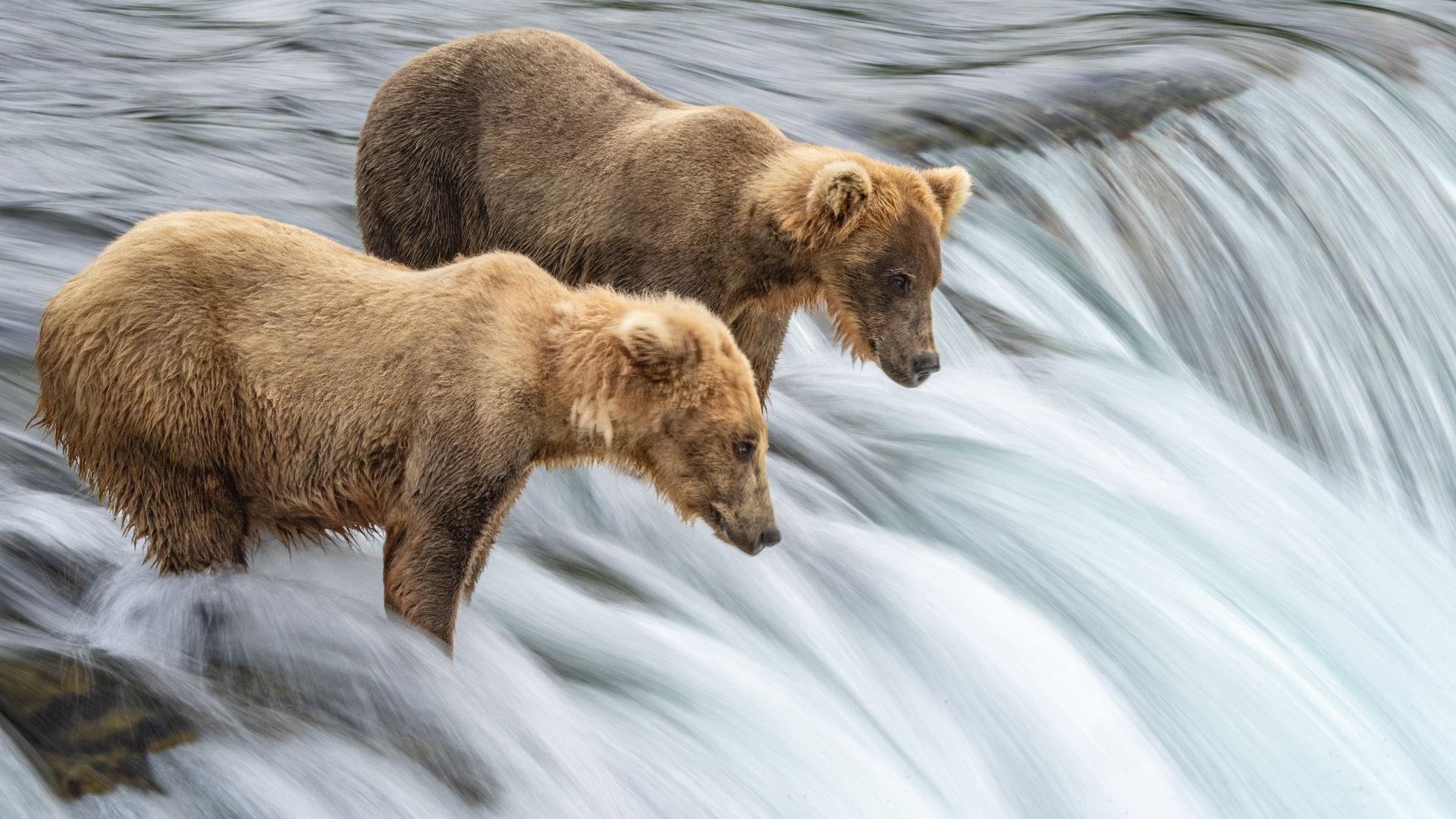
Nat Hab Expedition Leader and Photo Expedition Director © Mike Hillman
The beauty of photographing in places like Lake Clark National Park lies in the variety of opportunities—from wide landscape shots framed by towering mountain ranges to intimate close-ups of bear fur or claws. Mike emphasizes that it’s not about the equipment, but developing your eye and being patient for that perfect moment.
Whether you’re zooming in for a detailed shot or capturing an action-packed wrestling match, bear photography challenges you to be creative and flexible. Every moment spent waiting for the right light, the right angle, or the right bear movement can result in a spectacular bear photography image.
For more on Bear Photography in Alaska
- Check out shots of bear mothers and cubs in photos and video If you’re lucky, this will add a 12th shot to your Alaska brown bar photo shot list.
- Learn more about mastering bear photography from Nat Hab Photo Expedition Director Mike Hillman in a more recent Nat Hab Daily Dose of Nature Webinar: Power & Grace: Mastering Bear Photography in the Wild
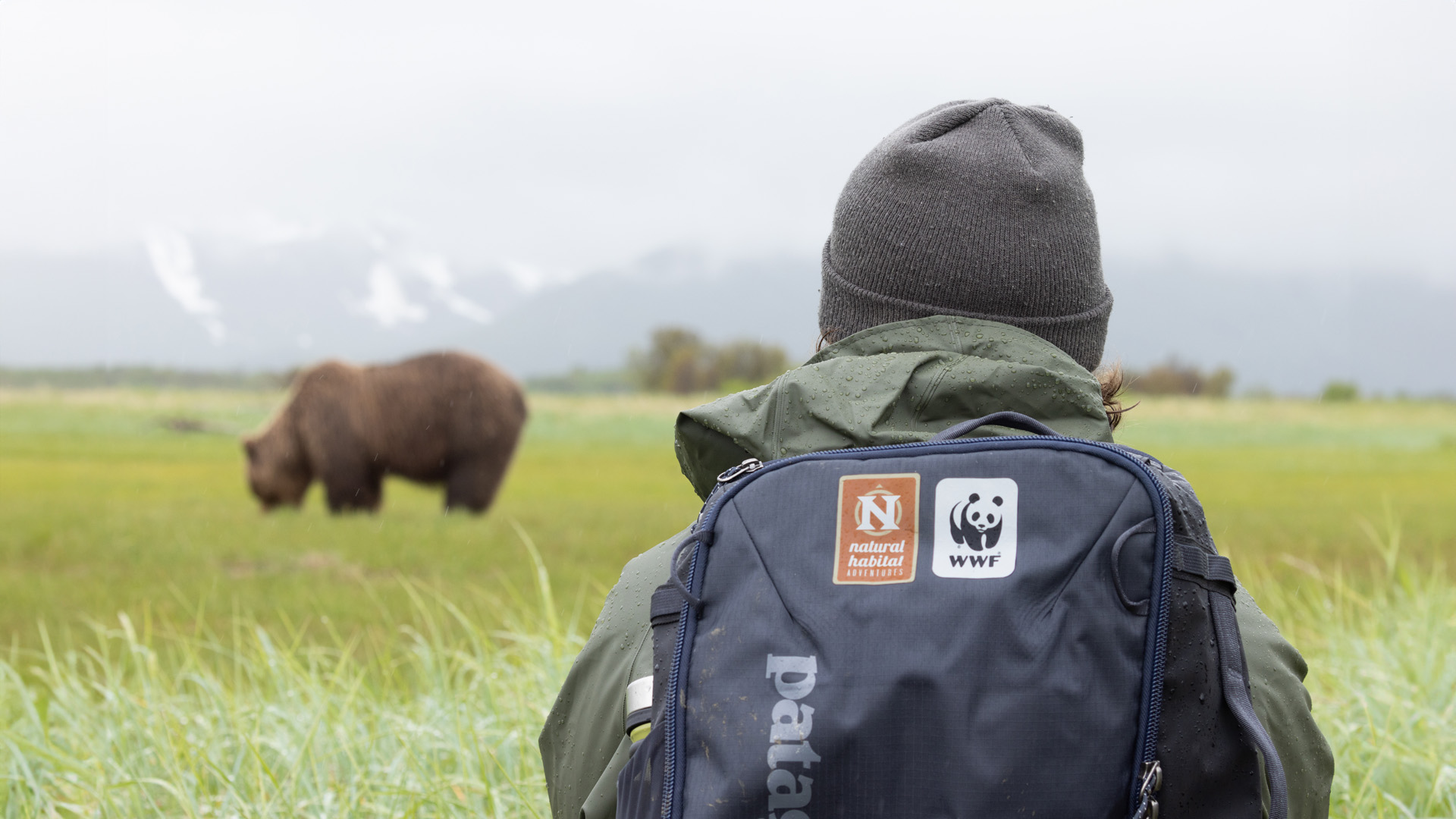
Nat Hab Expedition Leader © Rylee Jensen
The post Bear Photography: A Photo Shot List for Your Alaskan Adventure first appeared on Good Nature Travel Blog.
By Nat Hab Expedition Leader Eddy Savage
The broad public perception of brown bears (Ursus arctos) is that they possess furry brown coats—hence the name—and that all brown bears generally resemble one another. After all, how often do you have the opportunity to compare the coats and features of multiple brown bears side by side?
But bear with me here: Brown bears rarely ever look identical. In fact, the only common features they share are 1) they’re furry, 2) they have a large muscular hump on their front shoulders, 3) their claws are long and scoop-shaped, and 4) they have rounded ears and a dish-shaped face, resembling a teddy bear.
(function(d,u,ac){var s=d.createElement(‘script’);s.type=’text/javascript’;s.src=’https://a.omappapi.com/app/js/api.min.js’;s.async=true;s.dataset.user=u;s.dataset.campaign=ac;d.getElementsByTagName(‘head’)[0].appendChild(s);})(document,123366,’zyjonya4zhotlc9mlio9′);
Brown Bear Differences
Brown bears can vary dramatically in body size, coloration, facial features, claw colors and scarring. A bear that appears one color with its spring/summer coat may showcase a remarkably different coat come autumn. Some bears have ears set further apart, some have eyes closer together, some boast a longer nose and a taller forehead, others display a mismatch of patchy coloration all over their body, and some bear distinct scars.
Having worked as a bear-viewing guide for the past decade, I’ve come to recognize individual brown bears from a distance based on the aforementioned characteristics. I easily identify bears that I’ve seen year after year by their body proportions, facial features, scarring, fur colorations, and body movements. In fact, there are a few bears I can identify from half a mile away quite easily.
I hope you’ll enjoy this collection of brown bear photos from our Alaska adventures and appreciate each bear in all its individuality!
Meet Some of Alaska’s Brown Bears
This adult female is more than 20 years old. One of her most distinct features is her very blonde face.
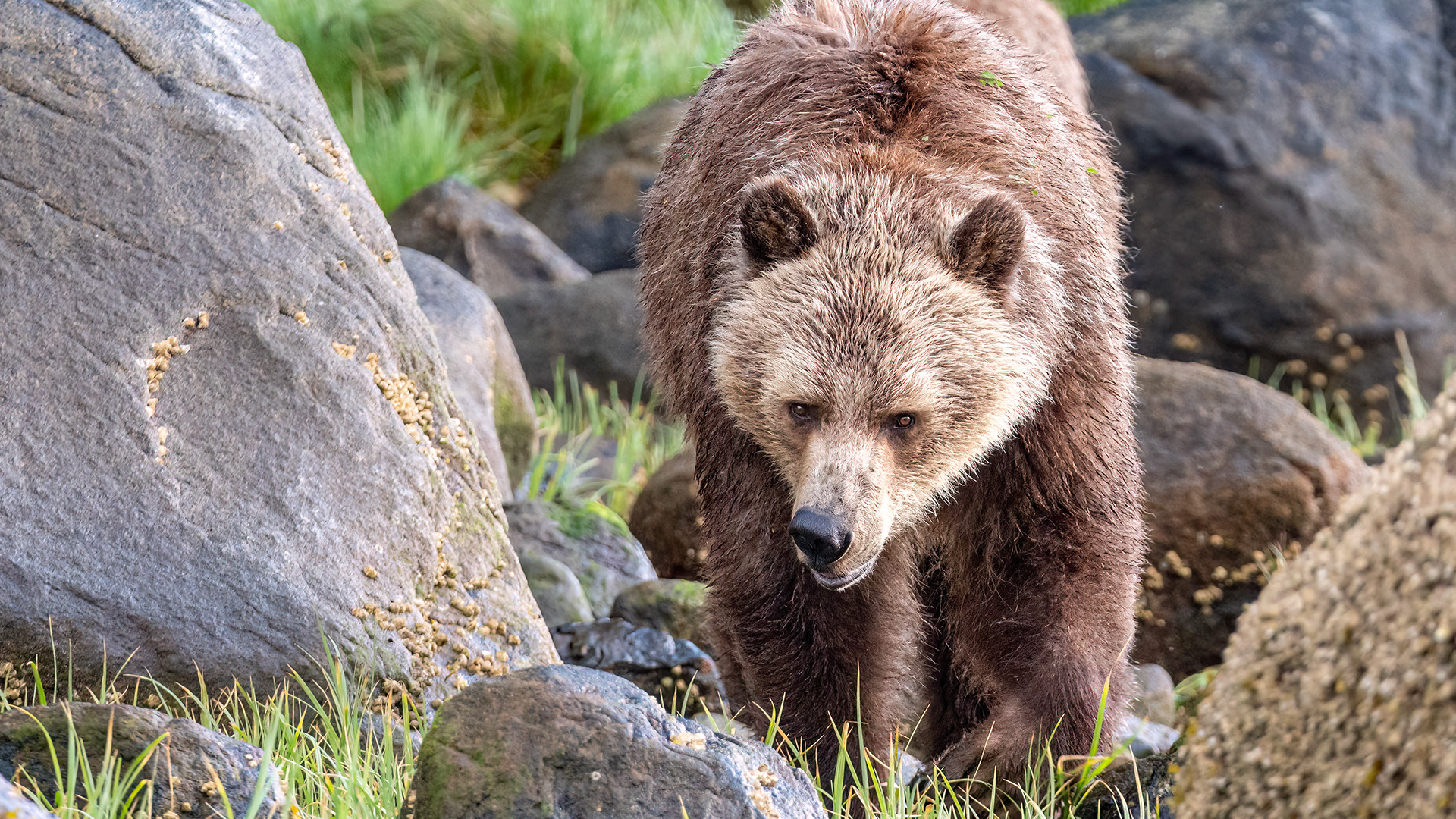
This young adult male, with ears set quite far apart, exemplifies the brown bear’s dish-shaped forehead. Male bears reach their peak size around 12 to 17 years old. Judging by the size of this bear’s snout, he’ll likely grow quite a bit larger!
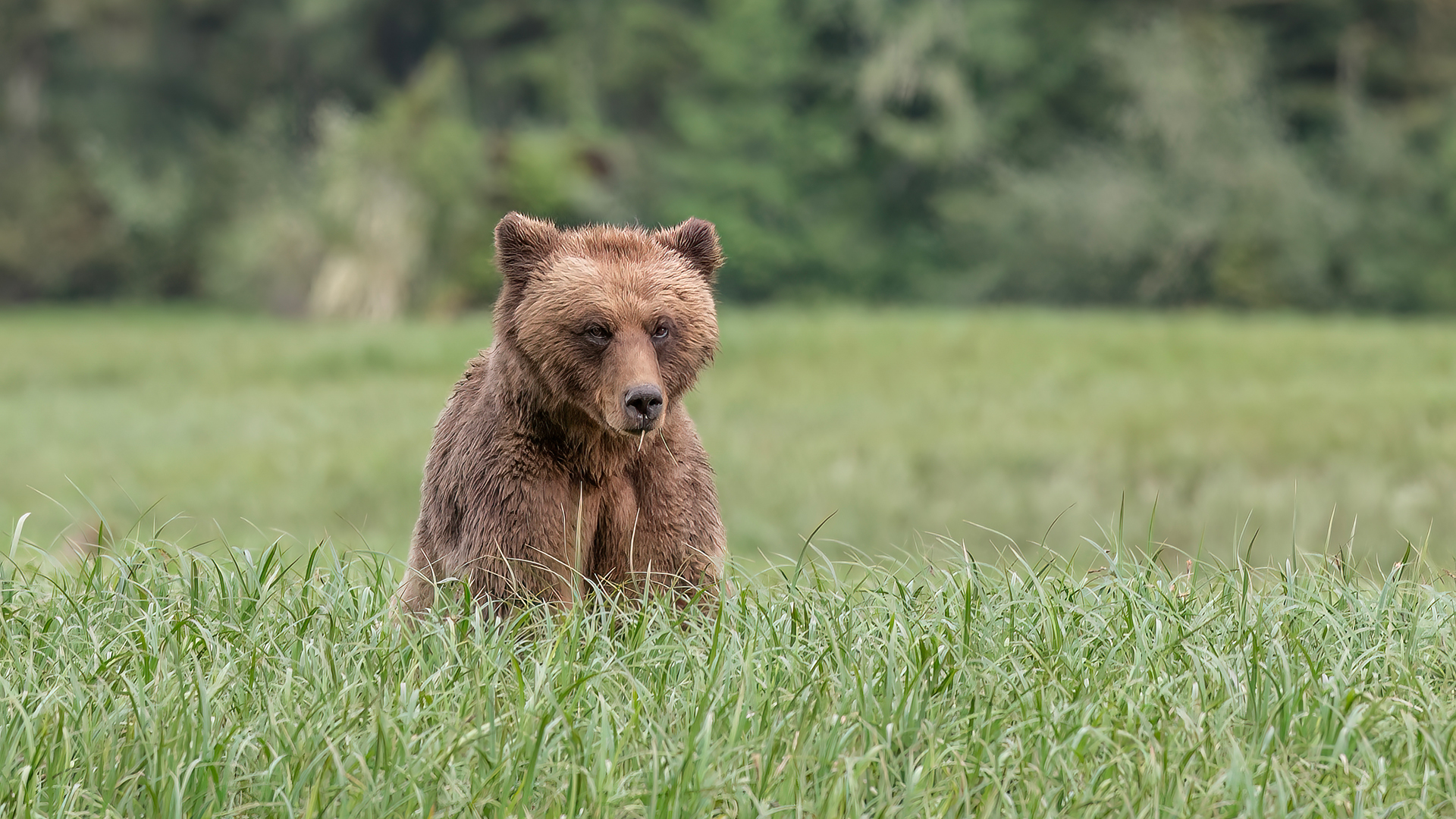
This adult female in her 20s undergoes immense fur color pattern changes from year to year. Her body shape and a tiny scar above her right nostril help us ID her each season.
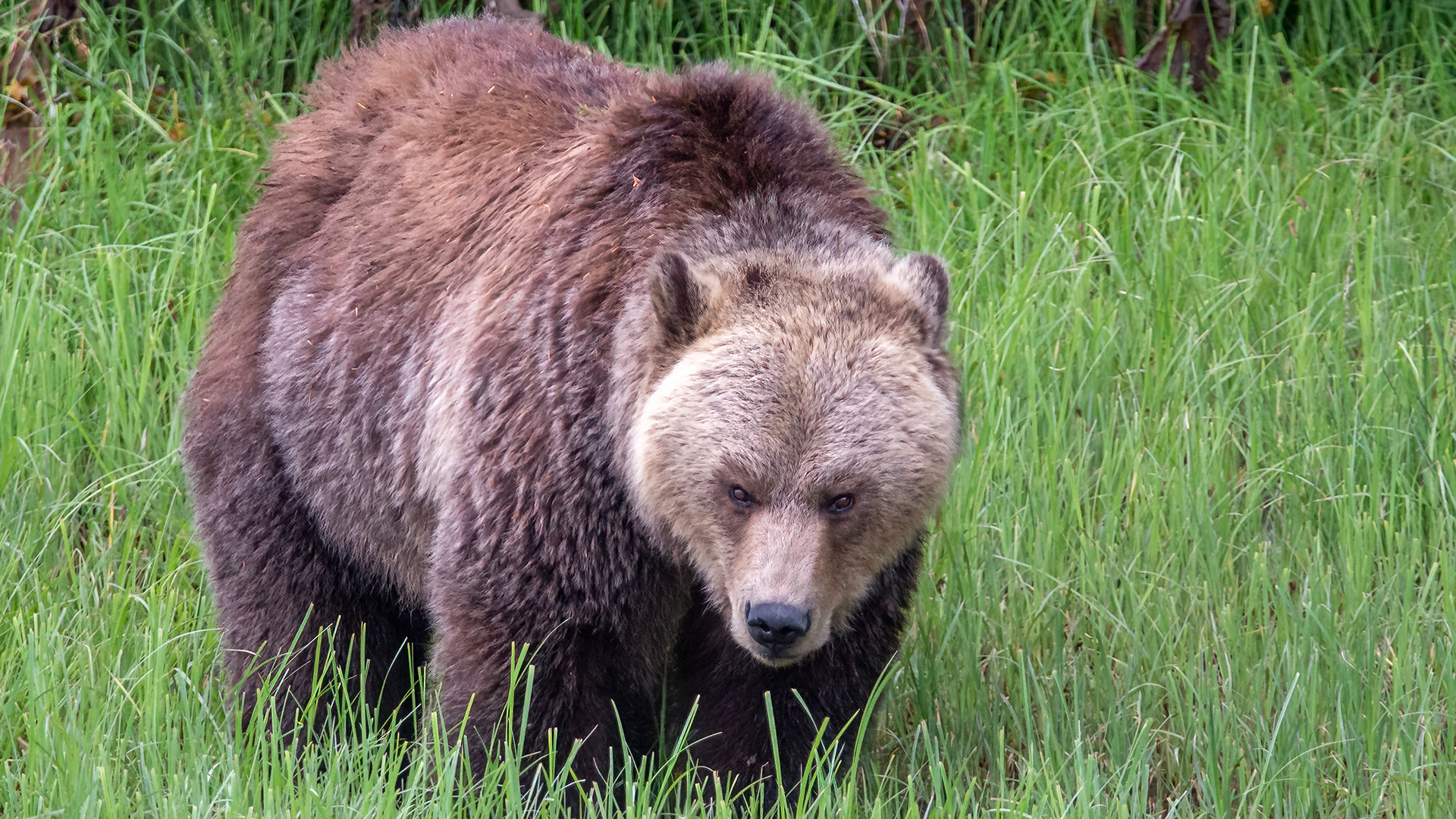
This adult male, in his late teens or possibly early 20s, bears extensive scarring across his body and is missing an ear, the result of scuffles with other males during the breeding season while competing for or defending mating opportunities.
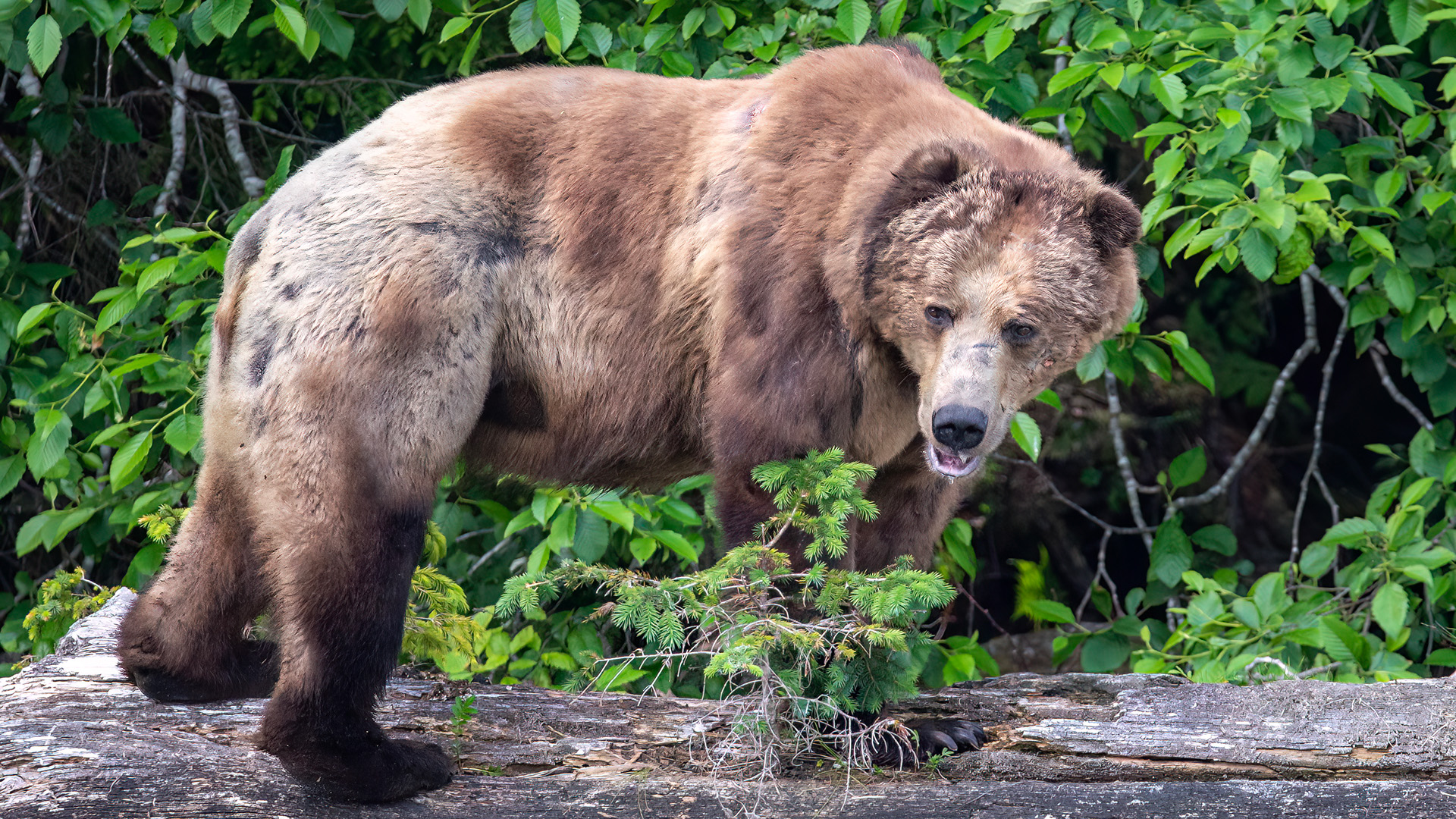
This image shows a relatively uniform brown bear. Note the thinner fur on the bear’s forehead. This is typical during springtime among most male bears, as they rub intensely on scent-marking trees in the area.
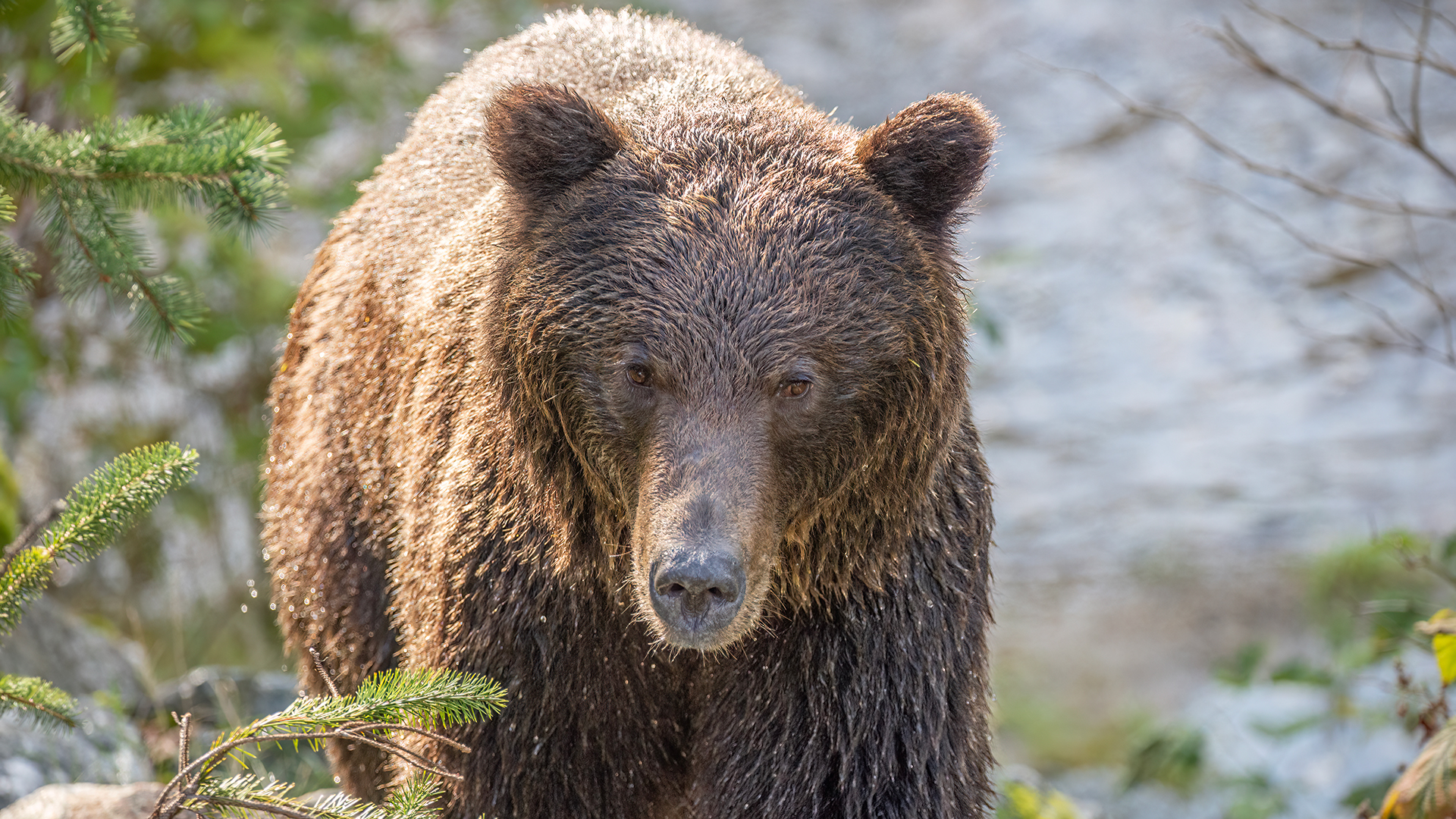
This young male brown bear’s fur takes on an almost golden hue in the sunlight. Again, observe the length of the snout—this bear still has some growing to do!
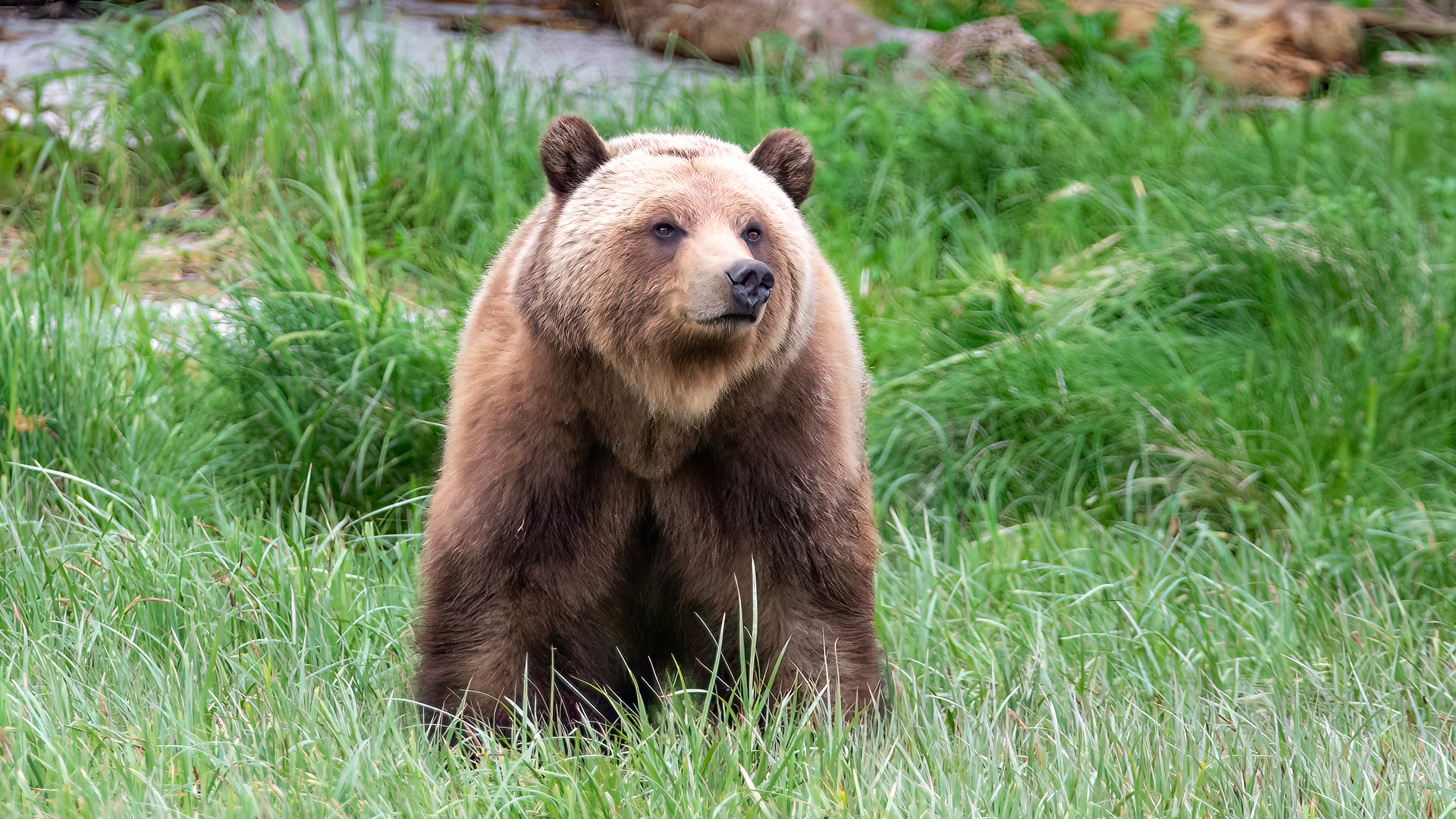
This young female brown bear was around 7 or 8 in this picture. I’ve watched her each year since she was a yearling cub. One of her distinct features is her eyes; she has much darker fur around the eyes, with very blonde hair on the rest of her face, making her easily recognizable.
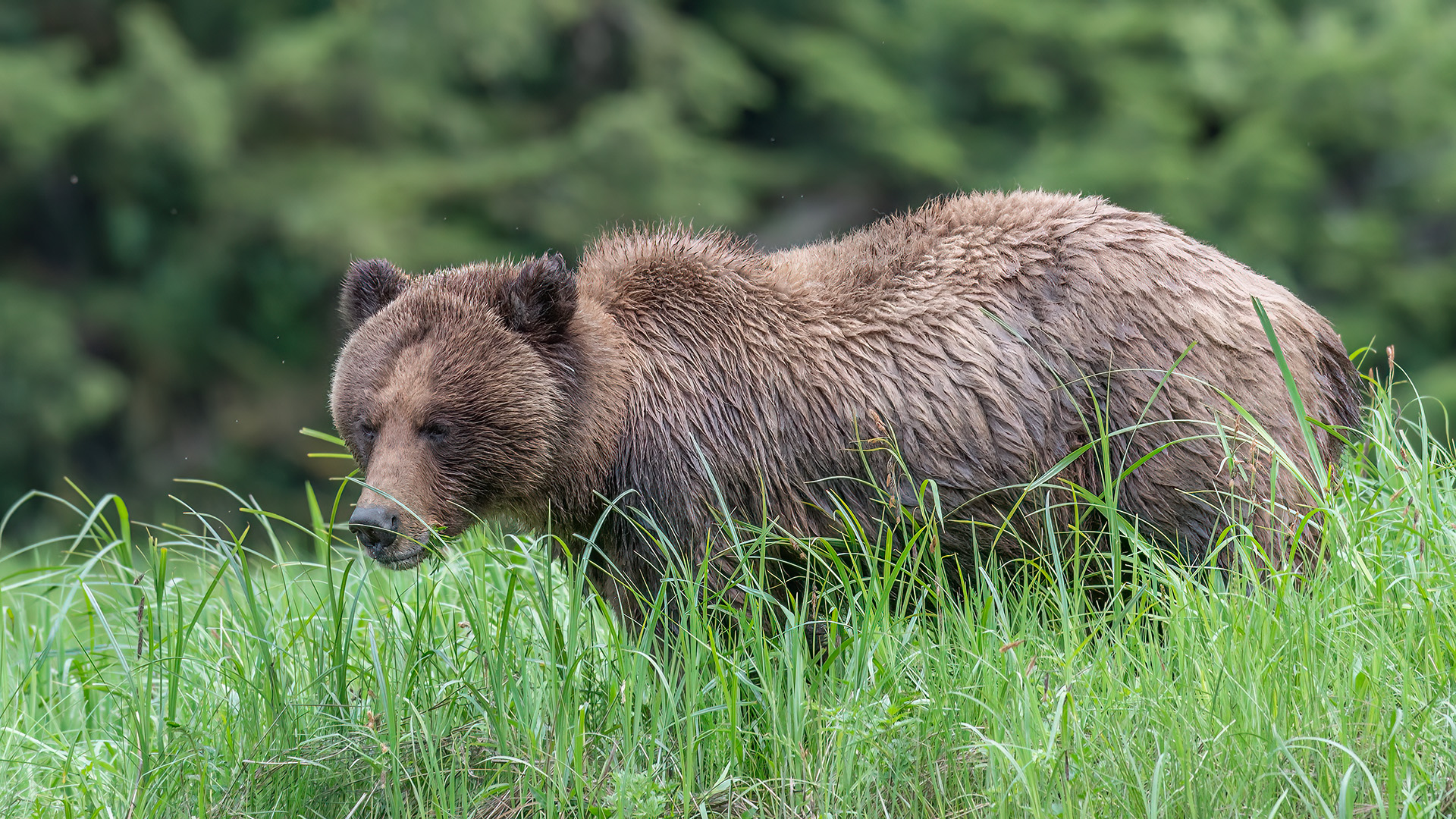
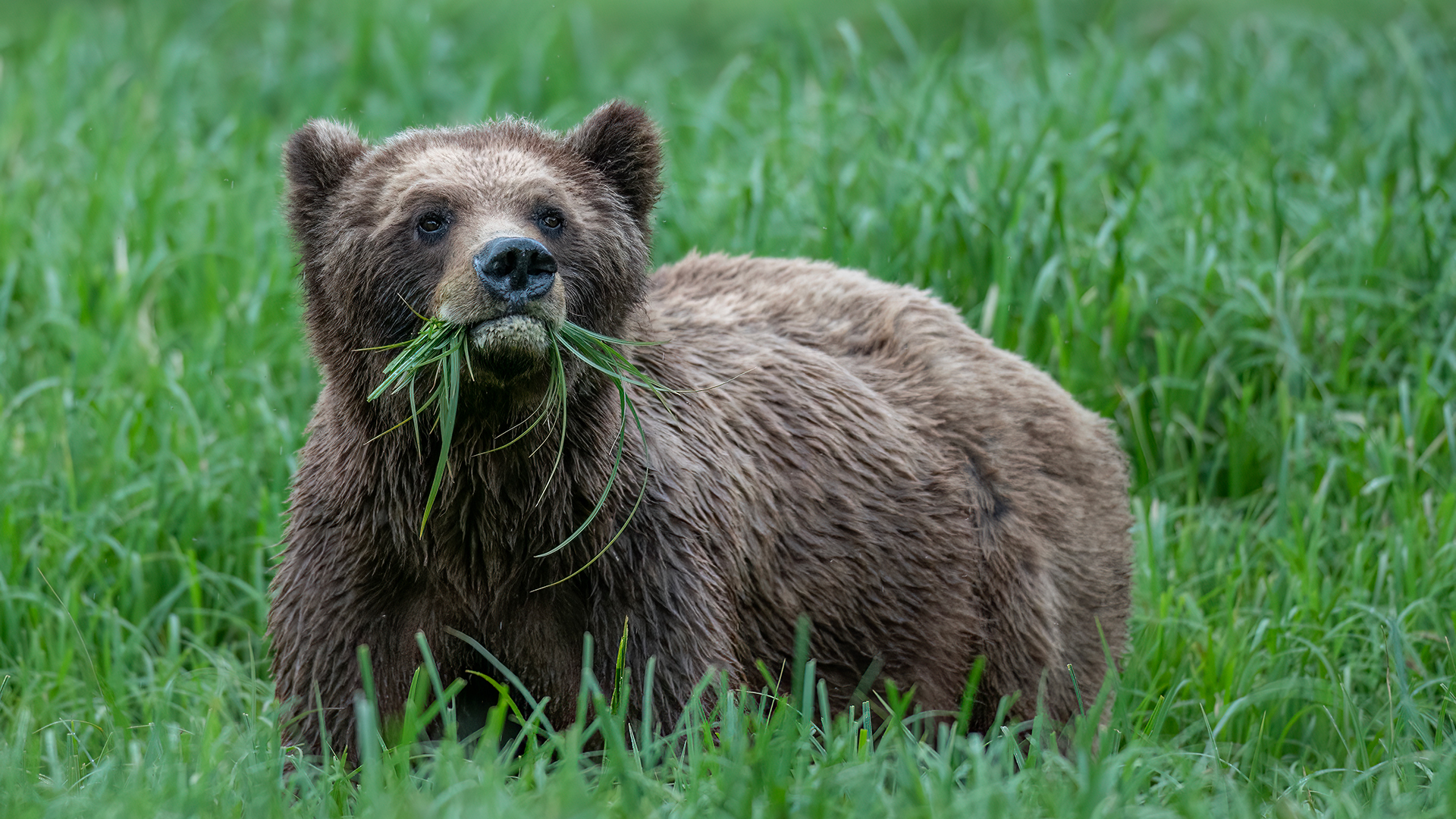
This young bear is munching on Lyngby’s sedge—an important springtime food. It displays a uniform brown color, but the ears are slightly pointy and asymmetrical.
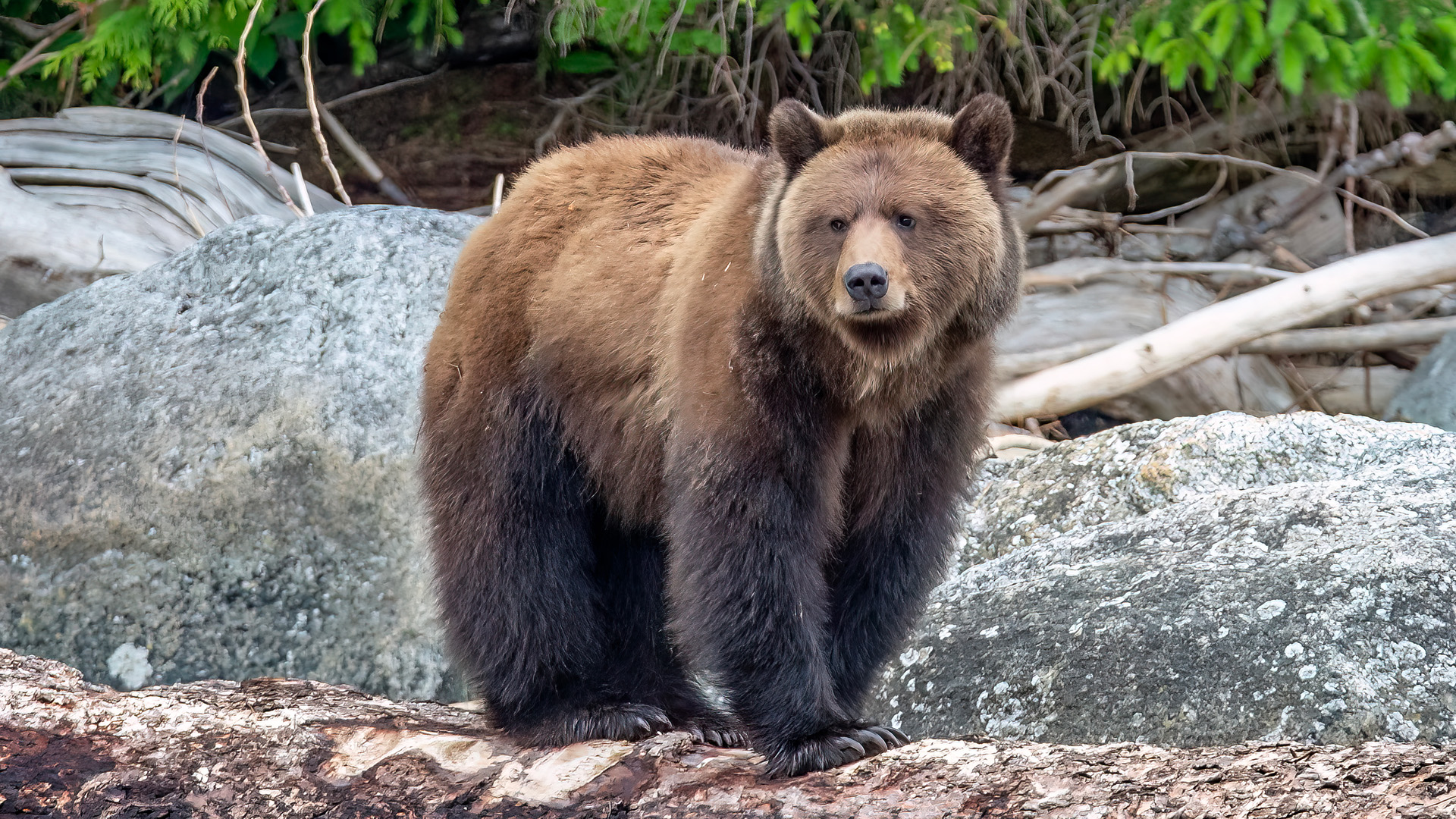
The dark “socks” on this bear will aid in identifying it in the future. This bear is roughly 3.5 years old. You can discern its youth, as the face still retains some cub-like proportions.
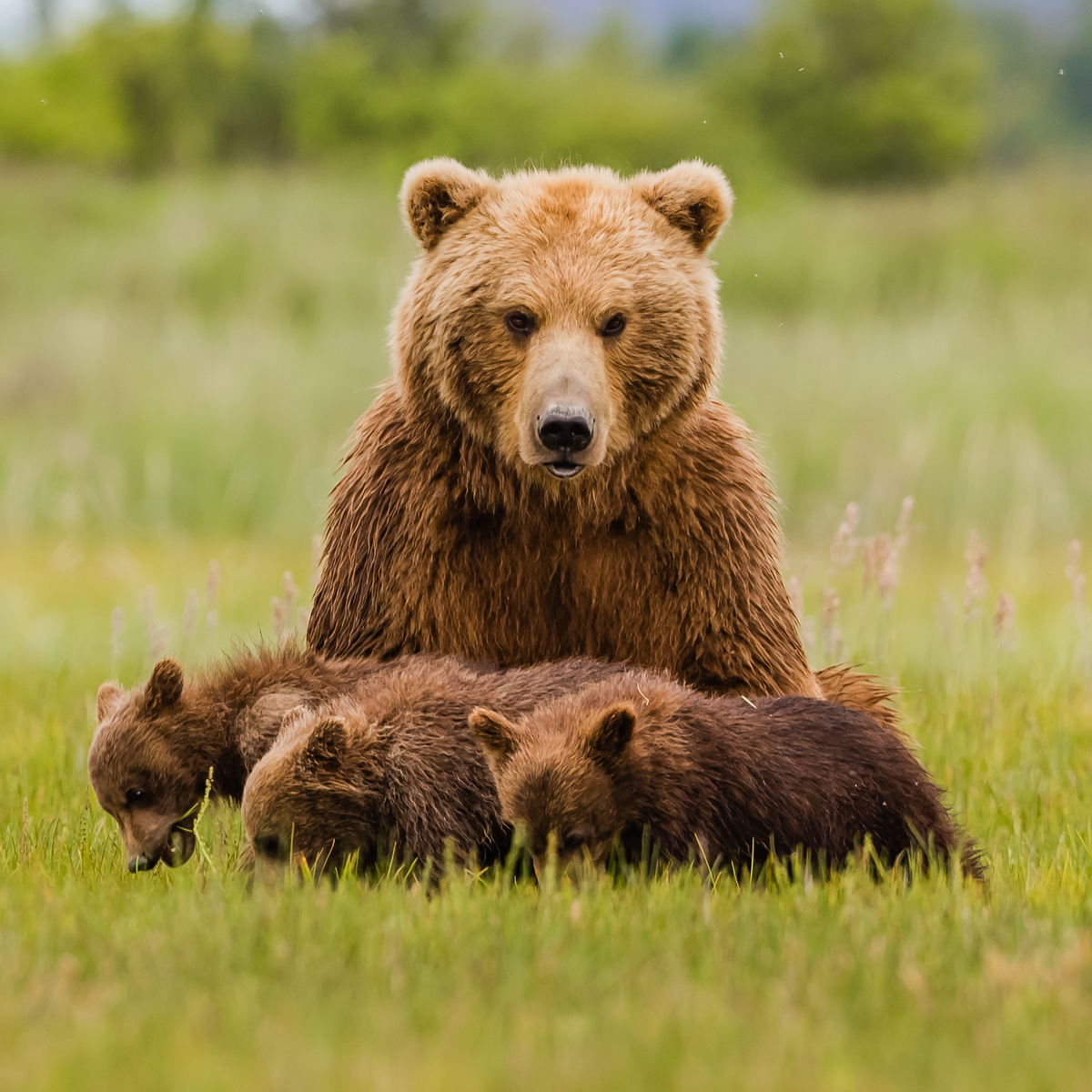
Lastly, we have some very young cubs of the year. These two were likely 3–4 months old and weighed around 20 lbs each. Their mother is the bear in image No. 1, and it’s already evident that she’s passed on her blonde facial fur to her cubs. Adorable!

(function(d,u,ac){var s=d.createElement(‘script’);s.type=’text/javascript’;s.src=’https://a.omappapi.com/app/js/api.min.js’;s.async=true;s.dataset.user=u;s.dataset.campaign=ac;d.getElementsByTagName(‘head’)[0].appendChild(s);})(document,123366,’pz5de0mj31uynycbjlpy’);
Want to see brown bears in the wild? Explore our Alaska adventures!
The post Why Brown Bears Look Different: A Guide’s Photo Diary first appeared on Good Nature Travel Blog.
17 Mar, 2025 | Admin | No Comments
Mothers & Cubs: Spectacular Grizzly Photos from Alaska Adventures
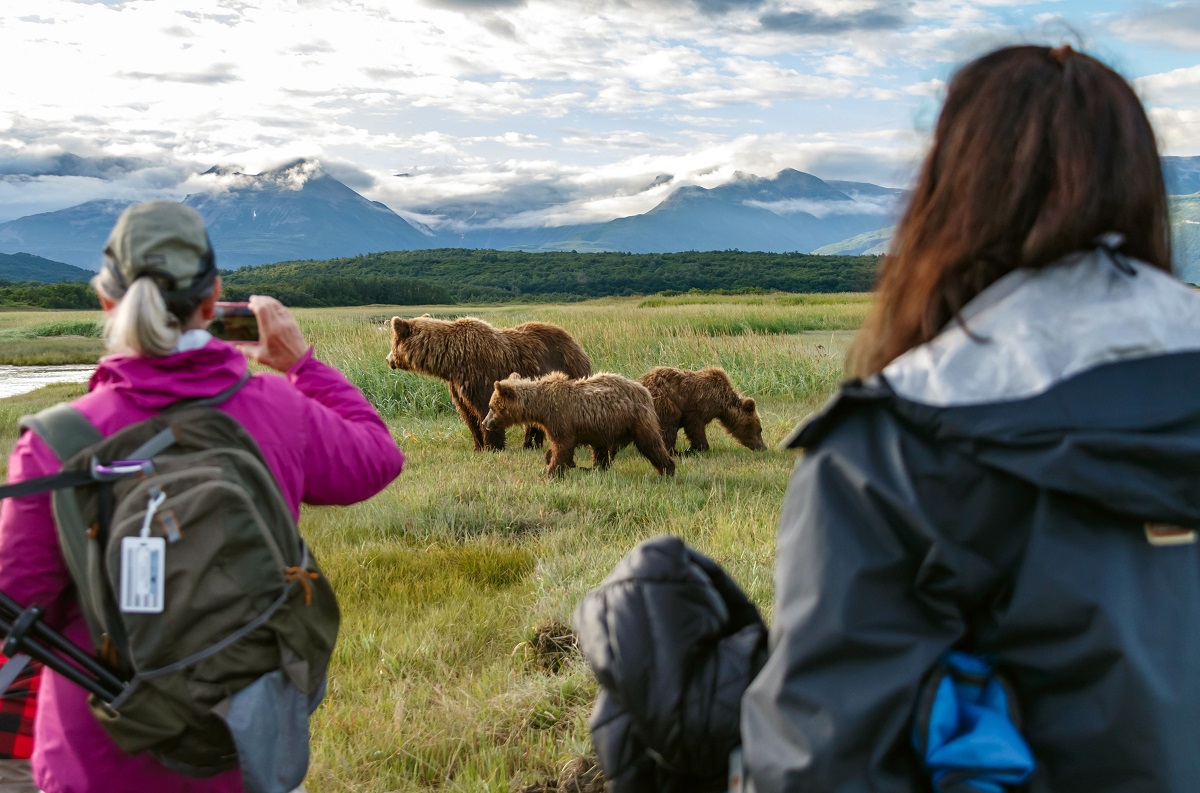
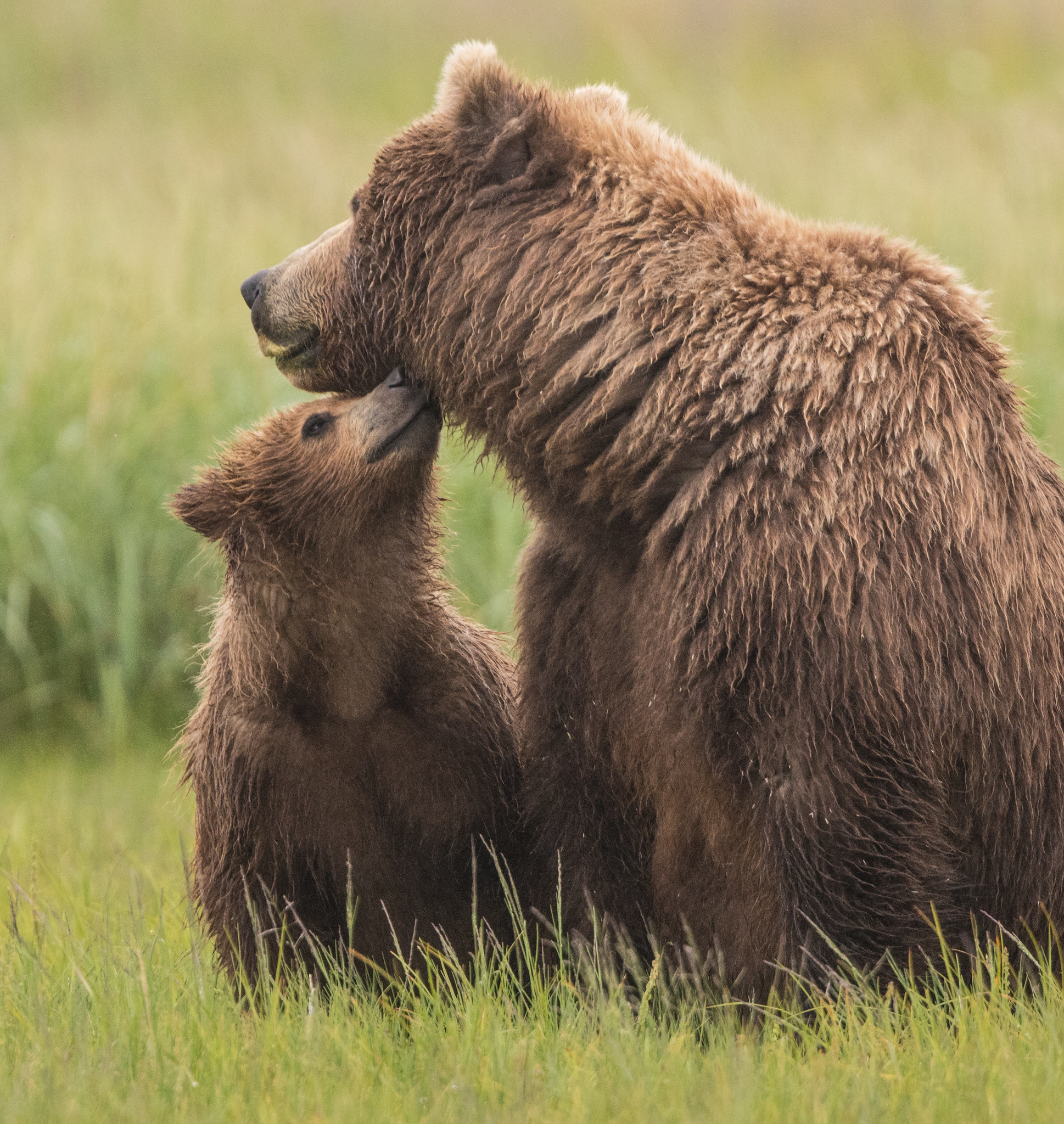
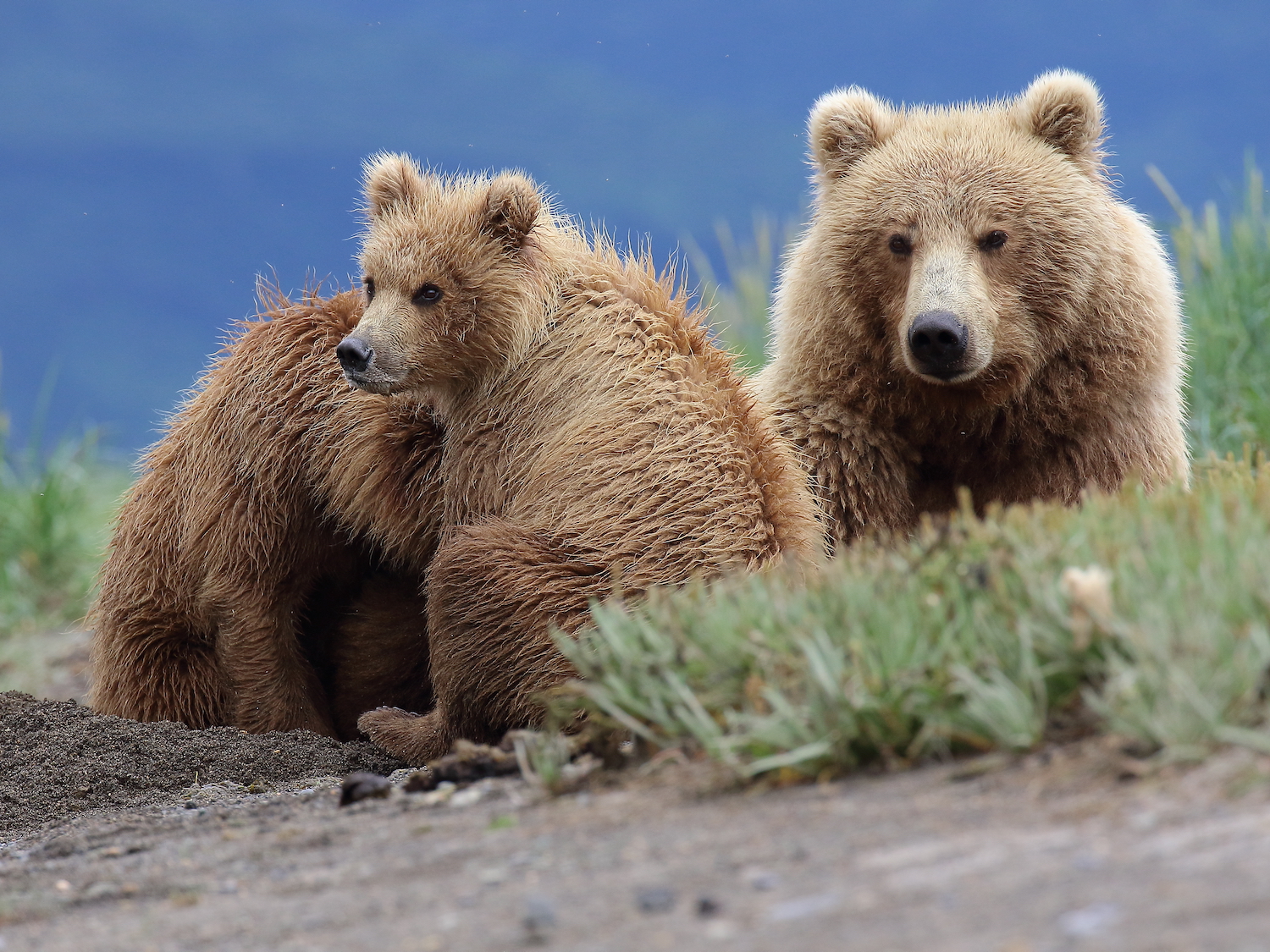
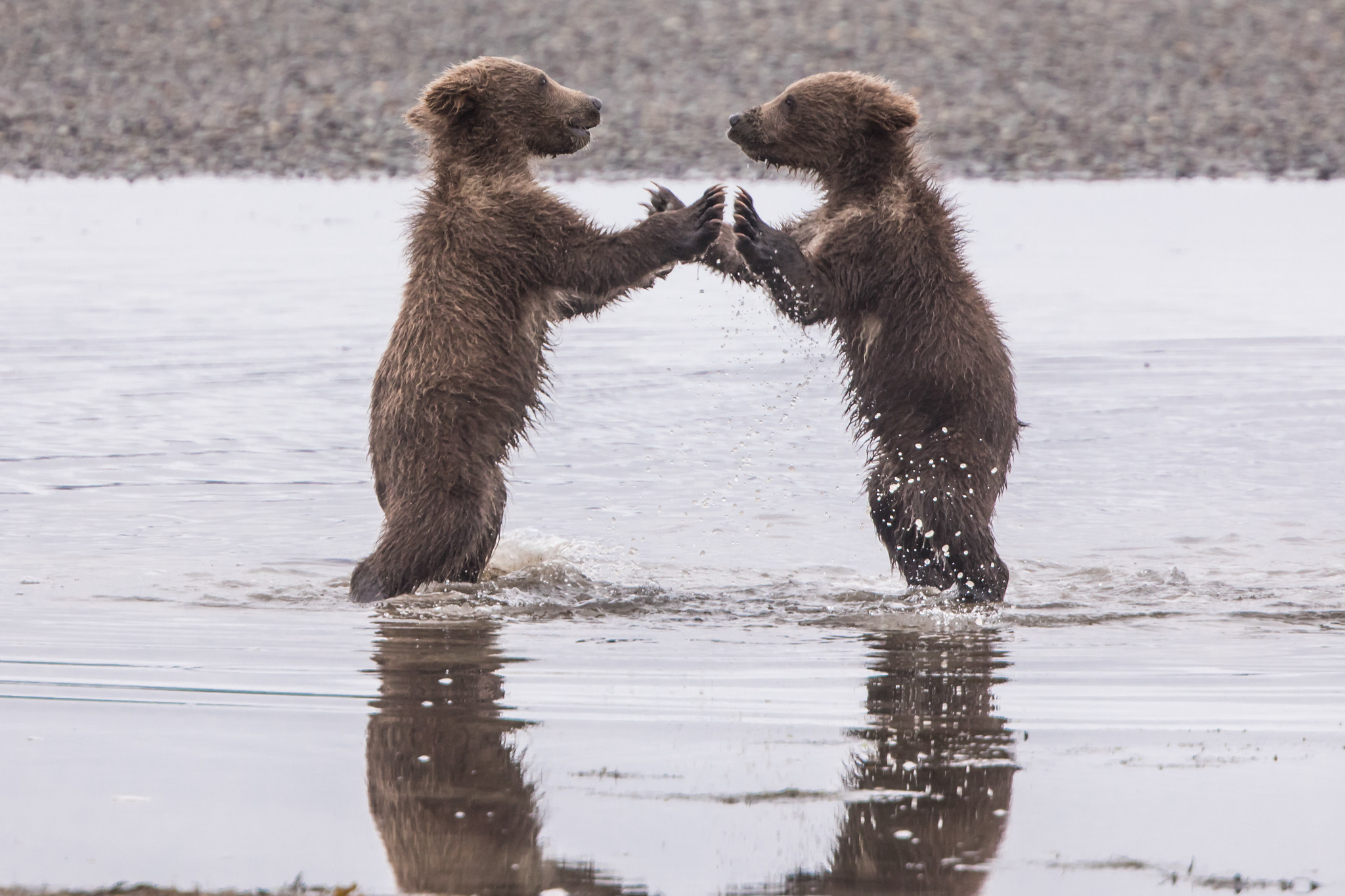
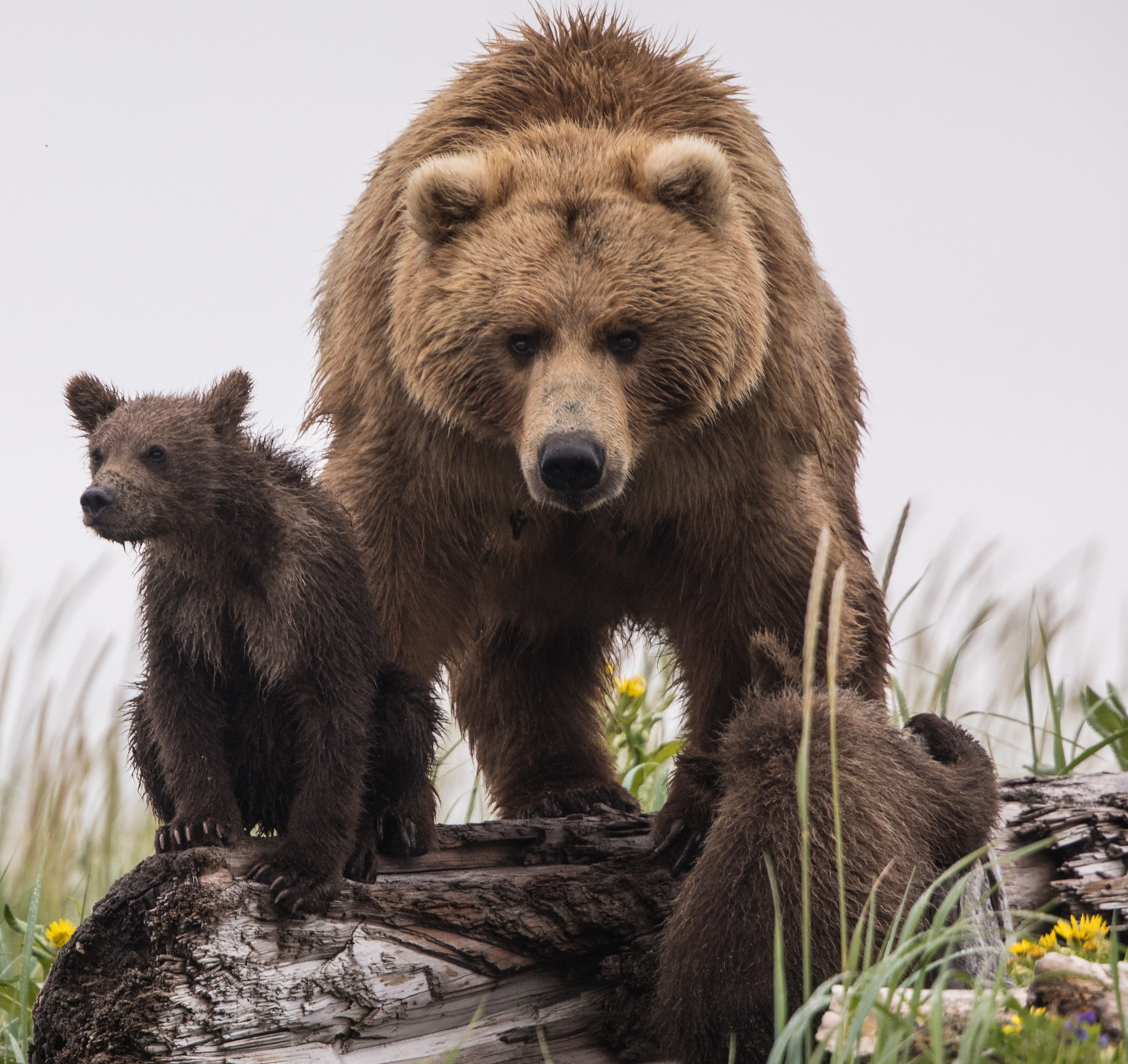
Few things are more powerful than witnessing the bond between mother and child—or in this case, cub! In the wilds of Alaska, Nat Hab travelers photograph fascinating bear behavior and are treated to affectionate displays between protective mothers and playful cubs. This rarest of encounters can be had on our Grizzly Ship Photo Expedition: Kodiak to Katmai—the ultimate bear photography safari! While you dream of adventure, enjoy this roundup of some of our favorite photographs of brown bear mother and cubs, taken by Nat Hab travelers and guides along the remote coast of Katmai National Park. Also featured are some stellar submissions from our Wildlife Photo Contests of years past.
But first, watch our Daily Dose of Nature on how to photograph mothers and cubs, and start planning your photo adventure!
© Alek Komarnitsky
© Peter Norvig
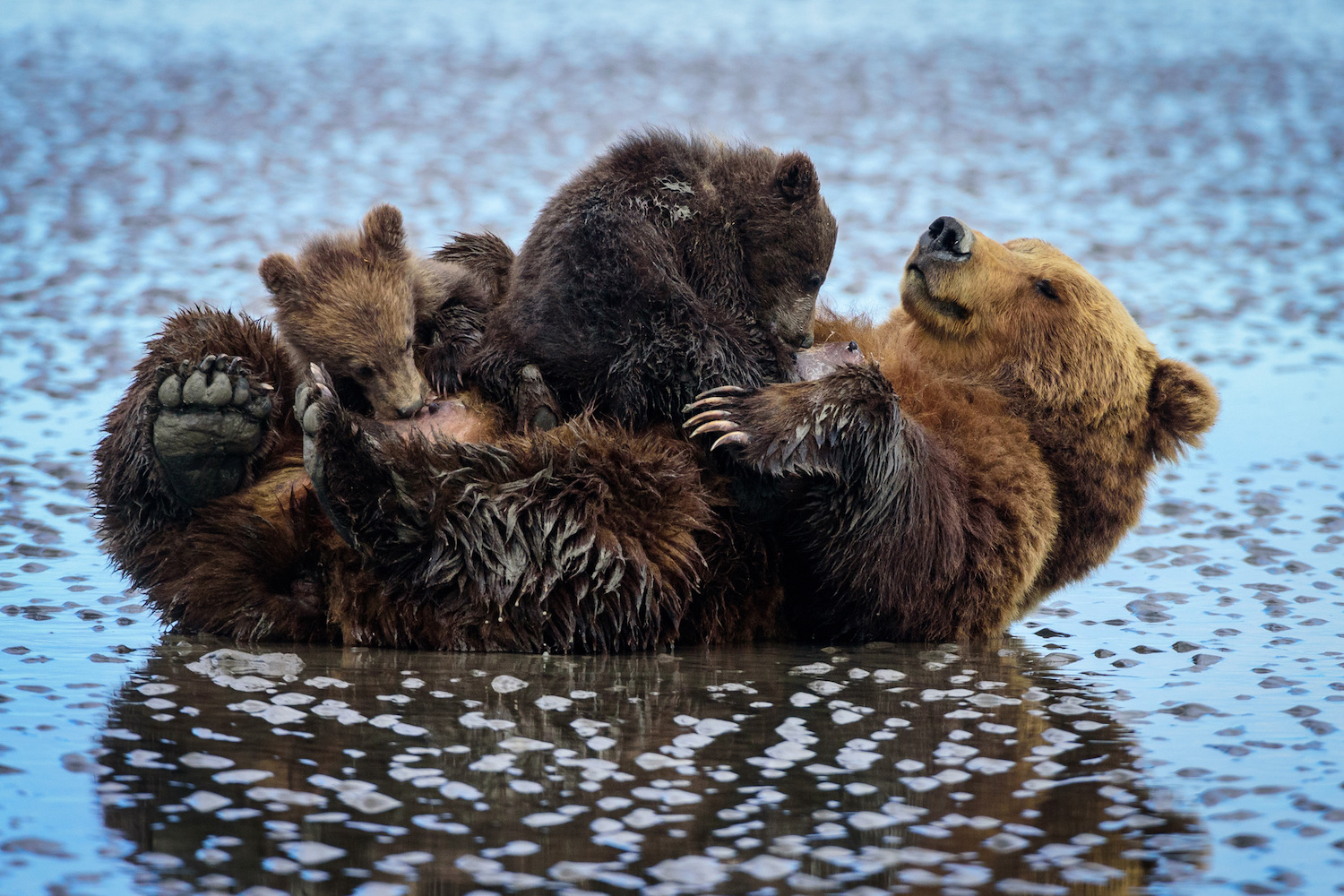
© Alan Jones
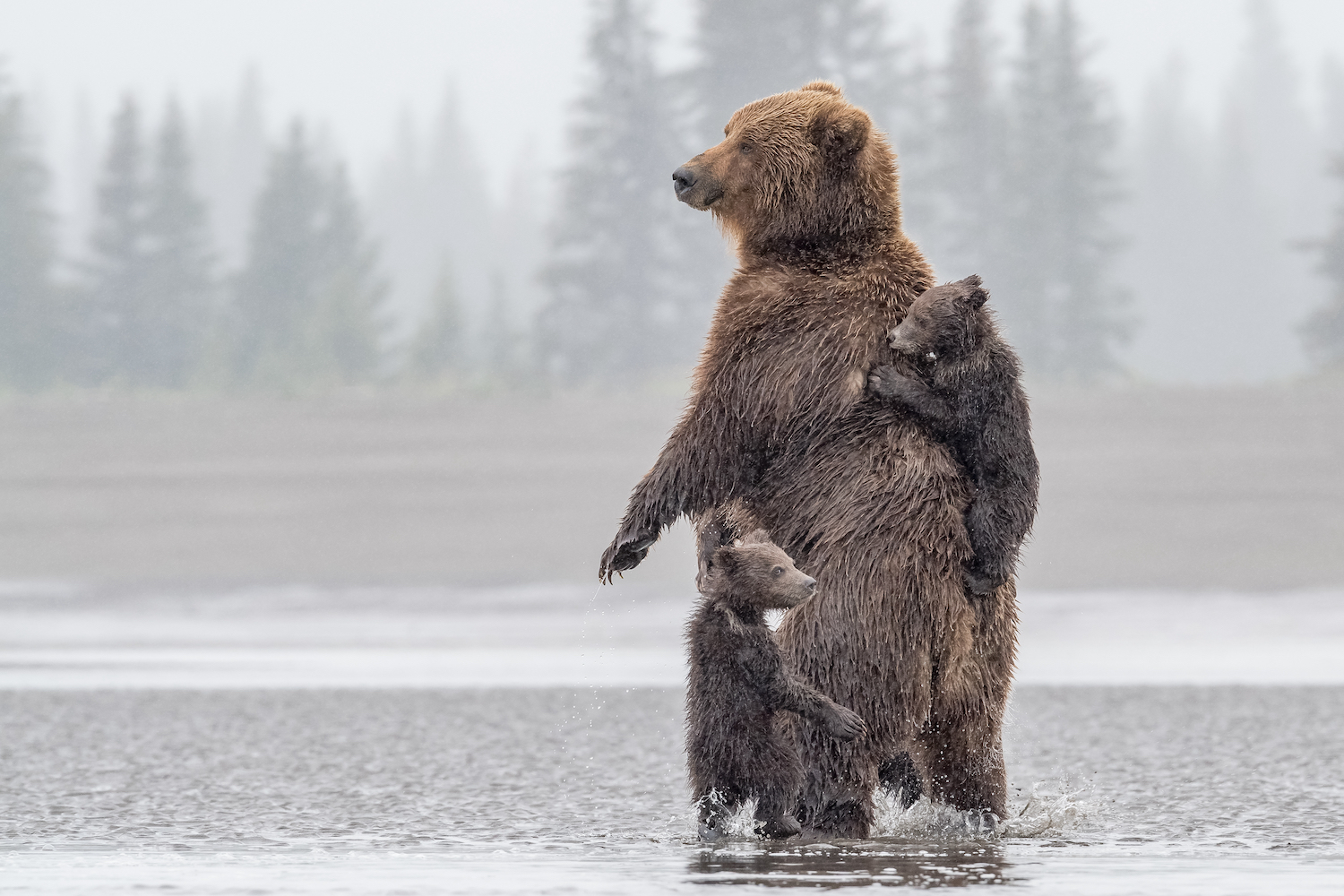
© Peter Derrington
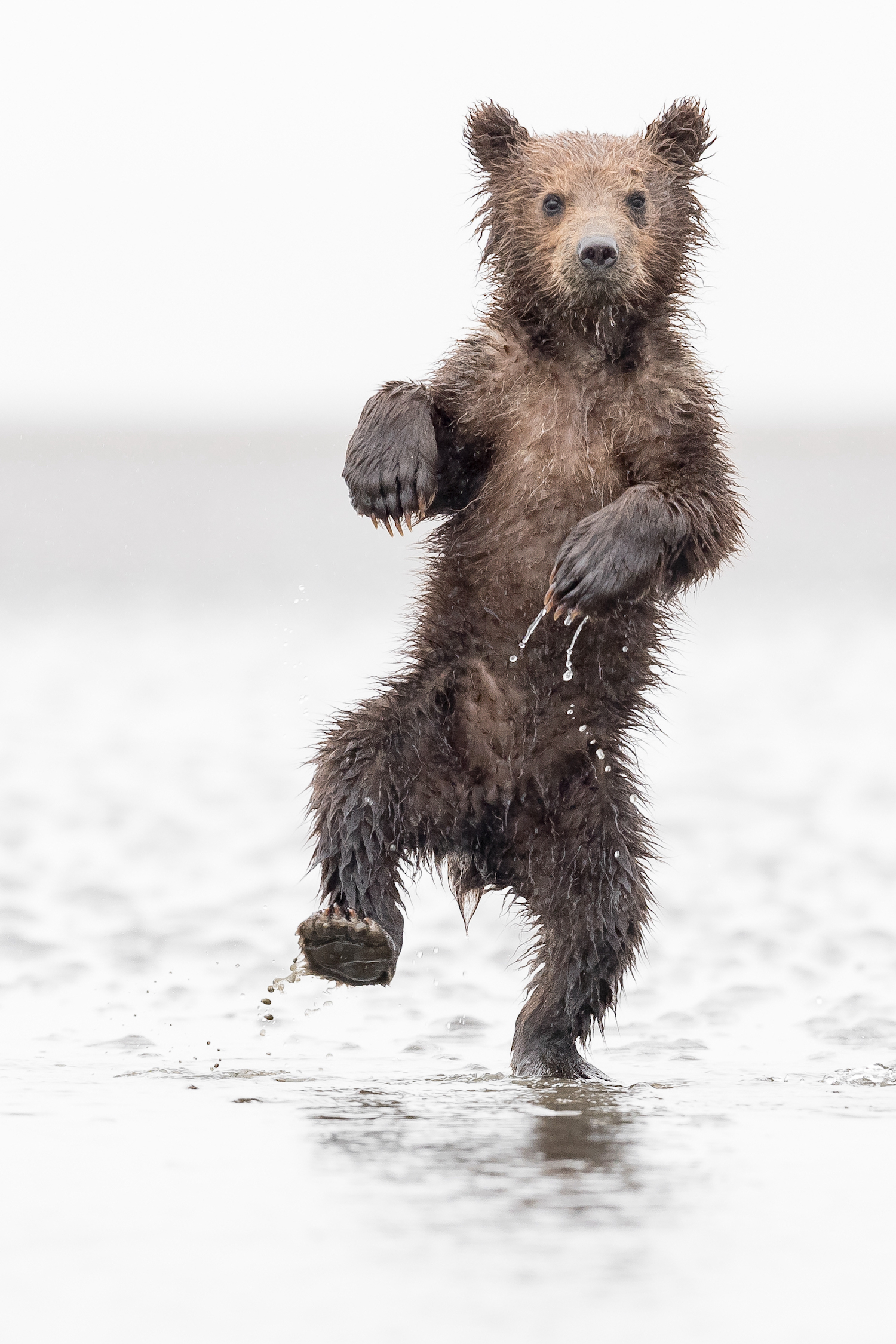
© Peter Derrington
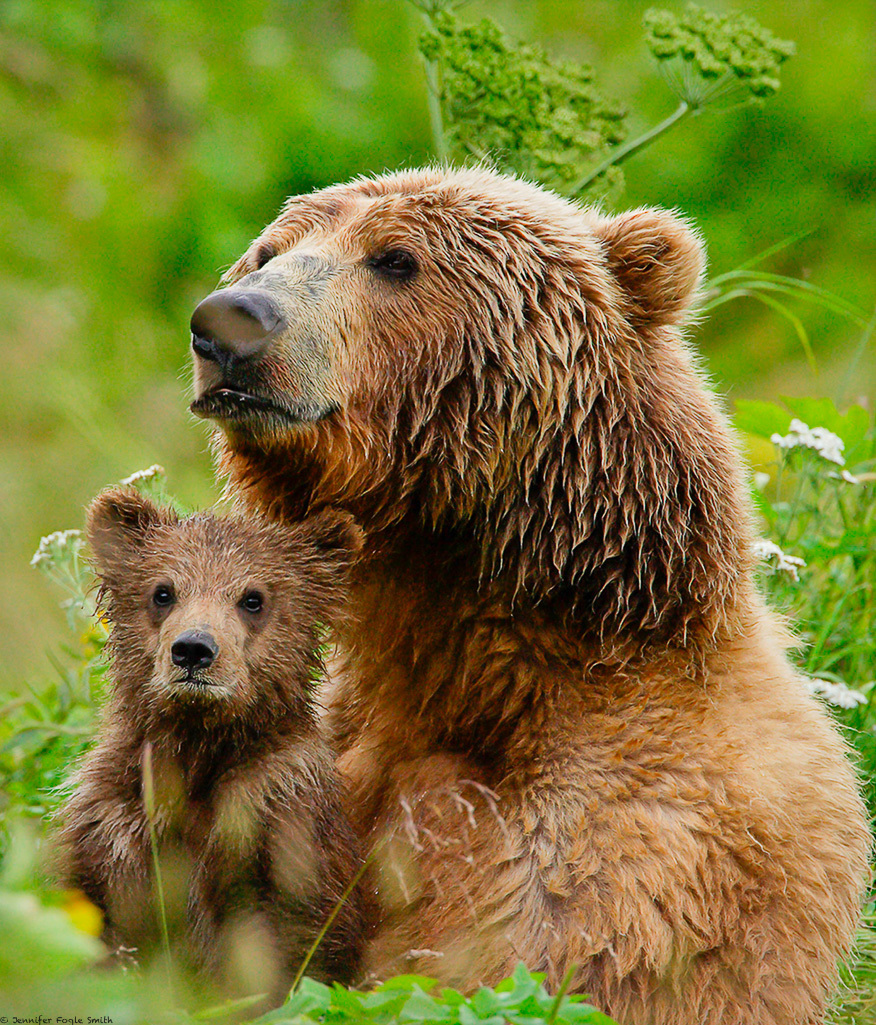
© Jennifer Fogle Smith
© Peter Norvig

© Benjamin Spalding
© Doug Beach
© Peter Norvig
© Peter Norvig
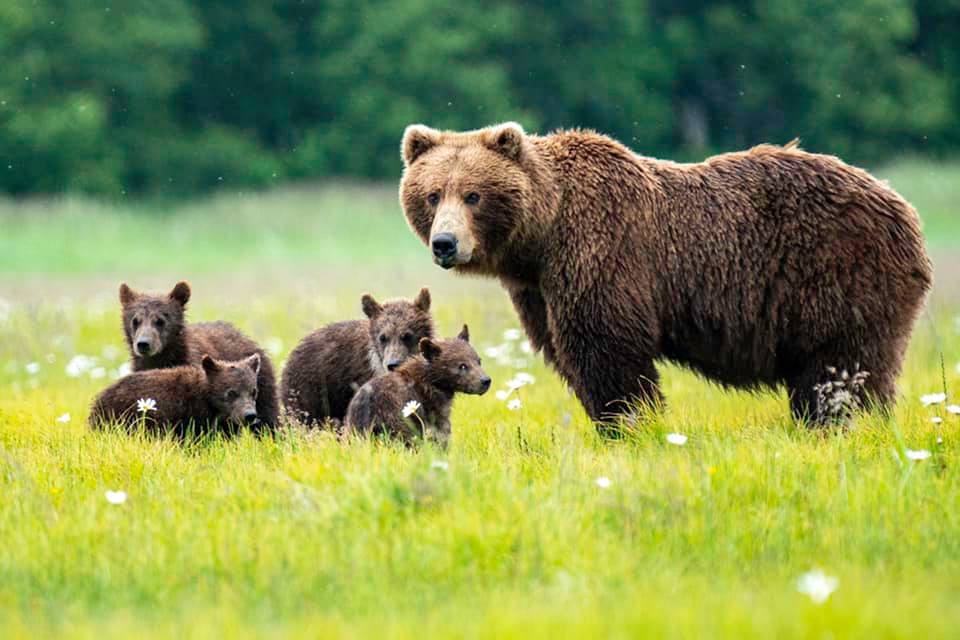
© Brad Josephs
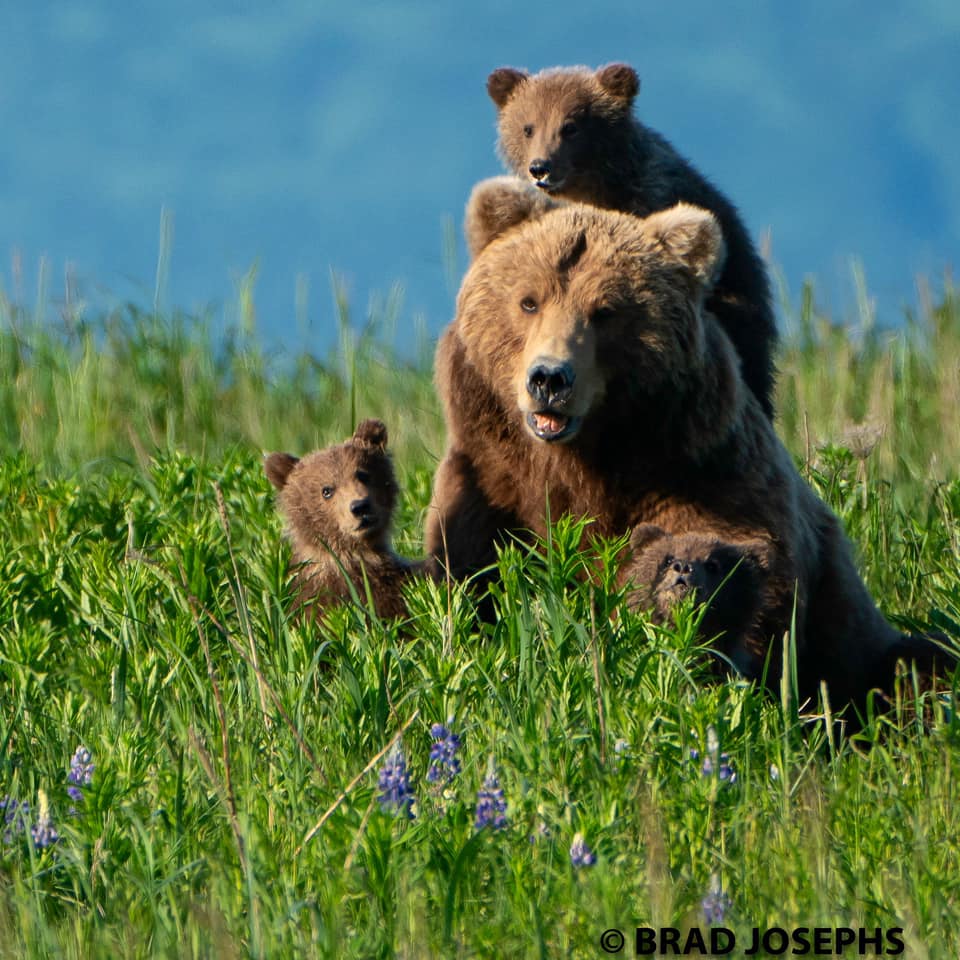
© Brad Josephs
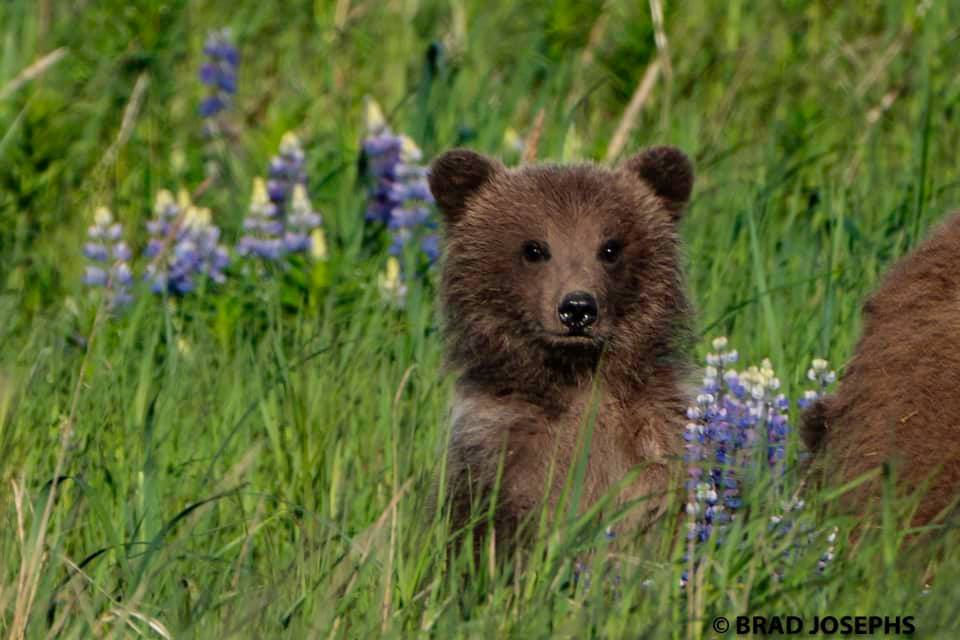
© Brad Josephs
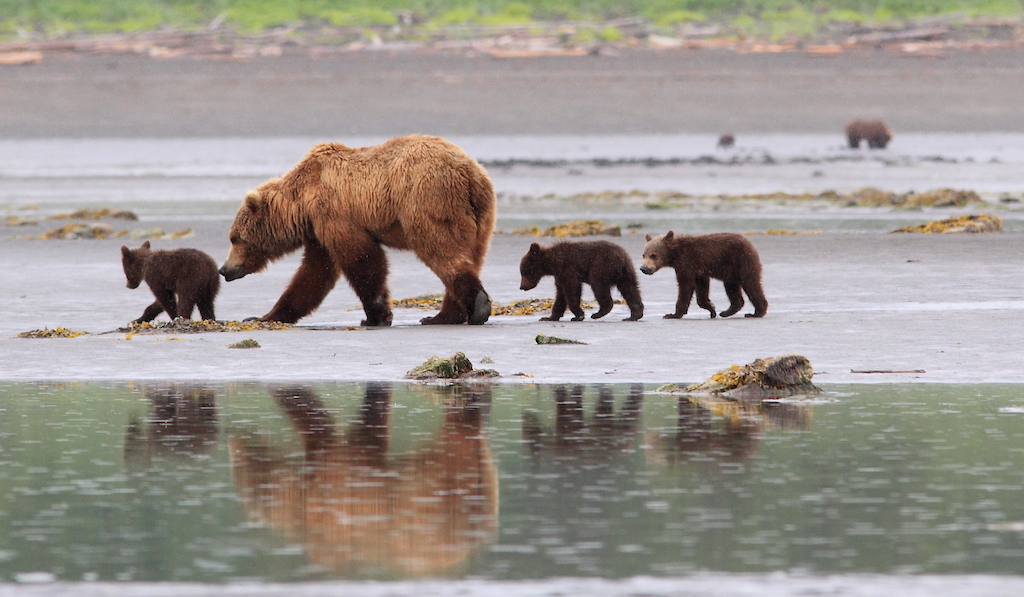
© Brad Josephs

© Brad Josephs
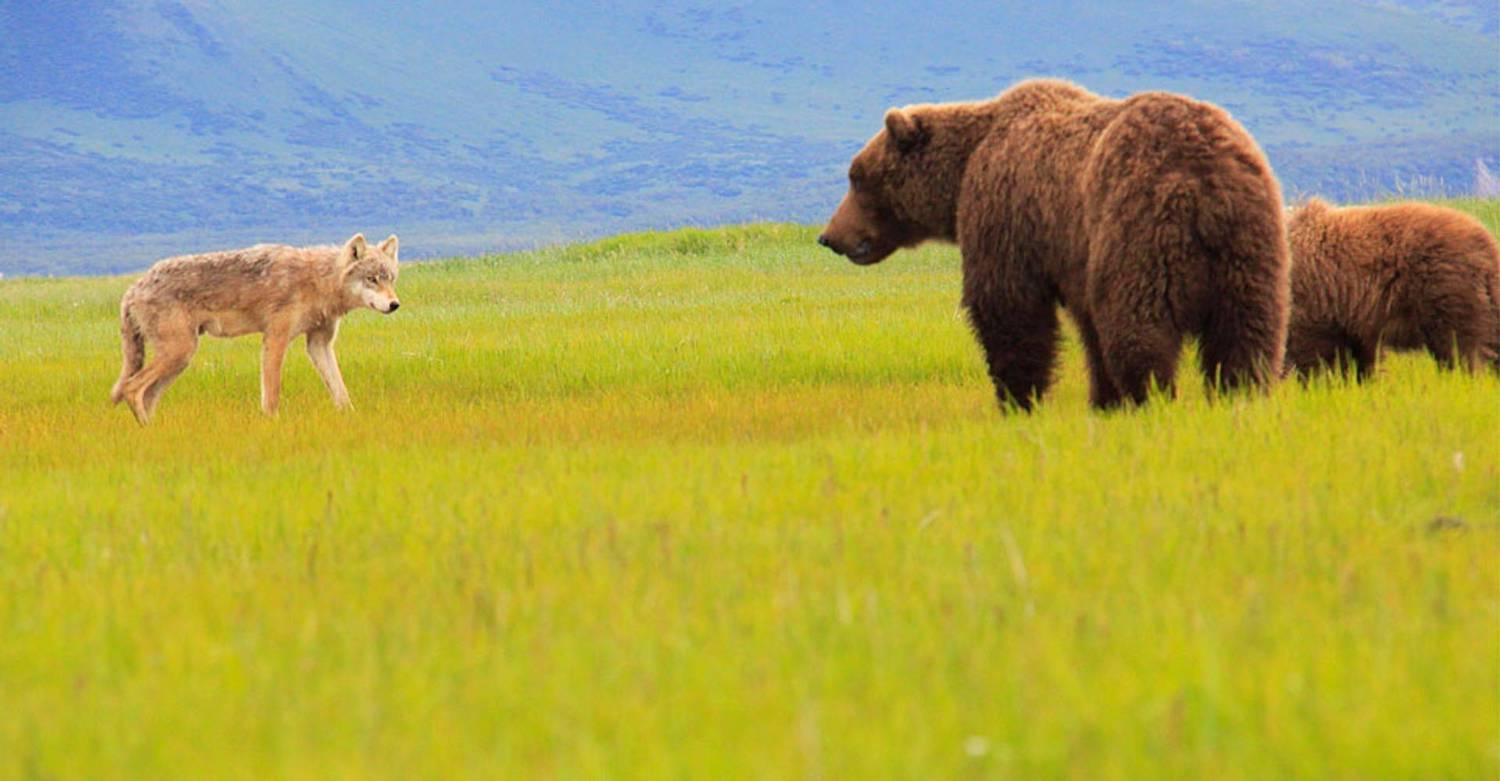
© Brad Josephs
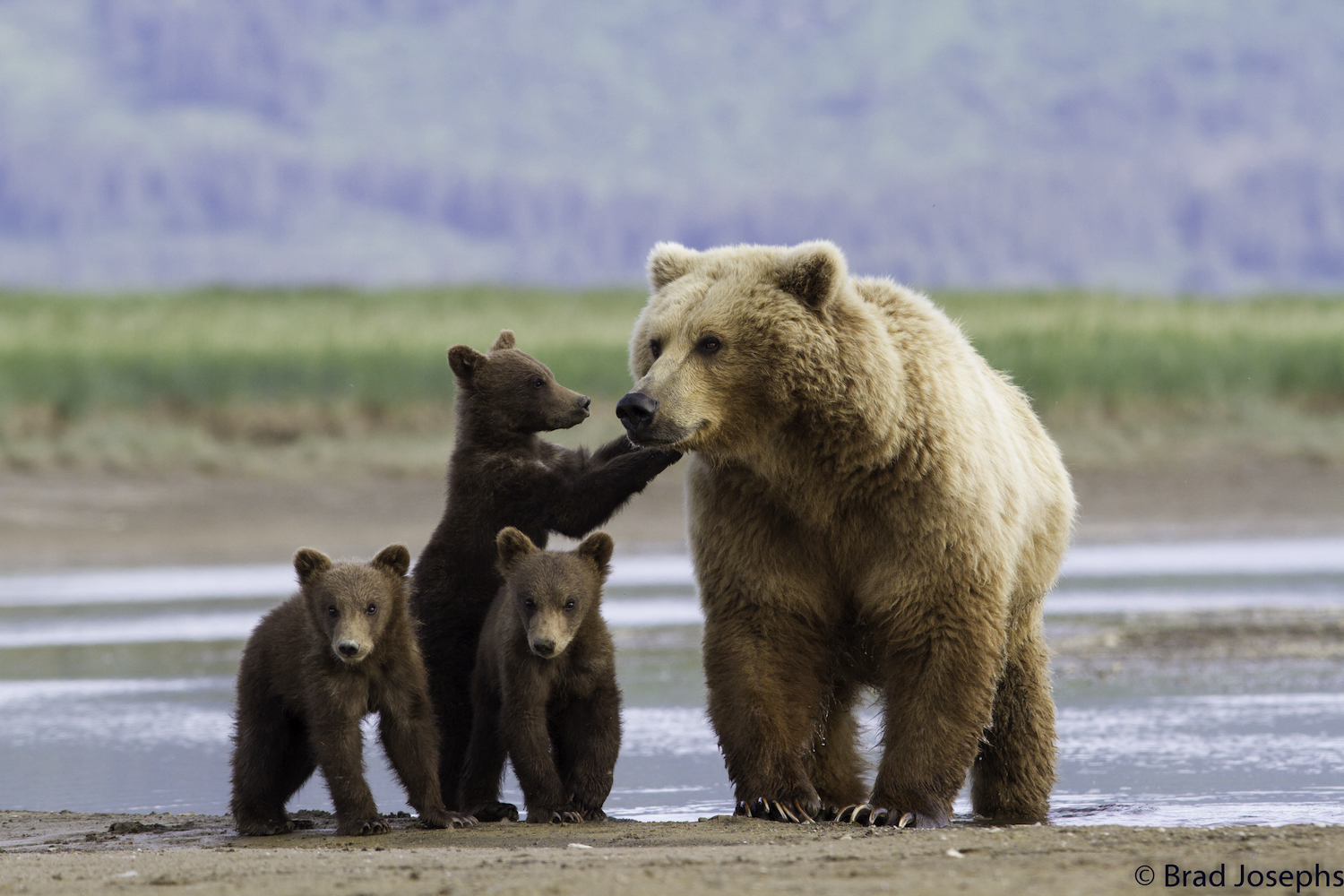
© Brad Josephs

© Brad Josephs
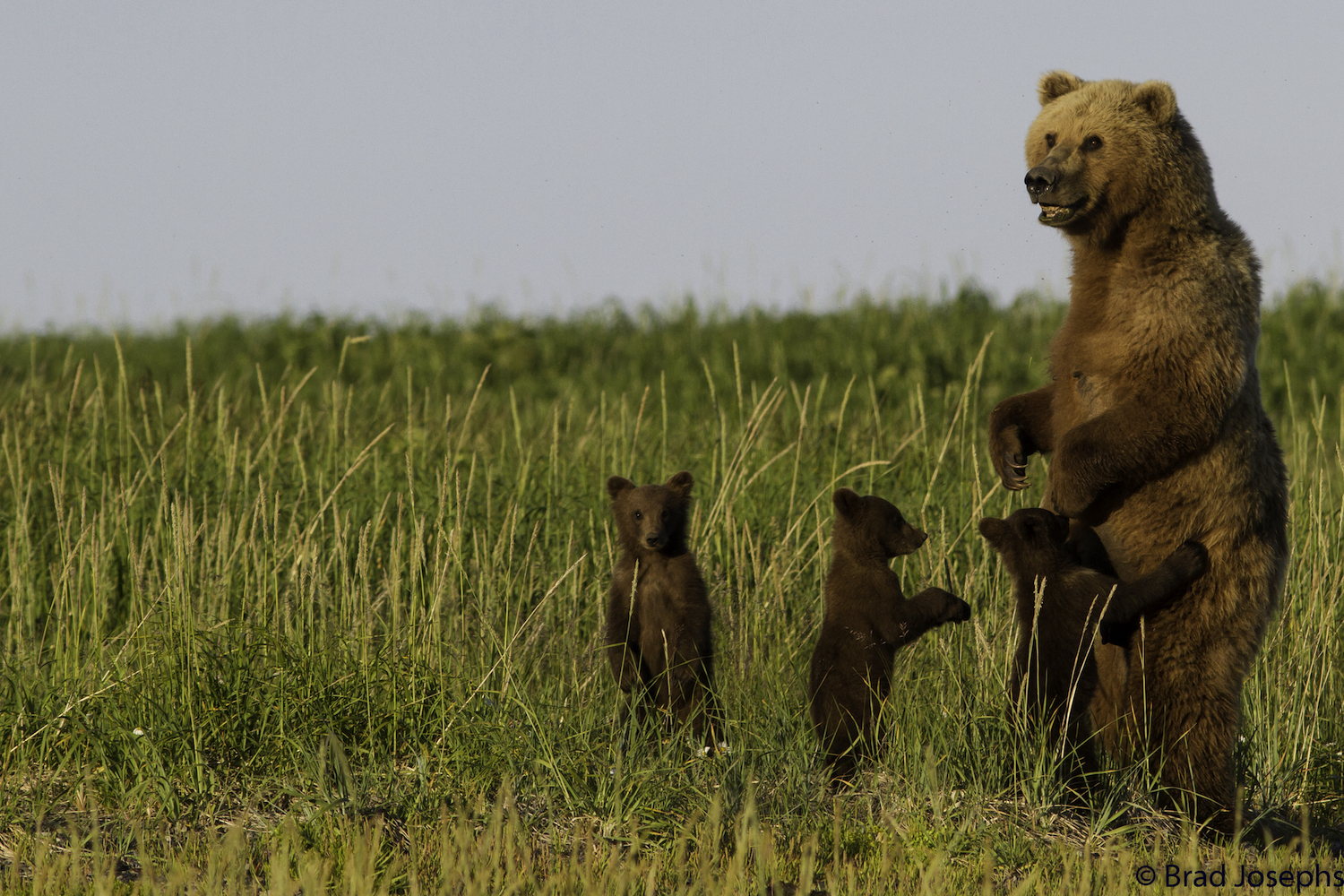
© Brad Josephs

The post Mothers & Cubs: Spectacular Grizzly Photos from Alaska Adventures first appeared on Good Nature Travel Blog.

Tanning beds may provide sun-kissed skin indoors, but they present challenges when they reach the…
The post Recycling Mystery: Tanning Beds appeared first on Earth911.